

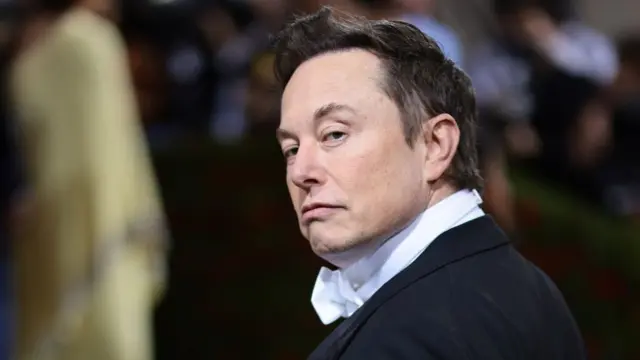
Statements by Elon Musk are rarely modest, but the “$10 trillion or nothing” plan is already at a level where even his usual ambitions look like a separate category of risk. Formally, it is just a post on X, but in reality it is a signal to the market that Musk is still not playing the game of being “the richest person in the world,” but operating at a scale where the entire logic of capitalization is being rewritten. As of today, his net worth is estimated at around $788 billion according to Forbes. This figure alone already looks more like theory than practice. However, even that is just an intermediate point in his strategy. The main driver of the next leap is the potential IPO of SpaceX, which many analysts call the most anticipated listing of the decade. If it happens at the peak of interest in space technologies and satellite infrastructure, Musk could indeed become the first dollar trillionaire in history. But the most interesting part begins after that. Reaching $1 trillion is already almost “market math.” Getting to $10 trillion is a matter of a paradigm shift. To understand the scale, a simple comparison is enough: such figures are comparable to the largest economies in the world. This is not just about growing company valuations, but about creating entirely new markets.
The central element of this story is still SpaceX. According to Reuters, the company’s shareholders approved a unique compensation model tied not only to financial performance but also to achieving technological milestones. These include reaching a $7.5 trillion valuation and establishing a sustainable colony on Mars. It sounds like science fiction, but these kinds of conditions are now becoming part of real corporate agreements.
It is important to understand that Musk is not trying to “make more money” in the traditional sense. His logic is about building ecosystems that generate value at new levels. Space is not just rockets. It is satellite internet, logistics, defense, navigation, and data. If even part of these areas scales as he expects, the valuation could grow exponentially.
The second layer is synergy with other assets. Tesla remains a key element, but no longer just as a car manufacturer, rather as a platform for AI, autonomous systems, and energy infrastructure. Neuralink and xAI add another dimension — control over data and computation. Together, this creates a model where each company reinforces the others.
However, the main question is not whether this is technically possible, but whether the market will allow it. A rise to $10 trillion implies a concentration of capital at a level that will inevitably attract attention from regulators, governments, and competitors. This is no longer just business — it is influence.
There is also a more grounded aspect. Even if all of Musk’s projects develop successfully, reaching such figures would require decades, stable markets, and a constant inflow of capital. History shows that markets love ambition, but are not always willing to finance it indefinitely.
Nevertheless, the very emergence of such goals says a lot about the current stage of technological development. If billionaires once competed within industries, now they compete in creating new realities. Space, artificial intelligence, and future infrastructure are no longer just trends — they are becoming the foundation for valuation.
In this context, Musk’s plan looks less like a personal goal and more like a marker of an era. The question is no longer whether he will become a trillionaire. The question is how far the market is willing to go with him.
All content provided on this website (https://wildinwest.com/) -including attachments, links, or referenced materials — is for informative and entertainment purposes only and should not be considered as financial advice. Third-party materials remain the property of their respective owners.