

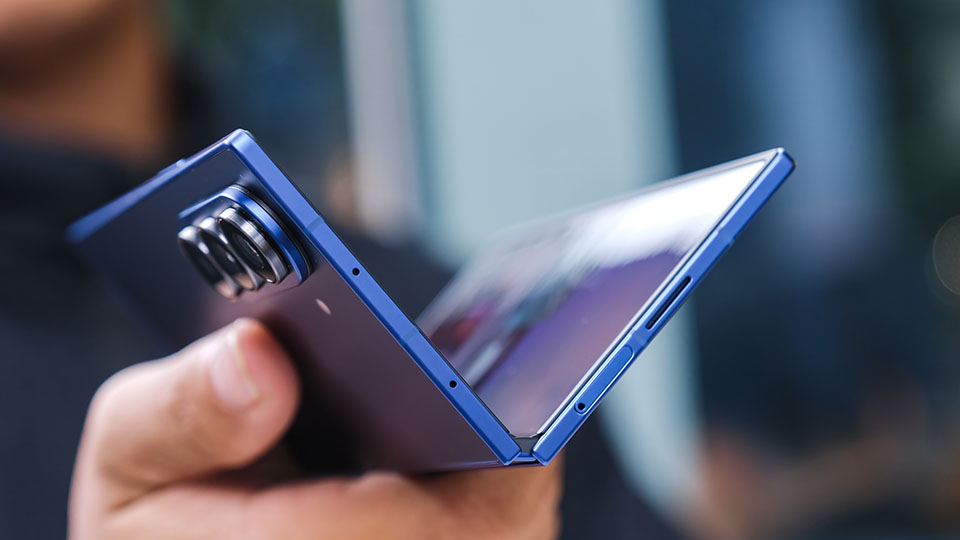
Conversations about a foldable iPhone have been going in circles for a couple of years, but now this is no longer just rumors from the “maybe someday” category, but a product that is clearly taking shape. If in 2024 it looked like a reaction to competitors, then by 2026 it becomes clear: Apple was not in a hurry not because it couldn’t, but because it was waiting for the right moment and refining the concept to its own standards.
The main reference point is clear. While Samsung was pushing the Galaxy Fold line and Huawei was experimenting with form factors like the Pura X, the market has already moved past the “wow, it folds” stage and shifted to a more practical question: is it actually convenient to use every day? And it is exactly at this moment that Apple, judging by leaks, is preparing its move.
According to the latest data, the device may be called iPhone Ultra or Fold. And this is not about a cosmetic experiment, but a full-fledged attempt to rethink the very format of a smartphone within the Apple ecosystem.
What is already known about the design and form factor. Based on leaks and mockup demonstrations, Apple is not betting on the classic “book-style” design typical for most Android devices, but on a wider internal display. When unfolded, the device will be closer not to a stretched smartphone, but to a compact tablet at the level of iPad mini. This is an important point. The company is not just making “an iPhone that folds,” but is trying to merge iPhone and iPad into a single device. The main usage scenario is expected to be in horizontal orientation, with a full-fledged interface adapted for work, not just for content consumption.
Compared to current market solutions, visually and conceptually this is closer to a tablet that can be folded than to a phone that can be unfolded.
Why does this make sense for Apple? Apple never bets on technology for the sake of technology itself. A foldable screen is not a value on its own – the value is in the user experience. And here the company plays to its strength: the ecosystem. If a user already has a MacBook, iPad, Apple Watch, and iPhone, the foldable Ultra becomes a logical continuation.
This is not a separate gadget, but a universal screen that covers several scenarios at once:
quick tasks on the external display
work and reading on the internal one
multitasking without switching between devices
Essentially, this is an attempt to remove the boundary between “phone” and “tablet” that still exists within the Apple ecosystem.
A new user experience. The main change is the way you interact with the device. The smaller external screen remains for everyday tasks: calls, messages, quick checks. But the main focus is on the internal display of about 8 inches.
This is a different level of content perception. Reading, watching videos, working with documents or photos on such a diagonal is simply more comfortable. Especially on the go, where using a laptop is inconvenient and a regular smartphone already feels too small.
Multitasking is worth highlighting separately. Currently, the iPhone is limited to “picture-in-picture” mode, while the iPad has long supported полноценное разделение экрана. In Ultra, logically, this should become the standard: two apps simultaneously, proper window sizes, full work instead of compromises. For creative professions, this is a completely separate story. Designers, photographers, videographers, bloggers – everyone who works with visuals gets a tool that is always with them and does not require sacrificing convenience for portability.
Price and positioning. The expected price of around $2000 in the US immediately places the device in the ultra-premium category. This is not a mass-market iPhone, but a showcase of technology and a status product. Apple has already done this with Mac Pro and Vision Pro – first expensive and niche, then ideas gradually move into more affordable devices. In essence, Ultra is not about “buying instead of a regular iPhone,” but about “buying if you are already in the ecosystem and want the maximum.”
But there is a nuance, and it is not a small one.
The first issue is app optimization. A new screen format is always a headache for developers. Even if Apple provides tools, not all apps will adapt immediately. At launch, odd interfaces, bugs, and compromises are almost guaranteed.
The second point is durability. A foldable screen is not just a display, but a complex mechanism. History has already seen how early flexible smartphones cracked, scratched, and aged faster than regular devices. Apple, of course, will not release a raw product, but physics still applies.
The third factor is repairability. A device with a unique construction, complex matrix, and hinge automatically becomes expensive and difficult to service. Even in countries with official service, it will not be cheap, and in other markets it becomes even more complicated.
The fourth aspect is resale value. Such devices tend to perform poorly on the secondary market. A high starting price and a niche audience mean that after a couple of years, selling it without a significant discount will be difficult.
And the main question… The most interesting part here is not even the device itself, but what it represents for the market. If Apple действительно releases a foldable iPhone, it will signal that the technology has finally moved beyond the experimental stage. But the key point is not whether this iPhone will be successful. The real question is whether it will become a new standard, like touchscreens once did, or remain an expensive toy for enthusiasts.
Apple knows how to turn the latter into the former. But this time the task is harder: it is not enough to make it look good – the company needs to convince people that they actually need a smartphone that folds. And this is where the real intrigue begins.
All content provided on this website (https://wildinwest.com/) -including attachments, links, or referenced materials — is for informative and entertainment purposes only and should not be considered as financial advice. Third-party materials remain the property of their respective owners.