

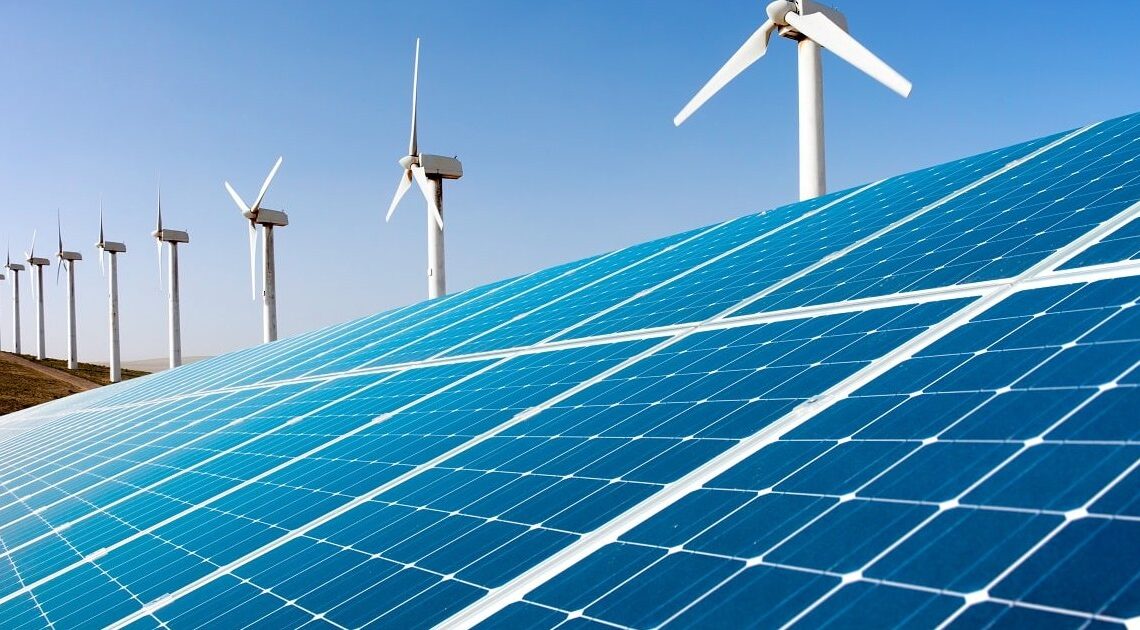
Europe’s energy transformation, which was conceived as a path to reducing dependence on fossil fuels and increasing the resilience of energy systems, is increasingly facing an unexpected side effect — growing dependence on Chinese technologies. This is not just about trade supplies of equipment, but about the formation of a new critical infrastructure dependency that is gradually being perceived as a potential national security factor.
Against this backdrop, fairly tough recommendations are already being voiced in the United Kingdom by security services: the issue of dismantling Chinese equipment from the national energy grid is being considered. Formally, the discussion is framed in the context of cybersecurity and protection of critical infrastructure, but in practice it is about revising the entire model of technological imports in the energy sector.
The situation looks particularly illustrative against the backdrop of the global energy transition. Europe is consistently reducing its dependence on Russian gas, but at the same time increasing its reliance on Chinese supplies in the renewable energy segment. This creates a kind of paradox: one source of geopolitical risk is partially replaced by another, less obvious but potentially no less significant. In recent years, China has taken a dominant position in the production chains of equipment for “green” energy. This is not about individual niches, but about systemic control over key components of the industry. According to industry estimates, the structure looks as follows: about 90% of global solar panel production is linked to Chinese companies, more than 80% of wind turbine components also come from China, and a similar share is observed in the battery segment. The situation is considered especially critical in the field of rare earth metals, where China controls a significant part of the entire supply chain — from extraction to processing.
It is precisely this concentration of production that is causing growing concern among European security experts. The problem lies not only in economic dependence, but also in potential technological vulnerability. The deeper the integration of Chinese equipment into the energy infrastructure of European countries, the higher the level of potential systemic risk.
One of the key arguments of those advocating stricter control is the issue of cybersecurity. Modern energy installations are no longer just physical objects of energy generation. They are complex digital systems, controlled by software, connected to monitoring networks and remote management systems. A central place in this architecture is occupied by inverters — devices that ensure the conversion and transmission of energy from solar and wind power plants into the general energy system.
It is through such elements, according to a number of experts, that potential vulnerabilities could theoretically arise. This refers to the possibility of remote interference in the operation of equipment through software control mechanisms. In public discussions, the term “hidden switches” or software shutdown mechanisms is sometimes used, which could hypothetically be embedded in the control system. There is no official confirmation of such scenarios, but the very fact that these risks are being discussed already influences political decisions.
Particular attention is also paid to the issue of access to the software code of the equipment. In a globalized supply chain, some experts point to the difficulty of fully verifying all software components, especially when it comes to mass industrial equipment installed simultaneously in dozens of countries.
In addition to technical risks, there is also a political and economic dimension to the problem. In the context of growing tensions between the United States and China, European countries find themselves in a situation where their technological choices can become a subject of external political pressure. There have already been precedents where alliances with the United States influenced decisions in the telecommunications infrastructure sector, including restrictions on the use of equipment from certain Chinese companies in communication networks.
A similar scenario is potentially possible in the energy sector. If a country’s critical infrastructure relies on equipment whose origin becomes politically sensitive, this creates an additional layer of vulnerability — not technical, but diplomatic.
Despite these risks, the transition to renewable energy sources remains a strategic priority for Europe. This creates a complex dilemma: on the one hand, отказ from Chinese equipment at the current stage could significantly slow down the energy transition and increase its cost. On the other hand, maintaining the current dependence could lead to the formation of long-term structural risks.
Some countries have already begun to take targeted measures. In the United Kingdom, certain projects involving Chinese manufacturers in the construction of energy infrastructure have been blocked. Recommendations are also being discussed regarding the gradual replacement or controlled phase-out of certain components from national energy grids. In Italy, at the level of public procurement and auctions, the issue of the origin of equipment for solar power plants is increasingly being raised, with an emphasis on supplier diversification.
The Chinese side, for its part, категорically rejects accusations of hidden risks or political conditioning of its technologies. The official position is that affordable solar panels and wind installations contribute to global carbon emission reductions and accelerate the transition to clean energy. In this context, Chinese technologies are positioned as a tool of global climate policy rather than an element of geopolitical influence.
Thus, a new line of global tension is forming around “green” energy. Whereas previously key risks were concentrated around oil and gas supplies, now technologies for energy generation and management are coming to the forefront. And although externally this may look like a technical issue, in practice it is increasingly about strategic control over the future energy architecture of Europe.
All content provided on this website (https://wildinwest.com/) -including attachments, links, or referenced materials — is for informative and entertainment purposes only and should not be considered as financial advice. Third-party materials remain the property of their respective owners.