

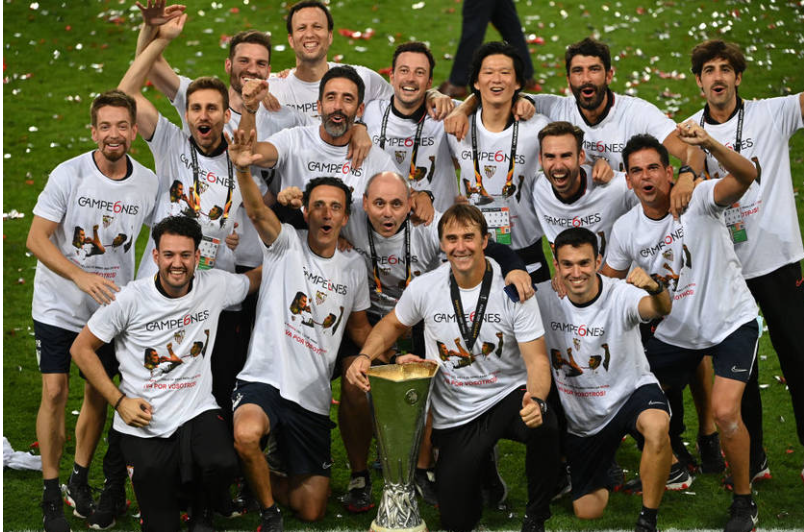
The story of the Shirtum crypto project looks like a textbook example of how not to do “innovation” – but at the same time, it perfectly shows how money is made on trust and big names. This time, the center of the scandal is not anonymous Telegram developers, but very recognizable figures – former players of Sevilla FC, including Ivan Rakitić and Papu Gómez.
According to investigators, the project promised to combine football and Web3 through the sale of NFTs – digital collectible assets featuring well-known players. The idea sounded appealing: exclusive “filmic NFTs” with images and voice recordings of footballers that could be bought, stored, and resold. The price was about €450 per unit. For a fan, it didn’t seem too much for a “piece of football history.” The problem is that, according to the allegations, that history… did not exist.
The key issue currently being examined by a Barcelona court is this: investors were sold NFTs that were never actually minted on any blockchain. Technically, this is not just a “bad asset” or a “failed project” – it is a simulation of a product. These tokens could not be transferred, sold, or even properly verified. They existed only in words and in the interface, but not in the decentralized infrastructure where they were supposed to exist.
At the same time, the project team raised about €3 million to develop a mobile application – the platform where these NFTs were supposed to be traded. The money was collected, but the app never materialized. No iOS version, no Android version, no clear reporting on where the funds went. A classic story: “we’ll finish it soon” gradually turned into “the project is closed.”
But the story does not end there. The second layer is the SHI token. Here, the scheme is painfully familiar to the market. Out of 1 billion tokens, about 78% were allocated to insiders – developers and project participants. And they received them for free. Then everything followed the classic сценарий: the asset was heavily promoted, including through public figures, creating FOMO (fear of missing out), after which the tokens were sold to retail investors at inflated prices.
The final act was the removal of liquidity. Once a significant amount of funds had entered the project, liquidity on the decentralized exchange was simply withdrawn. The token price collapsed to nearly zero. Today, SHI is not traded on any major platform and is essentially worthless. According to the plaintiffs, total damages exceed €24 million. Thirteen investors from Spain claim they lost all their invested funds. And these are only those who went to court – the real number of victims could be significantly higher.
Legally, the case is currently under investigation in a Barcelona court. It is important to understand that the involvement of the footballers is being considered in terms of their possible role in promoting the project and influencing investors. But this factor is exactly what makes the story particularly revealing. Because in the crypto industry, trust is often built not on technology, but on faces. And when those faces are famous athletes, the level of critical thinking among the audience tends to drop sharply.
Shirtum is not the first, and most likely not the last, story of this kind. But it clearly illustrates how three vulnerabilities intersect: weak regulation, high technological complexity for the average user, and the influence of public figures. Add greed and the fear of “missing out,” and you get the perfect environment for such schemes.
Another important point is the nature of NFTs themselves. In a normal situation, any token can be verified: it must exist on a blockchain, have a contract address, and a transaction history. If it doesn’t, that is already a red flag. However, in practice, most investors never reach this verification stage. A красивый landing page and a few famous names are often enough.
In the end, the Shirtum story is not so much about footballers or even a specific project. It is about market maturity. As long as the crypto industry remains a space where trust often replaces verification, such cases will continue to happen. Just under different names, with new tokens and new faces on the cover.
And this leads to an uncomfortable but important conclusion. In crypto, you can ignore analytics, you can avoid understanding the technology, you can believe in an “idea.” But ignoring basic asset verification is no longer an investment – it is a bet. And, as practice shows, in such bets it is usually not the buyer who wins, but the seller.
All content provided on this website (https://wildinwest.com/) -including attachments, links, or referenced materials — is for informative and entertainment purposes only and should not be considered as financial advice. Third-party materials remain the property of their respective owners.