

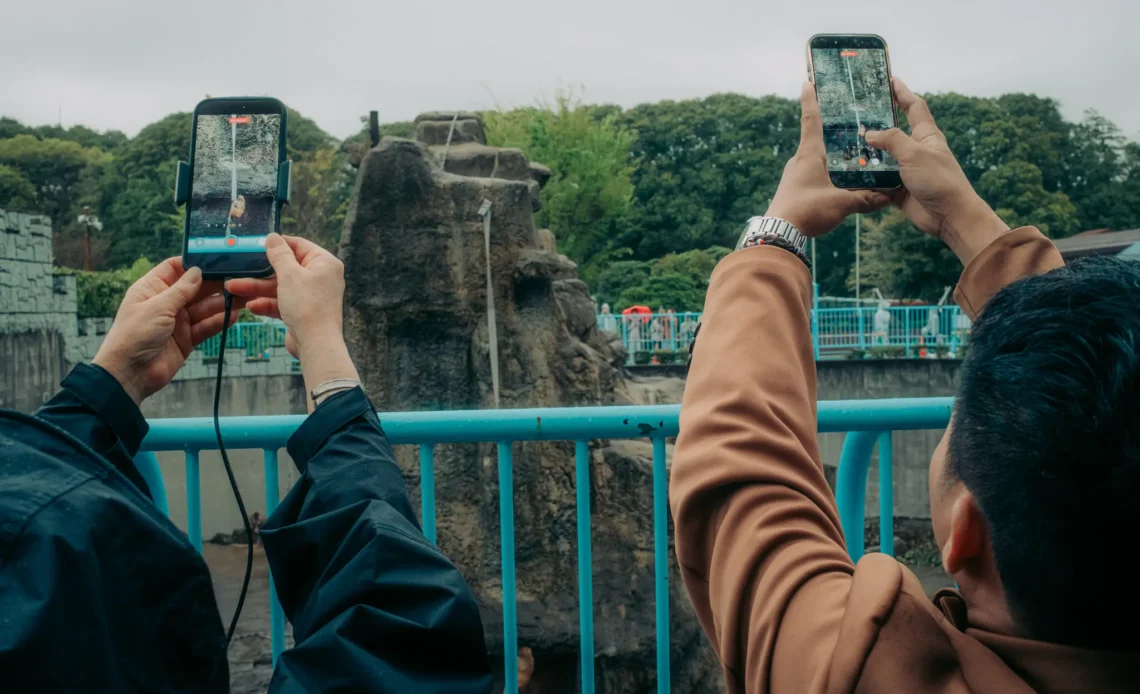
The hype surrounding memecoins давно moved beyond crypto exchanges and social media, but the story at the Japanese zoo in Ichikawa shows just how far online communities are sometimes willing to go for viral content and attention to a token. The incident, which at first glance looks like an absurd stunt for views, actually reflects a new reality of the crypto market where the line between marketing, meme culture and outright performance art is becoming increasingly blurred.
At the center of the story was the Ichikawa City Zoo near Tokyo. It was there that police arrested two U.S. citizens after they entered a macaque enclosure. According to Japanese authorities, 24-year-old student Reed Jahnai Daysun climbed over a protective barrier and entered the monkey area, where around 50 Japanese macaques were being kept. His companion – 27-year-old singer Neil Jabahri Duan – allegedly filmed the incident on video.
Both men were officially charged with interfering with zoo operations. However, they deny the accusations. According to The New York Times, Japanese authorities do not view the incident as a harmless prank, but rather as a serious safety violation because the actions could have posed a threat both to the animals and to visitors.
What drew particular attention was not simply the trespassing itself, but its possible connection to the crypto meme project Just a Memecoin (MEMECOIN), which operates on the Solana blockchain. Footage from the scene showed a person wearing a blue suit and a smiling emoji mask – imagery resembling the branding style associated with the project. That detail transformed a local story about disorderly conduct into an international viral case that quickly spread throughout the crypto community.
Online discussions soon focused on whether the incident was part of an unofficial promotional campaign for the token or simply an attempt by members of the community to artificially attract attention to the memecoin through scandal and viral content.
After the intruder appeared inside the enclosure, the macaques reportedly panicked. Zoo employees said the animals ran away and climbed to the top of an artificial rock formation inside the habitat. The situation could have ended much worse, as stress among primates can trigger aggression, injuries and chaos within the group.
Eventually, a zoo employee escorted the intruder out of the area without the use of force. Zoo management later emphasized that no animals were physically harmed. Nevertheless, the administration admitted that the incident exposed weaknesses in the security system. Following the event, additional protective netting was installed and patrols around the enclosures were increased.
Interestingly, the Just a Memecoin team reacted fairly quickly to the situation. In social media posts, representatives of the project attempted to distance themselves from the incident. They stated that they appreciate the community’s energy and enthusiasm, but do not support actions that violate local laws or endanger people and animals.
At the same time, the team announced plans to donate approximately 1 million yen – around $7,000 – to the Ichikawa Zoo to help improve animal care conditions. Many interpreted the move as an attempt to soften the reputational damage and shift the story from scandal toward “social responsibility.”
However, the incident itself became highly symbolic for modern memecoin culture as a whole.
Originally, meme tokens were built around internet humor, virality and community dynamics. Their value is often driven not by fundamentals, but by audience attention, social media popularity and the ability to generate headlines. The louder the discussion, the higher the chances of attracting interest to the token. In such an environment, the line between marketing and provocation gradually disappears.
This is especially visible in the Solana ecosystem, where launching memecoins has effectively become a separate industry. Due to low fees and fast transaction speeds, new tokens appear daily, and the competition for attention has become extreme. As a result, projects increasingly rely not on technology, but on spectacle, memes, scandals and viral campaigns to survive.
Against this backdrop, the monkey incident almost feels like a logical continuation of internet culture, where attention has become the ultimate asset.
The market itself reacted relatively calmly. At the time of publication, MEMECOIN had a market capitalization of around $13 million, and no major price movement was recorded after the incident. That too is telling: the crypto market is gradually becoming accustomed to such stories, and even a viral scandal no longer guarantees an instant token pump.
Important P.S.: The token dropped 7% over 24 hours. Apparently they should have climbed into the tiger enclosure – or better yet, the crocodile pit.
Nevertheless, reputational risks for projects like this remain serious. Memecoins traditionally exist somewhere between a joke, a marketing tool and a financial instrument. When hype begins crossing into legal violations or safety concerns, scrutiny from regulators and platforms intensifies rapidly.
In a broader sense, the story highlights how much the nature of internet finance has changed. In the early years, the crypto market was associated with decentralization, technology and alternative financial systems. Today, part of the modern meme sector increasingly resembles the entertainment industry, where token prices depend on memes, viral videos and the ability to hold audience attention for at least a few days.
The irony is that the monkeys were probably the only participants in the story who had absolutely no idea what was happening around them. Everyone else – from the crypto community to marketers and traders – clearly understood the core principle of the modern meme economy: attention is sometimes worth more than technology itself.
All content provided on this website (https://wildinwest.com/) -including attachments, links, or referenced materials — is for informative and entertainment purposes only and should not be considered as financial advice. Third-party materials remain the property of their respective owners.