

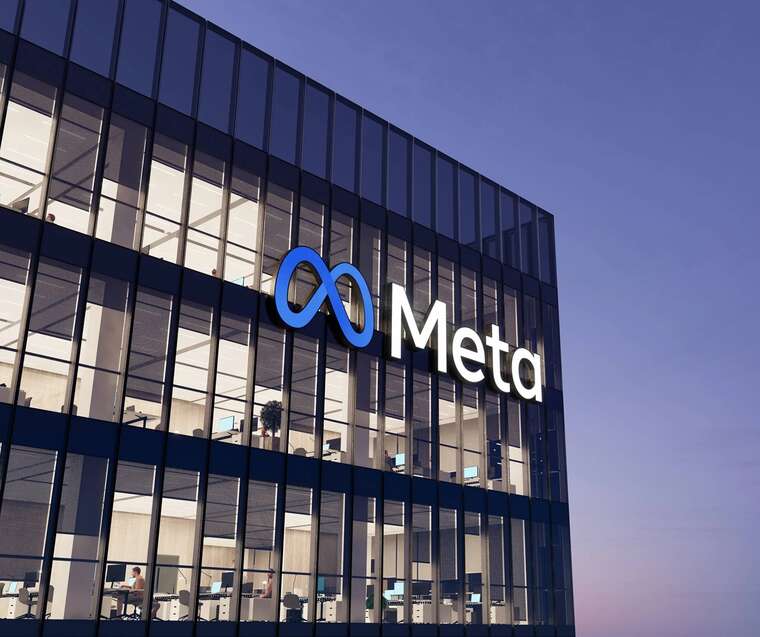
Meta is preparing for one of the largest waves of layoffs in recent years, according to BBC News. Based on information shared internally and confirmed by several American media outlets, the corporation plans to cut around 8,000 employees – approximately 10% of its workforce. Officially, this is being presented as a business optimization effort, but in reality the decision reflects a much larger shift: America’s tech giants have entered a new phase of the artificial intelligence race, where corporate priorities are changing almost overnight.
Meta, which owns Facebook, Instagram, and WhatsApp, is effectively rebuilding its entire development model around AI. The company has already informed employees about the planned layoffs while also announcing that several thousand previously approved vacancies will no longer be filled. In other words, Meta is not simply reducing headcount – it is reshaping the structure of its business needs.
The primary reason behind these moves is directly tied to artificial intelligence. In 2026, Meta plans to spend around $135 billion on AI development. Even by the standards of the world’s largest technology corporations, the scale of that figure is extraordinary. According to sources familiar with internal company documents, the amount is roughly comparable to Meta’s total AI spending over the previous three years combined.
The company has effectively entered a phase of hyper-accelerated expansion of computing infrastructure. Funds are being directed not only toward developing AI models themselves, but also toward building data centers, purchasing graphics processors, expanding cloud infrastructure, and assembling new research teams. In today’s AI industry, computing power has become the key strategic resource. Meta is now competing simultaneously with OpenAI, Google, Microsoft, and xAI in a race where spending is measured in hundreds of billions of dollars.
Against this backdrop, the layoffs look less like a crisis and more like a redistribution of resources inside the new AI economy. Just a few years ago, tech companies were aggressively expanding their workforces, hiring tens of thousands of employees to support the growth of social platforms, digital advertising, and metaverse projects. Now the priority is shifting toward automation and AI infrastructure.
Meta founder and CEO Mark Zuckerberg effectively warned the market about these changes back in early 2026. At the time, he openly stated that artificial intelligence was already beginning to radically change productivity within the company. According to Zuckerberg, one employee using AI tools can now accomplish work that previously required an entire team.
That statement turned out to be far more important than it initially seemed.
In essence, Zuckerberg publicly acknowledged the beginning of a structural transformation of the labor market inside Big Tech. While automation previously targeted mainly manufacturing and repetitive tasks, pressure is now spreading into intellectual and office professions – software development, analytics, marketing, content creation, customer support, project management, and even parts of engineering work.
It is particularly notable that Meta is cutting jobs while simultaneously posting record levels of spending. This breaks the old logic in which layoffs were viewed as a sign of financial weakness. In Meta’s case, the opposite is true: the company remains highly profitable but prefers to allocate capital toward the technological infrastructure of the future rather than toward expanding its workforce.
That is why the current layoffs appear to be part of a much larger historical transition.
Technology corporations are gradually redefining the core asset of business itself. In the previous decade, the main competitive advantage was people and the scale of teams. Now the focus is shifting toward computing power, data, and proprietary AI models. Increasingly, industry leaders are embracing the idea that future companies will be able to generate comparable output with significantly fewer employees.
Meta is not unique in this process. Similar developments are already taking place across other technology giants. Google, Microsoft, Amazon, and other corporations are also redirecting budgets toward AI infrastructure while simultaneously reducing certain divisions.
But Meta is doing it especially aggressively.
The reason is simple: for the company, artificial intelligence has become a matter of strategic survival. After a difficult period involving metaverse investments and weakness in the advertising market, Meta is trying to establish itself as one of the dominant players in the new AI economy. The launch of its Llama models, the development of AI-powered advertising tools, content automation, and AI integration across Facebook, Instagram, and WhatsApp all require enormous capital investments.
At the same time, the paradox is that AI itself is partially being used to justify the layoffs. The company is effectively telling employees that artificial intelligence has increased productivity so dramatically that the previous workforce size is no longer necessary.
This creates a new model of corporate economics in which automation is beginning to compete not only with low-skilled labor, but also with the white-collar middle class of the technology industry.
Investors, however, are reacting relatively calmly to such developments. Markets have already become accustomed to the idea that massive AI investments are accompanied by workforce optimization. In fact, some analysts view these layoffs as a positive signal for shareholders because they help maintain profit margins amid record capital expenditures.
Yet in a broader context, the situation is far more complex.
Artificial intelligence is gradually transforming not only technology companies but the entire structure of the corporate world itself. In the past, business growth almost automatically meant workforce expansion. Now that relationship is beginning to break down. In theory, a company can increase revenue, infrastructure, and influence while simultaneously reducing staff.
That is why the current layoffs at Meta are not just another round of corporate restructuring. They represent one of the first major real-world signals of how the AI era is beginning to reshape the labor market in practice rather than merely in analyst presentations and futuristic forecasts.
In effect, the industry is entering a period where the central question is no longer “Will AI replace humans?” but rather “Which functions will AI replace first, and how quickly will that happen inside major corporations?”
All content provided on this website (https://wildinwest.com/) -including attachments, links, or referenced materials — is for informative and entertainment purposes only and should not be considered as financial advice. Third-party materials remain the property of their respective owners.