

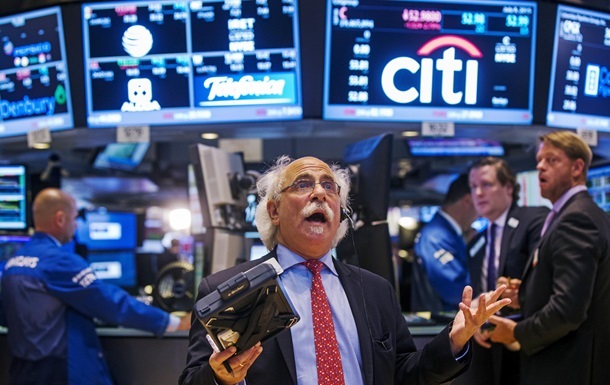
Financial markets are entering one of the most tense and at the same time most revealing days of recent months. On the surface, the situation appears almost calm: indexes are moving without sharp swings, trading volumes remain moderate, and investors seem to have taken a wait-and-see position. But behind this calm lies an extremely high concentration of events, each of which is capable of reshaping market sentiment for weeks and even months ahead.
Today, Wall Street’s attention is focused on several pressure points at once: Nvidia’s quarterly earnings report, the changing situation around Iran and the oil market, the release of Federal Reserve meeting minutes, and the possible beginning of preparations for a SpaceX IPO. All of these events are interconnected far more strongly than they may appear at first glance because together they shape the broader picture of future global liquidity, technological growth, and investor appetite for risk.
The market is essentially operating in a “calm before the storm” mode. Investors have already placed their major bets, but they are not yet ready to aggressively expand positions before new signals emerge.
Oil and geopolitics: markets are once again trading on hope
One of the main drivers of today’s sentiment was the unexpected easing of geopolitical fears. U.S. President Donald Trump stated that the conflict with Iran could end “very quickly,” and that alone was enough for the oil market to begin cooling sharply after the recent rise in tensions.
An especially important signal was the resumption of supertanker traffic through the Strait of Hormuz. For the global economy, this is a critical chokepoint: a significant share of the world’s oil and liquefied natural gas supplies passes through this narrow maritime corridor. Any risk of blockage automatically turns into a threat of soaring energy prices, rising inflation, and increased pressure on central banks worldwide.
For now, the market has received temporary relief. Brent crude prices moved lower, investors began reducing defensive positions, and the energy sector partially shifted from panic mode into waiting mode.
However, it is still far too early to relax. Even a short-term destabilization in the Middle East could quickly send oil prices aggressively higher again. Therefore, the current decline in prices reflects hope for de-escalation more than the final disappearance of risk.
This is particularly important for the Federal Reserve right now. Cheaper oil reduces inflationary pressure and therefore increases the likelihood of a softer monetary policy stance in the future.
Nvidia: the report that could define the entire tech market
The main event of the day is the quarterly report from NVIDIA.
For the market, this is no longer simply the publication of one company’s corporate results. Nvidia has effectively become a barometer for the entire artificial intelligence economy.
Nvidia’s chips now form the foundation of modern AI infrastructure. They power data centers, train large language models, support cloud platforms, and drive generative AI systems. In practice, the entire current AI race depends on the company’s computing power.
As a result, investors view Nvidia’s earnings as a test of several critical questions at once:
- Is the AI boom still continuing?
- Are corporations still willing to spend tens of billions of dollars on AI infrastructure?
- Is the market approaching overheating territory?
- Does the shortage of high-performance chips remain intact?
- Can the sector justify its enormous valuations?
Expectations are currently extremely high. This creates a classic market problem: it is no longer enough for the company to simply deliver strong growth. It must produce near-perfect results and an even stronger outlook.
That is why the market reaction could be extremely sharp in either direction.
If Nvidia once again delivers explosive revenue growth and confirms strong demand for AI chips, it could trigger another rally across the entire technology sector. Semiconductor manufacturers, cloud providers, data center operators, and the broader AI segment would likely benefit first.
But if the market senses even the slightest slowdown, it could become a trigger for widespread profit-taking across Big Tech.
In reality, Nvidia today is testing not only its own business but also the durability of the entire AI rally of recent years.
SpaceX and expectations of the “IPO of the century”
Another major topic for the market remains the possible IPO of SpaceX.
Wall Street is already actively discussing rumors that Elon Musk’s company could soon publish documents for a public offering. If the process truly begins, it could become the largest IPO in modern market history.
Interest in SpaceX is driven by several factors at once.
First, the company effectively dominates the commercial space industry. SpaceX has evolved from merely a rocket company into a full-scale infrastructure platform controlling satellite launches, space logistics, and the rapidly growing Starlink satellite network.
Second, the market has long faced a shortage of major technology IPOs. After a prolonged period of high interest rates, many companies delayed going public, and investors are eager for a new large-scale listing.
Third, Elon Musk’s brand alone is capable of generating enormous enthusiasm among retail investors.
If the offering process truly begins, the market could receive a powerful new source of speculative capital and attention. For the technology sector, this would become a psychologically important signal: the era of mega-IPOs may be returning.
But there is also a risk of overheating. The higher the expectations, the greater the potential volatility.
The Fed: markets search for hints about rate cuts
Another key factor this evening will be the publication of the minutes from the Federal Reserve’s April meeting.
Investors will analyze the text almost word by word in search of clues about the future path of interest rates.
The market currently finds itself in a difficult position:
- inflation remains relatively elevated;
- the U.S. economy has not yet shown a sharp slowdown;
- the labor market remains resilient;
- government debt and debt servicing costs continue to rise;
- geopolitics is increasing uncertainty.
Against this backdrop, the Federal Reserve is forced to balance the fight against inflation with the risk of placing too much pressure on the economy.
If the minutes suggest that the central bank is moving closer to rate cuts, it would support technology stocks and risk assets.
If the rhetoric remains hawkish, the market could once again begin pricing in a “higher for longer” interest rate scenario.
Calm markets are not weakness – they are anticipation
Interestingly, despite such a concentration of major events, U.S. indexes are still moving relatively calmly.
Yes, markets declined slightly yesterday because of rising bond yields, but trading volumes remained comparatively low. This is an important detail.
There are still no clear signs of panic or large-scale capital flight. Instead, the market appears to be cautiously taking profits and reducing short-term risk ahead of major announcements.
This type of behavior is common before significant earnings reports or Fed decisions: the market temporarily slows activity before rapidly repricing assets once new information arrives.
Which companies currently look stronger than the market
While major technology giants are testing short-term support levels, several companies continue to demonstrate relative strength.
Among them:
- Micron Technology – investors continue betting on demand from AI infrastructure and the memory market;
- Eli Lilly and Company – the company remains one of the leaders in the biopharmaceutical sector thanks to strong demand for next-generation drugs;
- Phillips 66 and The Williams Companies – the energy sector remains resilient despite the recent pullback in oil prices.
It is particularly notable that part of the capital is beginning to rotate away from overheated segments into more stable industries with reliable cash flow.
What all this means for investors
The current market situation resembles a classic transition point between phases.
On one hand, the U.S. economy remains relatively resilient, the technology sector continues to expand, and AI remains the dominant global investment trend.
On the other hand, markets are becoming increasingly sensitive to interest rates, capital costs, and the quality of corporate earnings.
That is why investors are now paying especially close attention to the quality of results rather than simply the existence of growth itself.
The key question for the coming days is relatively simple: can the market justify its own expectations?
If Nvidia confirms that the AI boom remains intact, the Federal Reserve softens its tone, and geopolitical tensions continue to ease, Wall Street could receive a new growth impulse.
But if even one of these elements disappoints, the market will quickly remember that the era of ultra-cheap money is already over, and lofty valuations require nearly flawless execution.
Today could become the turning point after which investors begin looking at the entire 2026 technology cycle in a completely different way.
All content provided on this website (https://wildinwest.com/) -including attachments, links, or referenced materials — is for informative and entertainment purposes only and should not be considered as financial advice. Third-party materials remain the property of their respective owners.