

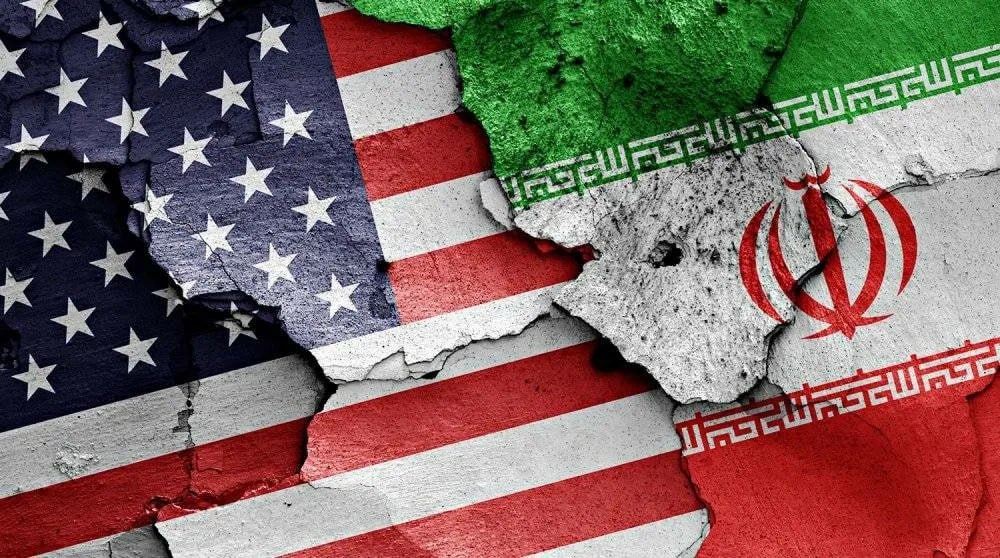
While most of the world was asleep, events began unfolding around one of the most dangerous geopolitical conflicts of recent months that, just days earlier, seemed almost impossible. The United States and Iran have unexpectedly moved closer to an agreement to end the conflict, and international media are already calling it a potential turning point for the entire Middle East and global financial markets.
Several major American outlets, including Washington Times and Axios, reported that Washington and Tehran are just one step away from signing a peace agreement. According to sources, accelerated negotiations have involved a number of regional countries and mediators attempting to prevent further escalation after a series of strikes and threats to close the Strait of Hormuz.
Additional attention was drawn by Donald Trump’s statement, in which he effectively confirmed that the agreement is in its final stage. According to the US president, a series of discussions took place in the Oval Office with leaders of Saudi Arabia, the UAE, Qatar, Pakistan, Turkey, Egypt, Jordan, and Bahrain. Trump also held a separate call with Israeli Prime Minister Benjamin Netanyahu. The most important part of his statement was the phrase that the “peace agreement is largely already agreed and awaits final formalization.” For financial markets, this became the key signal of a sharp decline in the probability of a large-scale war in the Middle East.
According to New York Times leaks, Iran has already preliminarily accepted the draft agreement. The current version includes the cessation of hostilities across the region, including Lebanon, the reopening of the Strait of Hormuz for international shipping, partial lifting of the US naval blockade, and the unfreezing of roughly $25 billion in Iranian assets.
The nuclear issue, however, has reportedly been separated from the main agreement and will be discussed independently over the next 60 days. This approach appears to be an attempt to isolate the most explosive topics and first achieve at least temporary stabilization.
In essence, this is not a full peace treaty, but rather a major interim compromise. Importantly, the document is described as a memorandum of intent rather than a legally binding agreement. This means that both sides are only outlining general principles of de-escalation and willingness to continue negotiations.
Nevertheless, even the possibility of such an agreement immediately shifted market sentiment.
Bitcoin reacted almost instantly. Following the news, BTC surged from around $75,800 to above $77,000. Within hours, approximately $215 million in short positions were liquidated across the crypto market. Traders betting on further downside were forced to close positions, adding fuel to the upward move.
By the morning, Bitcoin slightly pulled back from its overnight highs, but the reaction clearly demonstrated how sensitive risk assets remain to geopolitics and expectations of reduced global tension.
Investors are now closely watching the oil market. Oil remains the primary barometer of Middle Eastern conflict. In recent weeks, prices had surged on fears of a potential closure of the Strait of Hormuz, one of the world’s most critical oil shipping routes.
Roughly one-fifth of global oil supply passes through the strait, meaning even discussions of its blockade typically trigger significant market nervousness. If the agreement is signed and the Strait remains open, oil prices could fall sharply.
For the global economy, this would be a major factor. Cheaper oil reduces inflationary pressure, eases the burden on central banks, and potentially improves conditions for equity and technology markets.
Unsurprisingly, not only cryptocurrencies but also other risk assets have begun to rise on the back of these developments. Investors are effectively pricing in a scenario where a major Middle East conflict is avoided.
However, the situation remains extremely fragile.
Despite optimistic statements, negotiations are not yet finalized, and details continue to be worked out. Moreover, US–Iran relations have historically shown that such diplomatic turns can reverse quickly, both toward de-escalation and renewed confrontation.
Israel’s position adds another layer of complexity. Although Trump stated that his call with Netanyahu went “very well,” significant skepticism remains within Israeli political and military leadership regarding any deal with Tehran, especially while Iran’s nuclear program remains unresolved.
Iran itself, according to leaks, appears to be attempting to preserve a highly favorable structure: immediate cessation of hostilities, easing of sanctions, reopening of the Strait of Hormuz, and postponing nuclear negotiations for later stages.
From a geopolitical perspective, this looks like an attempt to buy time, stabilize domestic conditions, and reduce economic pressure without immediate major concessions on the most sensitive issues.
For Donald Trump, a potential agreement also carries major political significance. After weeks of strong rhetoric and threats of strikes on Iran, a sudden shift toward peace allows him to position himself as a leader who prevented a major war through negotiation rather than escalation.
Markets are now essentially waiting for an official announcement. If the agreement is signed, it could become one of the largest geopolitical shifts of the year, with significant implications for oil, the US dollar, crypto, equities, and overall investor sentiment.
But for now, everything remains a memorandum of intent and an attempt to freeze the conflict rather than a finalized peace. And as markets repeatedly demonstrate, sentiment can shift rapidly from euphoria back to panic, especially when the Middle East is involved.
All content provided on this website (https://wildinwest.com/) -including attachments, links, or referenced materials — is for informative and entertainment purposes only and should not be considered as financial advice. Third-party materials remain the property of their respective owners.