

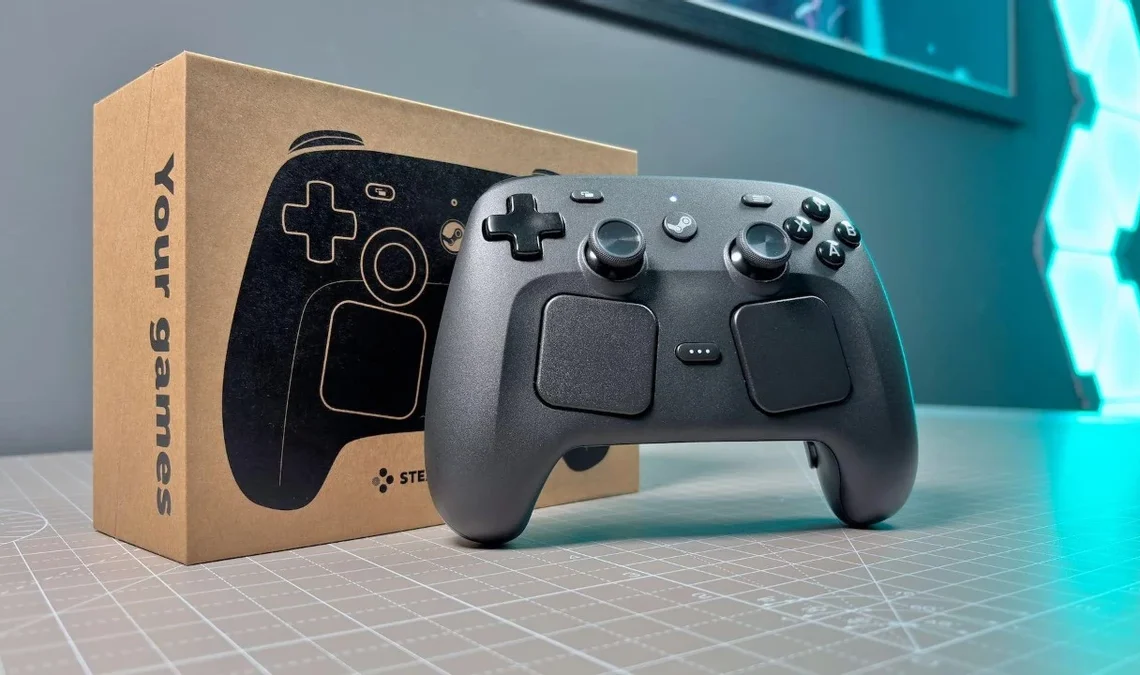
Valve’s new controller unexpectedly found itself in the spotlight not only because of huge demand and shortages, but also thanks to extremely unusual behavior. Users discovered that the device can emit the famous “Wilhelm scream” when dropped from a small height. And yes — we are talking about the exact same iconic sound effect from movies that has been used for decades in films, TV shows, and games during scenes where characters fall.
At first glance, the story sounds like another internet fake or community prank. But owners of the new Steam Controller began massively confirming the strange effect on forums and social media.
What’s happening with the controller
According to users, the sound plays when the controller falls from a height of around 90 centimeters. Most often it happened accidentally — for example, when the gamepad slipped off a couch, table, or someone’s lap during gameplay.
However, the effect does not appear every time. Users noticed several conditions:
- Steam must be running in Big Picture mode
- Haptic feedback and vibration must be enabled
- The sound plays randomly
- The bug was most commonly noticed while playing Path of Exile 2
What makes the situation especially funny is the fact that the Steam Controller itself does not have a built-in speaker. Technically, the device should not be able to “scream” at all.
So where does the sound come from?
As it turns out, the source of the sound is not a speaker, but the controller’s vibration motors.
Modern haptic feedback systems are capable of operating at very high frequencies and creating complex vibration patterns. Under certain conditions, the vibration motors begin reproducing oscillations that effectively become audible sound.
That is why users hear the famous “Wilhelm scream” literally through the vibration of the controller’s body.
Judging by discussions online, the issue appears to be connected to a bug in the haptic feedback settings. Some players noticed that adjusting vibration strength in decibels works incorrectly: during testing, the intensity of the effect neither decreases nor increases as it should.
One user said they eventually disabled both vibration and haptic feedback entirely until an update is released, because the sound started appearing too frequently.
Why the “Wilhelm scream”?
The funniest part of this story is the choice of sound itself.
The “Wilhelm scream” has long become a kind of meme within the entertainment industry. This short scream was first used back in the mid-20th century and later evolved into an Easter egg inserted into movies, cartoons, and video games. It can be heard in Star Wars, Marvel films, Indiana Jones, games, and hundreds of other projects.
Valve is known for its love of jokes and hidden details, so part of the community is now debating whether this is truly a bug or if one of the company’s engineers intentionally embedded an Easter egg at the firmware level.
So far, Valve has not issued any official comment regarding the nature of the effect.
Users are advised to test the bug carefully
After videos of the phenomenon spread online, many users began intentionally dropping their controllers to test the effect. However, owners quickly started warning each other to experiment carefully.
Most people recommend dropping the controller only onto soft surfaces — a bed, couch, or pillow. Despite the meme-like nature of the situation, this is still an expensive device, and repeated drops could damage the shell, sticks, or internal mechanisms.
The result is a rather absurd picture: people buy a hard-to-find controller for hundreds of dollars and immediately start carefully tossing it onto a couch just to hear it scream.
Shortages and hype around the new Steam Controller
Interest in Valve’s new device was already enormous even before the bug became viral.
Sales started on May 4 through the company’s official store. However, demand turned out to be so high that Valve’s website began experiencing issues almost immediately after orders opened.
Within about half an hour, the controller disappeared from sale in several regions, and soon became unavailable in nearly all major countries.
Against the backdrop of shortages, resellers quickly became active. On the secondary market, the device started selling for several times the official price. For the gaming industry, this has already become a familiar scenario: similar situations happened with the PlayStation 5, Nvidia graphics cards, and Steam Deck.
Valve had to introduce a reservation queue
To reduce pressure from bots and scalpers, Valve launched a reservation system.
Users can now reserve a place in line for the next batch of devices. The company clarified that each account can reserve only one Steam Controller.
After receiving a confirmation email, buyers will have 72 hours to complete their purchase. If the order is not finalized in time, the spot will go to the next person in the queue.
What this story says about the modern gaming industry
The story of the “screaming” Steam Controller looks funny, but at the same time it perfectly illustrates modern gaming hardware culture.
Today, a gamepad is no longer just a plastic controller with buttons. It is a sophisticated device with haptic feedback, gyroscopes, sensors, adaptive triggers, and programmable response systems.
And sometimes all this complexity leads to completely unexpected effects — for example, a controller literally producing a dramatic scream when it falls.
At the same time, the internet instantly turns any such bug into a viral meme. Yesterday users were discussing the device’s specifications, and today they are debating whether Valve intentionally embedded the “Wilhelm scream.”
The irony is that such a bizarre bug may actually be more useful for marketing than traditional advertising. After all, people are far more eager to tell each other about “the controller that screams when dropped” than about another improvement in vibration feedback or reduced input latency.
All content provided on this website (https://wildinwest.com/) -including attachments, links, or referenced materials — is for informative and entertainment purposes only and should not be considered as financial advice. Third-party materials remain the property of their respective owners.