
Disruptive technologyNews

“Translator” from cat and dog language

Join our Trading Community on Telegram

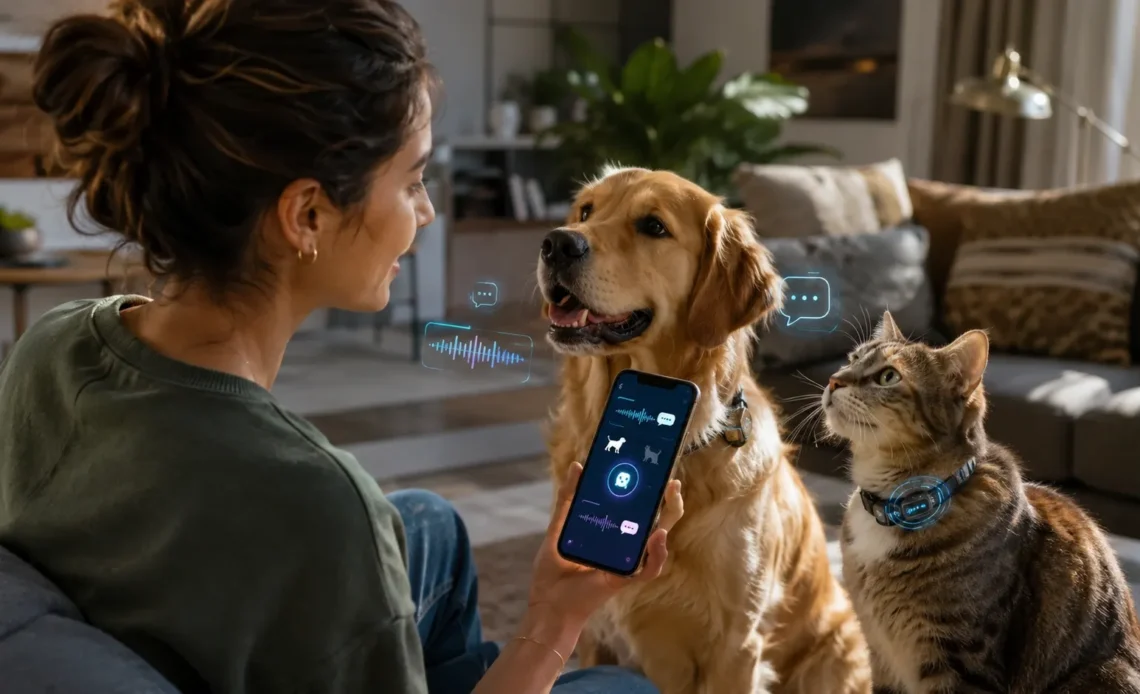
A Chinese startup Meng Xiaoyi from Hangzhou has claimed to have developed a device that promises something almost science-fiction-like – translating the meows and barks of pets into human language. The unusual novelty was reported by Oddity Central. The gadget comes in the form of a standard collar, but inside it contains a full set of technologies: microphones, motion sensors, and cloud-based data processing powered by Alibaba Cloud’s Qwen neural network. According to the developers, the system can recognize cat and dog sounds, analyze their behavior and emotional states, and supposedly translate them into human-understandable phrases with up to 95 percent accuracy.

The process, as described, is fairly simple: the collar captures the animal’s vocalizations, sends them to the cloud, where the neural network matches the sound with pre-trained emotion and behavior patterns. The output is a “translation” of the pet’s mood or intentions. Moreover, the device also works in reverse: if the owner calmly says “it’s okay, my good boy,” the collar can convert it into dog barks or cat sounds supposedly understandable to the animal. The idea sounds like both a technological breakthrough and a joke from the future where the boundary of reality has become slightly blurred.

The device is priced at 799 yuan, roughly 118 dollars, and more than 10,000 pre-orders have already been placed. The launch is planned for late May. Amid the hype, the startup has also raised around one million dollars in seed funding, further increasing attention to the project.

However, the louder the claims, the greater the skepticism. In Chinese social media, the device has already been nicknamed a kind of “human intelligence test,” implying how easily audiences accept bold claims without supporting evidence. The main criticism is simple: the company has not provided any independent scientific studies confirming the claimed accuracy. Demonstrations are limited to flashy promotional videos where meows and barks are turned into playful text “translations” in colorful speech bubbles. Doubts are further strengthened by the fact that the company is very new – founded only in 2026 – making it highly unlikely that such a complex system could have been developed in such a short time. Critics note that without massive datasets, long-term observation, and field research, claims of “95 percent accuracy” are at best premature.

At the same time, the idea itself is not new. Attempts to “translate” animal communication into human language have been made for decades. Back in the early 2000s, Japanese engineer Kazuhiko Naka­mura created a device called Bowlingual, which attempted to interpret emotional tones in dog barking. It could distinguish happiness, anger, and anxiety, but it served more as entertainment than a true translation tool.

Later, various research groups tried analyzing ground squirrel whistles, bat sounds, and other animal vocalizations using machine learning algorithms. In some cases, behavioral patterns were identified, and even complex signals resembling “social interactions” were discovered, but a real translation into human language was never achieved.

The fundamental problem is that animals do not use language in the human sense. Their communication consists of sounds, movements, smells, and environmental responses, making it extremely difficult to reduce all of it to words – a task that still looks more like science fiction than engineering.

This is why skepticism around the Meng Xiaoyi collar is so strong. On one hand, there is excitement about another attempt to bridge the gap between humans and animals. On the other, there is the awareness that the market has seen many similar promises before, which ended up as toys rather than real technologies.

Still, the device has already achieved its effect: online discussions have boosted pre-orders, and the idea of “understanding what a cat thinks” has once again gone viral. And perhaps the real question is not the accuracy of the algorithms, but whether people are ready to hear what their pets actually think about their service and living conditions.

0
0
Disclaimer

All content provided on this website (https://wildinwest.com/) -including attachments, links, or referenced materials — is for informative and entertainment purposes only and should not be considered as financial advice. Third-party materials remain the property of their respective owners.

Leave a Reply

Your email address will not be published. Required fields are marked *

Related posts
NewsStock brokersStock research & analytics

5 promising stocks for today

By tradition, when the market pretends that “everything is calm” while the S&P 500 quietly but…
Read more
CryptocurrencyForex brokersNewsStock brokersStock research & analytics

While the world was sleeping: the United States and Iran

While most of the world was asleep, events began unfolding around one of the most dangerous…
Read more
Disruptive technologyNews

The New Steam Controller “Screams” When Dropped

Valve’s new controller unexpectedly found itself in the spotlight not only because of huge demand…
Read more
Telegram
Subscribe to our Telegram channel

To stay up-to-date with the latest news from the financial world

Subscribe now!