

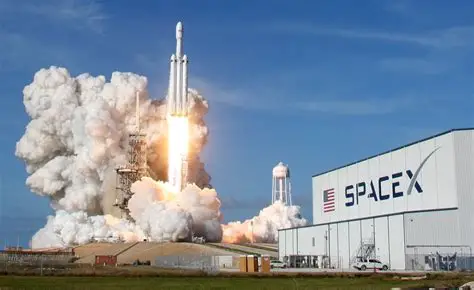
Today, financial markets witnessed an event that seemed impossible just a few years ago. SpaceX is going public, with its valuation reaching an impressive $1.77 trillion. This is the largest IPO in stock market history, capable of transforming not only the space industry but also the entire investment system.
However, the key story is not only the record-breaking valuation of Elon Musk’s company. A real revolution is happening behind the scenes of market infrastructure. To include SpaceX, major index providers are rewriting rules that have been considered almost untouchable for decades.
Space becomes part of every investment portfolio
In the past, companies had to wait several months after listing before being included in major stock indices. During that time, the market assessed the business, tested demand stability, and determined fair valuation.
In the case of SpaceX, things are different. Nasdaq and Russell exchanges introduced a special accelerated inclusion mechanism. Now major IPOs can enter indices within 15 days after listing instead of the traditional three-month waiting period.
At first glance, this looks like a technical detail. In practice, the consequences may be enormous. Hundreds of billions of dollars are managed by index funds. These funds do not make independent buy or sell decisions. Their job is to replicate index composition. If a stock enters an index, funds are required to buy it regardless of valuation.
This is why SpaceX’s inclusion automatically creates massive mandatory demand for its shares.
Financial results spark debate
On one hand, SpaceX shows impressive business growth.
In 2025, revenue increased by 33% to $18.7 billion. The main growth driver remains the Starlink satellite internet system, which continues to expand its global customer base. SpaceX can no longer be described purely as a space company. A significant part of its business is now tied to telecommunications, data transmission, and global digital infrastructure. Many analysts consider Starlink the company’s core asset and one of the most promising businesses of the next decade.
However, there is another side. Despite revenue growth, the company ended the year with a net loss of $4.94 billion. For comparison, it posted a profit a year earlier. The main reason for the deterioration was large-scale investments in artificial intelligence, including assets related to xAI.
For some investors, this is a long-term bet on the future. For others, it is a risky expansion at a moment when the market already values the company at nearly $2 trillion.
Why index investors are in an unusual position
The reaction of major stock indices is particularly interesting.
The S&P 500 refused to change its requirements for SpaceX. To be included, a company must trade for at least one year and show sustained profitability. In this way, the world’s most important index maintained its traditional selection approach.
Meanwhile, Nasdaq-100 and Russell indices chose a different path. Thanks to new rules, funds tracking these indices will be forced to buy SpaceX shares in the coming weeks.
In effect, millions of investors worldwide become shareholders automatically, even if they never intended to invest in the space sector.
A new stage of passive investing
This event has implications far beyond a single company.
In recent years, passive investing has become one of the most popular ways to allocate capital. Millions of people buy ETFs and index funds, considering this approach simple and efficient. However, the SpaceX case shows that passive investors are not always entirely neutral market participants.
When index rules are changed for individual companies, investors automatically gain exposure to assets that may be at peak valuation.
Supporters argue that innovative companies should be included faster because they shape the future economy. Critics warn that this creates conditions where early investors can sell at peak prices thanks to forced demand from index funds.
What this means for the market
The SpaceX IPO may become more than the largest public offering in history. It could mark a turning point in how global capital markets operate. If accelerated index inclusion proves successful, similar mechanisms may be applied to other future tech giants.
Active investors always retain the option to wait and evaluate companies. Index fund investors may not have that choice. Once a stock enters an index, it automatically enters their portfolio.
That is why the debate around SpaceX is not just about Elon Musk or space technology. It raises a fundamental question: should indices remain neutral reflections of the market, or become tools for accelerating the integration of major companies into the portfolios of millions of investors worldwide?
One thing is certain: SpaceX’s market debut has already entered history. The only question is whether it marks the beginning of a new investment era or a textbook example of markets surrendering to the loudest hype of the decade.
All content provided on this website (https://wildinwest.com/) -including attachments, links, or referenced materials — is for informative and entertainment purposes only and should not be considered as financial advice. Third-party materials remain the property of their respective owners.