

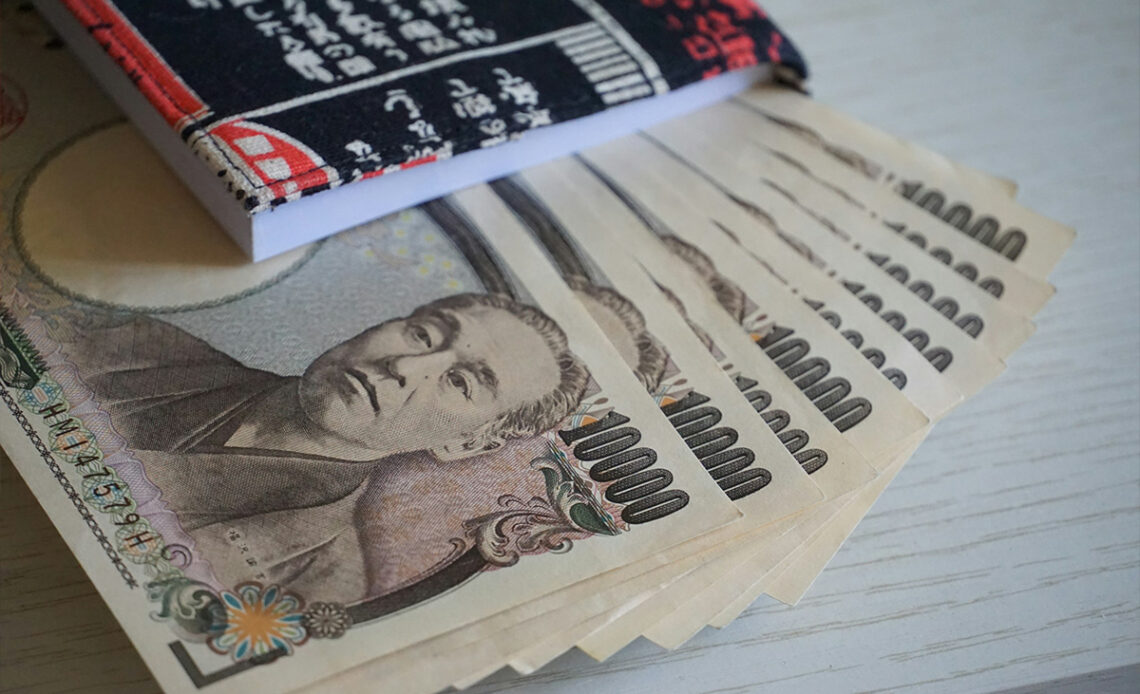
Financial markets are approaching an event that could become one of the most significant shifts in global liquidity in recent decades. The Bank of Japan (BoJ) is preparing to raise its benchmark interest rate to 1% – a level the country has not seen since 1995. The regulator announced the move through its official communications. While such steps were once viewed as a careful normalization process, markets are increasingly interpreting them as the end of the era of ultra-cheap money.
According to Bloomberg, economists estimate the probability of a rate hike at above 90%. On Polymarket, the scenario is almost fully priced in, with odds exceeding 99%. The central bank’s language is notably firm: it intends to keep the overnight call rate around 1% and continue adjusting rates in response to economic and inflation developments.
The decision was approved at the June 15-16 meeting by a vote of 7 to 1. Prior to the meeting, the policy rate stood at 0.75%. Japan is therefore taking another step along a tightening path that began after decades of near-zero and negative interest rates.
The End of the Negative Rate Era
The road to the current decision has been gradual but historically significant. In March 2024, the Bank of Japan raised rates out of negative territory for the first time since 2007, moving from -0.1% to a range of 0-0.1%. In January 2025, the rate increased to 0.5%, the highest level since 2008, driven by persistent inflation and wage growth. In December 2025, it was raised again to 0.75%.
Markets are now focused on the next milestone – 1%, a level that would have seemed unthinkable for Japanese monetary policy just a few years ago. At the same time, the central bank has confirmed that from April 2027 it plans to maintain monthly bond purchases of around ¥2 trillion while gradually reducing overall purchases as part of policy normalization. Even so, the rise in rates alone is already changing the structure of global capital flows.
Japan as the World’s Main Source of Cheap Money
For decades, Japan served as one of the largest suppliers of cheap liquidity to the global financial system. Zero rates and negative yields made the yen the ideal funding currency for carry trades – borrowing at almost no cost and investing in higher-yielding assets such as U.S. stocks, emerging markets, and cryptocurrencies.
That model is now beginning to break down. Higher rates mean higher borrowing costs in yen and lower attractiveness of carry trades. As a result, part of the global capital that flowed abroad may begin returning to Japan or shifting toward safer assets. Historically, this process has often acted as a trigger for turbulence across global markets.
Market History: A Familiar Signal with Growing Impact
Investors have already seen how risk assets react to Bank of Japan tightening:
- March 2024: S&P 500 -3.79%;
- July 2024: -7.02%;
- January 2025: -20.98%;
- December 2025: -7.07%.
In the past, such declines were quickly bought. The reason was simple: markets expected liquidity support from the Federal Reserve or other major central banks.
Today the situation is different. Cheap money is no longer available in either Asia or the United States on the scale investors once enjoyed. Oil prices remain elevated, while expectations for the Federal Reserve do not point toward aggressive easing. This creates an environment where liquidity shocks may have a more lasting effect.
Crypto Markets: A Highly Sensitive Zone
Particular attention is now focused on cryptocurrencies. Sudden changes in the global cost of capital typically increase pressure on risk assets. In such circumstances, crypto markets often react first through:
- cascading long liquidations;
- increased intraday volatility;
- capital rotation from altcoins into more liquid assets;
- downward pressure on Bitcoin if sentiment deteriorates.
That said, an immediate market collapse is not the base-case scenario. Much of the expected decision has already been priced in, and markets are currently benefiting from a more positive geopolitical backdrop, including optimism surrounding Donald Trump’s recent peace-deal rhetoric.
However, the combination of factors – higher Japanese rates, expensive energy, and ongoing geopolitical uncertainty – creates a fragile environment where any additional shock could amplify market moves.
A New Global Liquidity Balance
A move to 1% is not merely a domestic Japanese decision. It signals the end of an era in which one of the world’s largest economies supported global markets through decades of ultra-cheap capital.
The system is becoming more fragmented: less liquidity, higher capital costs, and faster reactions to stress. If markets previously operated under a “buy every dip” mentality, that reflex may become less reliable going forward.
Conclusion
The Bank of Japan is effectively rewriting the rules of global liquidity. While the change may appear small on paper – just 1% – in the context of global financial markets it represents a reversal of a decades-long trend.
Markets have already entered the anticipation phase. The question is no longer whether a rate hike will happen – it is largely priced in. The real question is whether this will prove to be a soft landing for Japanese monetary policy or the beginning of a broader global reassessment of the price of money.
All content provided on this website (https://wildinwest.com/) -including attachments, links, or referenced materials — is for informative and entertainment purposes only and should not be considered as financial advice. Third-party materials remain the property of their respective owners.