

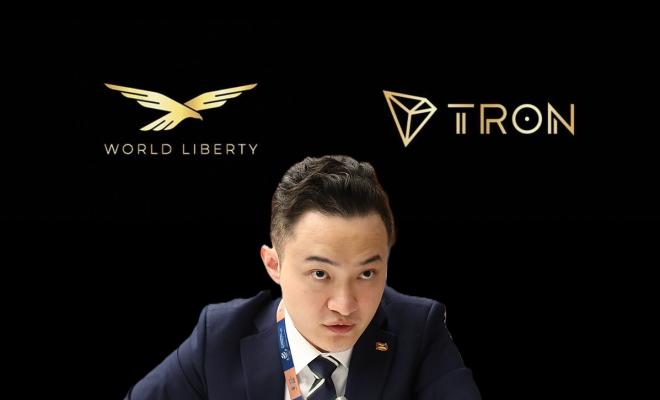
The scandal currently unfolding around a crypto project linked to the family of Donald Trump is not just another social media dispute. It is a story about trust, control over assets, and that very concept of “decentralization” that the industry loves to promote but does not always uphold in practice.
At the center of the conflict is Justin Sun, founder of the TRON blockchain and one of the largest investors in World Liberty Financial (WLFI). He publicly accused the project team of hiding a mechanism behind DeFi rhetoric that effectively gives developers full control over user funds.
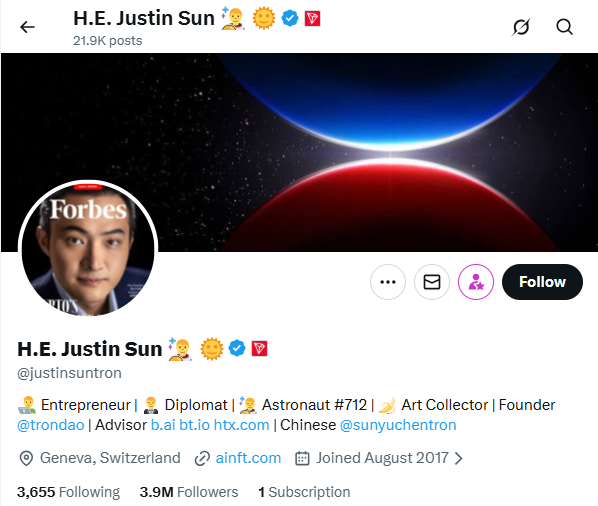
According to Sun, he initially supported the project because he believed in its stated vision: a decentralized financial platform that removes intermediaries and makes financial tools accessible to a broader audience. This is the classic DeFi narrative — freedom, transparency, and user control over assets.
However, Sun claims the reality turned out to be the opposite. He stated that the WLFI token smart contract contains a hidden function — essentially a “backdoor” — allowing the team to unilaterally freeze, restrict, and effectively seize tokens from any holder. Without notice, without explanation, and without the possibility of appeal.
If true, this is not just a technical feature but a fundamental contradiction to the idea of decentralization itself. In such a system, users do not fully own their assets — control remains with the developers.
Sun claims he personally experienced this: his wallet was allegedly blocked back in 2025. He even describes himself as the largest victim of such actions, given his significant financial investment in the project.
Another major part of his accusations concerns governance. According to Sun, the voting processes referenced by the WLFI team were not transparent: key information was withheld, participation was restricted, and outcomes were effectively predetermined. In other words, instead of decentralized governance, what exists is its simulation.
He also accused the team of using the community as a revenue source, comparing it to a “personal ATM.” In his view, users pay fees and trust the platform without realizing that control over their funds can be restricted at any moment.
WLFI responded quickly and in a characteristically sharp tone. Project representatives rejected all allegations, stating that Sun is “playing the victim” and making baseless claims to divert attention from his own actions. They emphasized that they possess contracts, evidence, and “the truth,” and ended their statement with a direct hint at legal action.
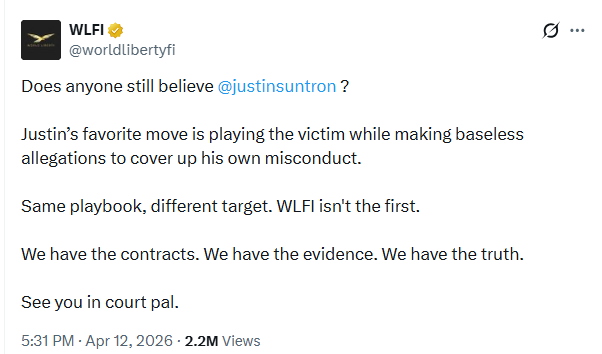
When a dispute escalates to “see you in court,” it is no longer just a disagreement — it becomes a potentially long and revealing legal battle.
It is important to understand that World Liberty Financial is not an unknown startup. Its association with a well-known political family and the involvement of a major figure like Justin Sun naturally increase investor trust. That is precisely why scandals like this hit harder — they affect not only a specific project but the reputation of the entire industry.
This case is illustrative on multiple levels.
First, it raises the recurring question of how “decentralized” projects really are. The presence of hidden functions in smart contracts — if confirmed — turns DeFi into a centralized system wrapped in appealing branding.
Second, it shows that even large, experienced investors are not immune to such risks. If someone with resources and access to information can end up in this situation, the risks for ordinary users are even higher.
Finally, it serves as a reminder of a fundamental rule that applies both in crypto and traditional finance: if you do not understand how a system works, you do not control your money.
Big names, political connections, and promises of “financial freedom” sound convincing. But in the end, only one thing truly matters — who actually controls the assets and under what conditions. Everything else, as practice shows, may turn out to be just well-crafted marketing.
All content provided on this website (https://wildinwest.com/) -including attachments, links, or referenced materials — is for informative and entertainment purposes only and should not be considered as financial advice. Third-party materials remain the property of their respective owners.