

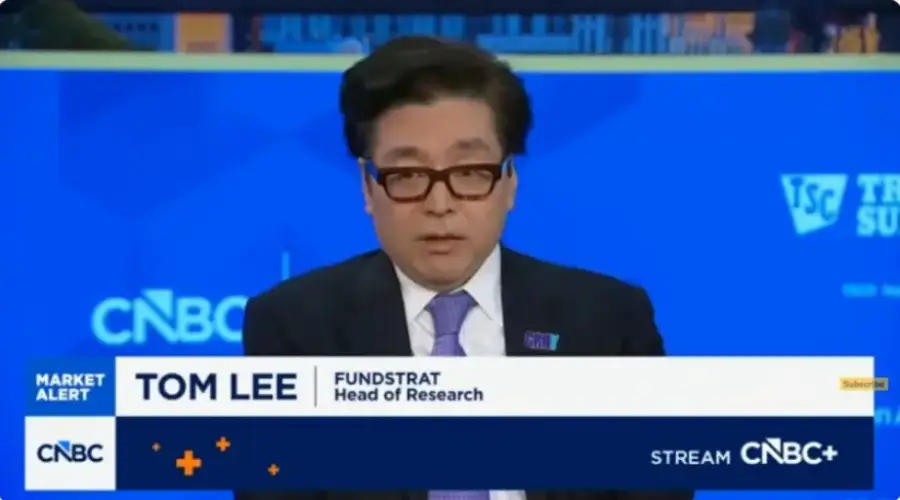
Over the next few years, Ethereum could surpass $62,000, said Fundstrat Global Advisors co-founder and BitMine Immersion Technologies chairman Tom Lee. The forecast sounds bold – and at first glance even too bold to take without skepticism. But once you break down the logic behind it, it becomes clear that this is less about a “magical number” and more about an attempt to describe what the next full crypto market cycle could look like.
Lee starts from a simple, almost classical idea: markets rarely reverse when things are calm, but rather when the flow of negative news reaches its peak. History supports this – whether wars, financial crises, or sharp macro shocks. These are the moments when bottoms form, because there are almost no sellers left and worst-case scenarios are already priced in.
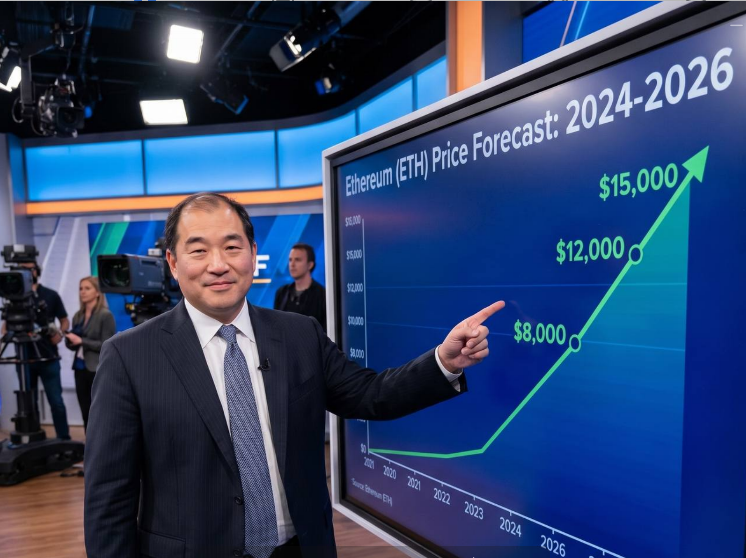
In the current environment, he sees a similar setup. Geopolitical tension, rising oil prices, uncertainty around monetary policy – all of this creates a backdrop of extreme caution. But this very backdrop, in his view, sets the conditions for a reversal. In simple terms, the market has already “digested” most of the negativity.
From this comes his concept of a “mini crypto winter”. This is not a full bearish cycle like in 2018 or 2022, but rather a cooling phase within a broader uptrend. Such periods are necessary for markets to reset excessive optimism, rebalance positions, and build a foundation for the next move higher.
Against this backdrop, the $62,000 Ethereum target looks like an extrapolation of several factors. The first is the correlation between crypto and equity markets. In recent years, the link between risk assets has strengthened, and if equities enter a sustained uptrend, crypto is likely to follow – with even higher volatility.
The second factor is the internal transformation of Ethereum itself. Lee is betting on two major themes: tokenization and the development of AI ecosystems. His logic here is pragmatic. Ethereum is not just a cryptocurrency – it is infrastructure. If real-world asset tokenization (from securities to real estate) gains traction, the main liquidity flows will likely run through platforms like Ethereum.
The same applies to artificial intelligence. The rise of autonomous agents interacting with each other and requiring payment infrastructure could create a new type of demand – not speculative, but functional. In this scenario, ETH becomes less an investment asset and more the “fuel” of a digital economy.
Another key point is his view on uneven recovery. Markets almost never move in sync. First come the most liquid assets – Bitcoin and Ethereum. This is a form of “probing the battlefield”: large capital enters where risk is lower and liquidity is deepest. Only later does money flow into altcoins and more speculative segments.
We have seen this pattern in previous cycles. If it repeats, Ethereum would again be at the center of attention in the early phase of recovery – positioned between Bitcoin and higher-risk assets.
Lee also links the recent downturn to a so-called “gold vortex” – a phase when capital flows into safe-haven assets like gold amid rising global uncertainty. In such moments, liquidity temporarily shifts from risk to safety. But once tension eases, the flow reverses.
This is where the key assumption of the entire forecast lies. It depends on the idea that current risks will not escalate into a systemic crisis. If that condition holds, the market has room to recover. If not, the scenario needs to be reassessed.
Therefore, the $62,000 figure should not be seen as a precise target, but as an upper bound of a bullish scenario under favorable conditions: equity market growth, Ethereum infrastructure expansion, liquidity returning, and easing geopolitical pressure.
In short, Lee’s position is this: the market has already passed the fear phase, is now in a doubt phase, and ahead lies a potential growth phase. The only question is whether this becomes the start of a new cycle… or just another pause before a more difficult chapter.
All content provided on this website (https://wildinwest.com/) -including attachments, links, or referenced materials — is for informative and entertainment purposes only and should not be considered as financial advice. Third-party materials remain the property of their respective owners.