


A memecoin surged by 1400% on the back of fake news about the death of a 193-year-old tortoise. On April 1, 2026, the cryptocurrency market once again reminded everyone that logic and common sense often go in different directions here. The trigger was a seemingly harmless post on the social network X (Twitter): a report about the death of the world’s oldest land tortoise named Jonathan.
According to the publication, posted by an account impersonating veterinarian Joe Hollins, the 193-year-old Jonathan had allegedly died. The post was written in an emotional tone and quickly spread across the platform. It described years of care for the animal, how it was hand-fed, and how its calm life was observed. Everything looked convincing enough to trigger a reaction from the audience.
The problem was that the news was fake. But the market, as often happens, reacted faster than fact-checking and healthy skepticism could kick in.
Amid the viral spread of the post, the JONATHAN memecoin on the Solana network surged sharply. According to data from DEX Screener, the token’s price jumped more than 1400% at its peak, reaching around $0.00038.
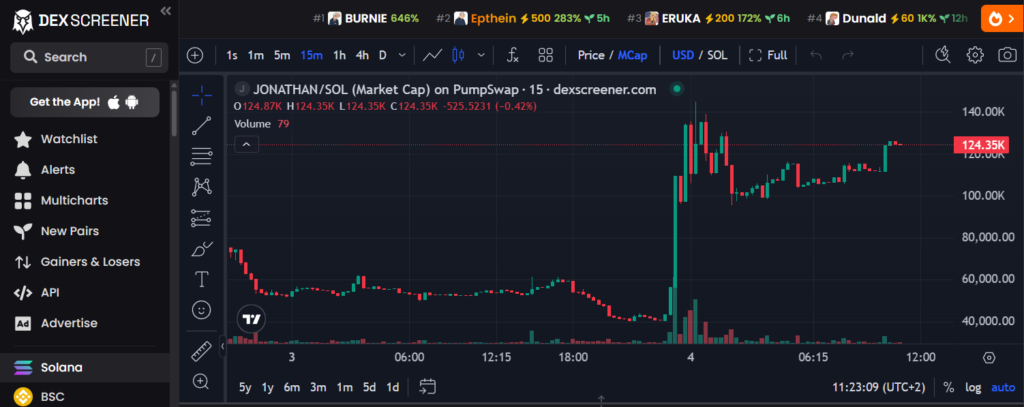
This surge was a classic example of memecoin behavior: the asset reacts not to fundamentals, but to информационный шум. And the more emotional and absurd the trigger, the faster short-term demand forms.
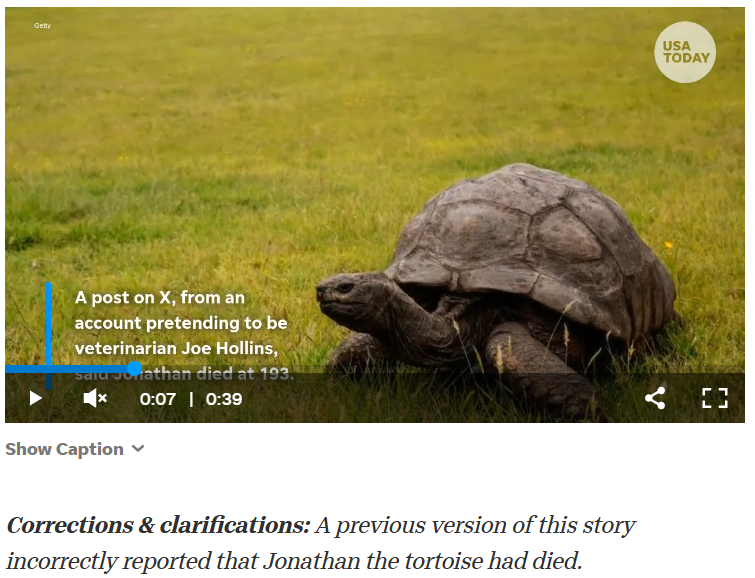
The story itself unfolded rapidly. The news of Jonathan’s “death” was picked up not only by users but also by some media outlets that did not verify the source in time. Only later was the information debunked. The account that posted the original message about the tortoise’s death has since been deleted. However, the post itself remains.

USA Today contacted the real veterinarian Joe Hollins directly, who confirmed that the tortoise is alive. Moreover, he stated that scammers are acting in his name, likely using the situation to collect cryptocurrency donations. According to him, this has nothing to do with April Fool’s jokes and is a classic fraud scheme. “I think that on X, someone impersonating me is asking for cryptocurrency donations, so this is not even an April Fool’s joke. This is fraud,” the veterinarian emphasized.
Meanwhile, the JONATHAN memecoin, as is typical in such stories, corrected just as quickly after its sharp rise. Investors who entered “on hype” began to take profits, and the price pulled back from its peak levels.
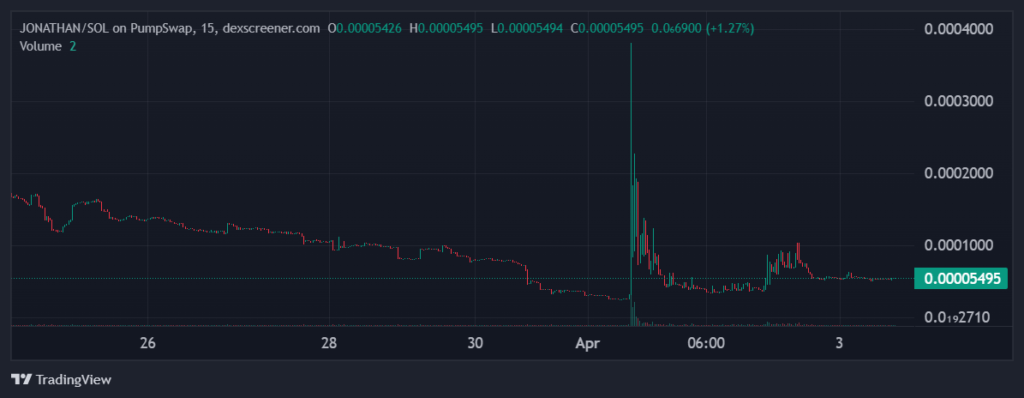
JONATHAN memecoin price. Source: DEX Screener.
It is important to note that the token itself has no official connection to the real animal or to the people mentioned in the story. It was launched back in the summer of 2025, and there is no evidence that the creators of the fake news and the developers of the token are in any way linked.
Jonathan himself is indeed a unique figure. He is the oldest known land animal, having spent most of his life on the island of Saint Helena. His age makes him a kind of living symbol of time, and this likely amplified the emotional impact of the fake news.
Such situations are not new to the crypto market. Memecoins regularly show sharp spikes driven by viral events, news, or even absurd информационные поводы. Similar surges have been seen in projects linked to animals, celebrities, or internet memes. One example is the PUNCH token, which rose on the back of a viral story about a Japanese macaque.
These cases highlight a key feature of the memecoin segment: it is a market of attention, not value. Prices are driven not by reports, technology, or business models, but by the speed of information spread and the emotional reaction of the audience.
For investors, this means a higher level of risk. Gains of hundreds of percent can occur within hours, but reversals happen just as quickly. In such conditions, trying to “time the entry” often turns into a probability game, where the winners are not the smartest, but the fastest or the most cautious.
The JONATHAN story is yet another reminder of how easily informational noise can turn into market movement. And at the same time, it highlights that in the era of social media, fact-checking remains just as valuable as fast internet.
Because, as practice shows, sometimes a single fake news story is enough… for the market to believe in it more than in reality, at least for a few hours.
All content provided on this website (https://wildinwest.com/) -including attachments, links, or referenced materials — is for informative and entertainment purposes only and should not be considered as financial advice. Third-party materials remain the property of their respective owners.