

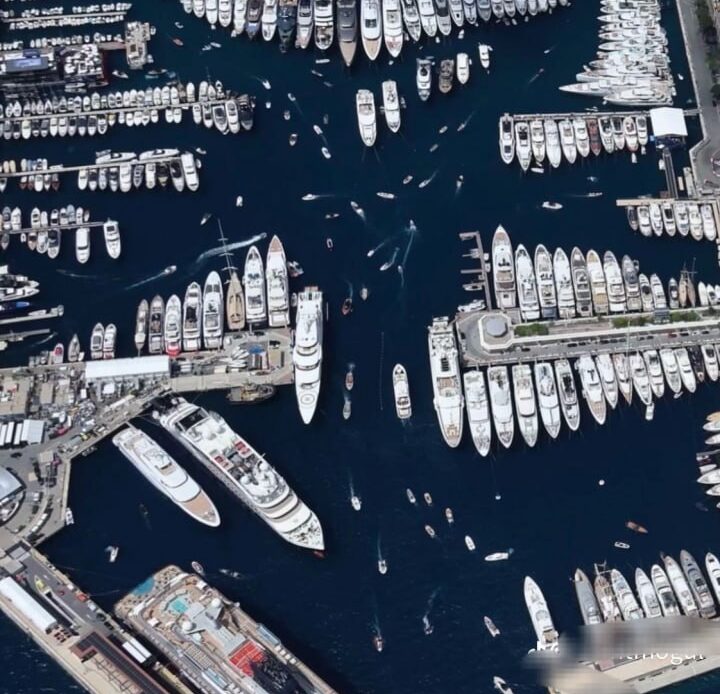
During the Formula 1 Grand Prix in Monte Carlo, the harbor of Monaco once again turned into one of the most expensive parking lots in the world. Hundreds of superyachts arrived for the legendary race, and the total value of the moored vessels, according to estimates from luxury market participants, reached about 4 billion dollars.
Many yacht owners paid more than 150 thousand euros just for a berth in the port with a view of the track. For the most prestigious positions, the cost of temporary mooring can be even higher, as demand for such spots significantly exceeds supply. Some guests arrived not only on yachts but also brought on board exclusive hypercars, including Koenigsegg and Bugatti models worth up to several million dollars each. Among the guests of the event were Donald Trump Jr., Kim Kardashian, Prince Albert II of Monaco, Michael Douglas, Catherine Zeta-Jones and many other representatives of global business, show business and aristocracy.
However, behind the bright photos there is a much more interesting economic story. For Monaco, Formula 1 has long been not just a sporting event, but a powerful tool for attracting capital. During the few days of the race, the principality receives income from hotels, restaurants, real estate rentals, yacht berths, transport, security, event organization and dozens of related services.
It is especially important that such events work as global advertising for the country. Millions of viewers around the world see not only the race, but Monaco itself as a center of wealth, investment and a luxury lifestyle. For a state with a population of less than 40 thousand people, this is effectively a marketing campaign on a global scale. It is not only Monaco that earns money. Around Formula 1 a whole economic ecosystem is formed. Yacht owners pay for crews, vessel maintenance, fuel, catering and technical support. Guests rent villas and hotel rooms at prices that can increase several times during the race weekend. Private aviation companies, luxury brands, jewelry houses and car manufacturers also use the race as a platform to work with the world’s wealthiest clients.
For the global luxury market, the Monaco Grand Prix remains one of the most important events of the year. Investment deals are concluded here, yachts and real estate are sold, new projects are discussed and business connections are formed. Often the value of contracts signed on the sidelines of the race far exceeds the cost of the sporting event itself.
In fact, Formula 1 in Monaco has long become not only a competition of drivers, but also the largest annual gathering of global capital. While spectators watch the battle on the track, in the port and in closed VIP zones a multi-billion-dollar luxury economy is operating, influencing far beyond the borders of the small Mediterranean principality.
All content provided on this website (https://wildinwest.com/) -including attachments, links, or referenced materials — is for informative and entertainment purposes only and should not be considered as financial advice. Third-party materials remain the property of their respective owners.