

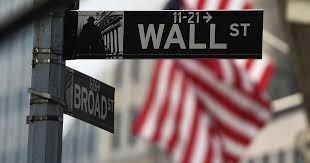
The U.S. stock market ended the trading session with a sharp reversal after three consecutive days of declines. Investor sentiment improved noticeably, but the main surprise was not just the rebound in indices, but a shift in the structure of growth: for the first time in recent sessions, the upward momentum was led not by large technology giants, but by small-cap companies.
Such a redistribution of leadership is often viewed as a broader and healthier recovery, where gains are not concentrated in one or two overheated sectors, but are instead supported by wider participation across different segments of the economy.
One of the key drivers of improved sentiment was the dynamics in commodity markets. Brent and WTI crude oil prices fell by nearly 10% over two trading sessions, dropping to around the $98 per barrel level. The pressure on prices intensified after reports of possible progress toward a peace agreement between the United States and Iran. For investors, this implies a potential reduction in the geopolitical risk premium embedded in energy prices, which typically supports risk assets, including equities.
Additional support came from the U.S. bond market. The yield on the 10-year Treasury note declined to 4.57%, easing pressure on equities, particularly in the growth segment. Falling yields are generally interpreted as a sign of reduced stress in the financial system and lower relative attractiveness of bonds compared to stocks.
Artificial intelligence remains a dominant force in the market narrative. After the close, Nvidia released an earnings report that marked one of its strongest in recent years. Quarterly revenue increased by approximately 85% to $81.6 billion, while net income more than tripled to $58.3 billion. The main driver of growth was the continued expansion of AI infrastructure and the emergence of the so-called “AI agent era,” where computing power becomes a core resource of the new digital economy.
Despite strong results in the tech sector, intraday dynamics showed an unexpected shift toward broader market participation.
The Russell 2000 small-cap index rose by 2.6%, breaking its recent losing streak and reclaiming key technical levels. Mid-cap indices also posted solid gains: the S&P SmallCap 600 rose about 2.1%, while the S&P MidCap 400 gained approximately 1.9%. By comparison, the tech-heavy Nasdaq rose 1.55%, and the S&P 500 advanced about 1.1%. This means that more traditional segments of the market outperformed the largest technology companies in percentage terms.
The Dow Jones Industrial Average gained 1.3%, moving closer again to the psychologically important 50,000-point level. One of the notable drivers was Goldman Sachs shares, which broke through a key buy level amid trading volumes significantly above average.
From a market structure perspective, such dynamics are often seen as a positive signal. When small and mid-cap companies begin to outperform large technology leaders, it can indicate broader economic optimism and a more even distribution of capital. In other words, investors start to believe not only in hype-driven sectors, but in the economy as a whole.
However, the current picture remains sensitive to external factors. The market continues to depend on commodity price dynamics, geopolitical developments, and monetary policy expectations. Some analysts already note that the recent declines in oil and bond yields may be temporary, and volatility could return if the macroeconomic backdrop shifts.
Against this backdrop, the current rebound opens selective investment opportunities, particularly in sectors sensitive to lower input costs and improving financial conditions. At the same time, the sustainability of the rally will depend on whether market participation continues to broaden beyond the technology sector.
This is now becoming the key question for investors: is the current reversal the beginning of a broader rally, or merely a short-term pause within an still-uncertain global economic environment.
All content provided on this website (https://wildinwest.com/) -including attachments, links, or referenced materials — is for informative and entertainment purposes only and should not be considered as financial advice. Third-party materials remain the property of their respective owners.