

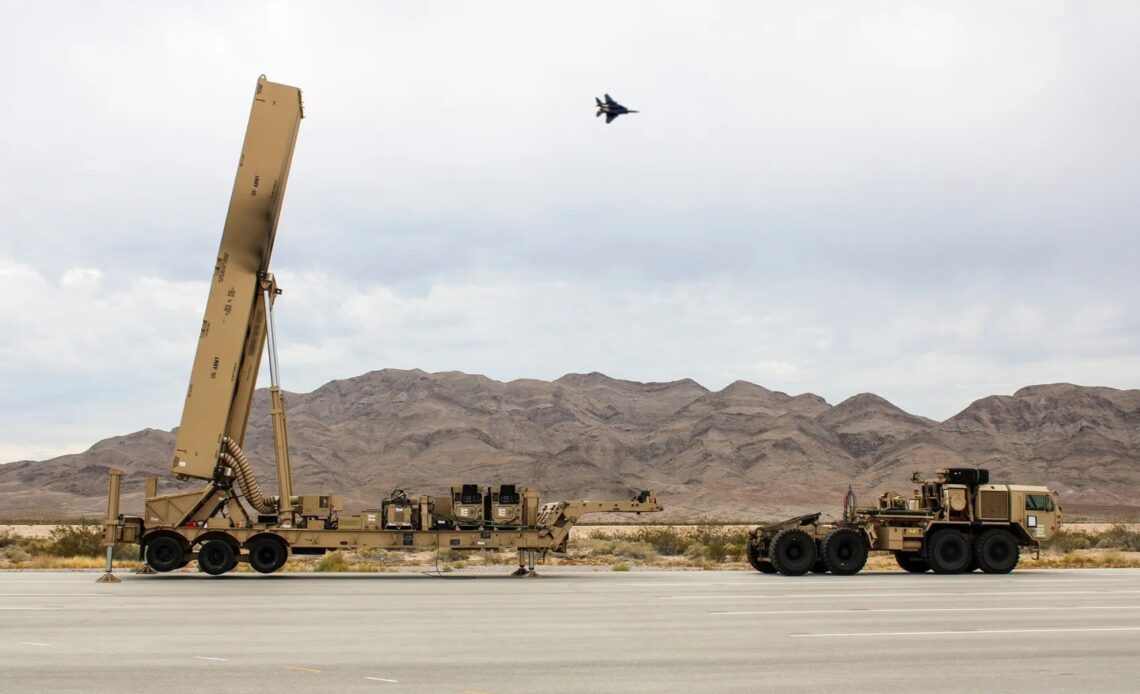
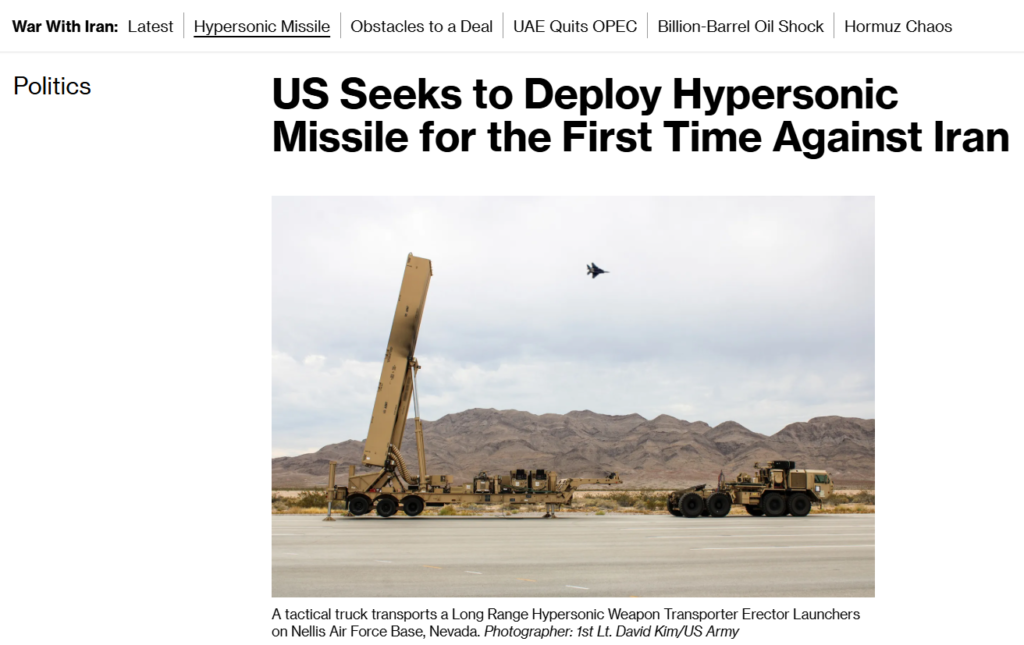
The situation around Iran is rapidly moving beyond the usual “sanctions routine” and is beginning to resemble a multi-layered pressure strategy, where military, financial, and technological tools are used simultaneously. According to Western media, the Pentagon is considering deploying Dark Eagle hypersonic missiles to the Middle East. This is not just another reinforcement of presence, but a qualitative shift in the level of military escalation: it is about weapons that are difficult to intercept and were originally designed as a tool of fast and precise pressure in high-risk conflicts.
At the same time, the economic direction is also developing. The U.S. Treasury has officially announced Operation Economic Fury — a comprehensive campaign aimed at undermining Iran’s financial infrastructure. As part of it, crypto assets linked to Iranian entities worth about $500 million have already been seized. This is an important signal to the market: cryptocurrencies, which for a long time were perceived as a tool for bypassing sanctions, are increasingly coming under the attention of regulators and becoming part of the global financial struggle.
The key feature of what is happening is the synchronization of actions. Military pressure is increasing simultaneously with financial pressure. This is a classic model in which one side not only limits the opponent’s resources but also demonstrates readiness for further escalation. As a result, a “compression” effect is formed, where room for maneuver is gradually shrinking.
Against this background, markets, paradoxically, remain relatively calm. Investors, judging by capital behavior, are not rushing to price in a scenario of a prolonged conflict or full isolation of Iran. The reason is that such geopolitical escalations have occurred more than once and often ended with a series of harsh statements without transitioning into a long phase of confrontation. Simply put, the market is used to doubting the most dramatic scenarios until factual confirmation appears.
Nevertheless, risks cannot be completely ignored. Escalation in the Middle East traditionally affects energy markets, inflation expectations, and global financial flows. And in current conditions, when pressure on digital assets is added, the impact becomes more complex.
From the perspective of the crypto market, the situation looks like a classic period of uncertainty. Bitcoin continues to hold near key levels, and the area around $75,000 remains an important support on both daily and weekly timeframes. The further direction will depend on price behavior in this zone. Holding the level may preserve the current market structure and give a chance for continued growth. Losing it will open the way for a deeper correction.
With Ethereum, the picture is less confident. The asset has been facing resistance around $2,400 for some time and cannot закрепиться above it. This indicates that buying strength here is weaker than in Bitcoin. In a negative market scenario, ETH may show a deeper decline. In such a configuration, a move toward $1,500 is possible, where the next significant level of interest lies.
If we put everything together, it forms a rather indicative moment for markets. On one side — growing geopolitical tension, military signals, and increased sanctions pressure. On the other — a restrained reaction of investors and an attempt to maintain rationality in risk assessment.
This is a typical situation where the market balances between news noise and real consequences. As long as events remain at the stage of statements and targeted actions, capital is not in a hurry to revise global scenarios. But the longer the pressure persists and the more tools are involved, the higher the probability that this “calm reaction” will be replaced by sharper movements.
That is why the current period requires not so much emotions as careful observation of levels and facts. The market can ignore risks for a long time, but when it starts to price them in, it does so quickly and without warning.
All content provided on this website (https://wildinwest.com/) -including attachments, links, or referenced materials — is for informative and entertainment purposes only and should not be considered as financial advice. Third-party materials remain the property of their respective owners.