

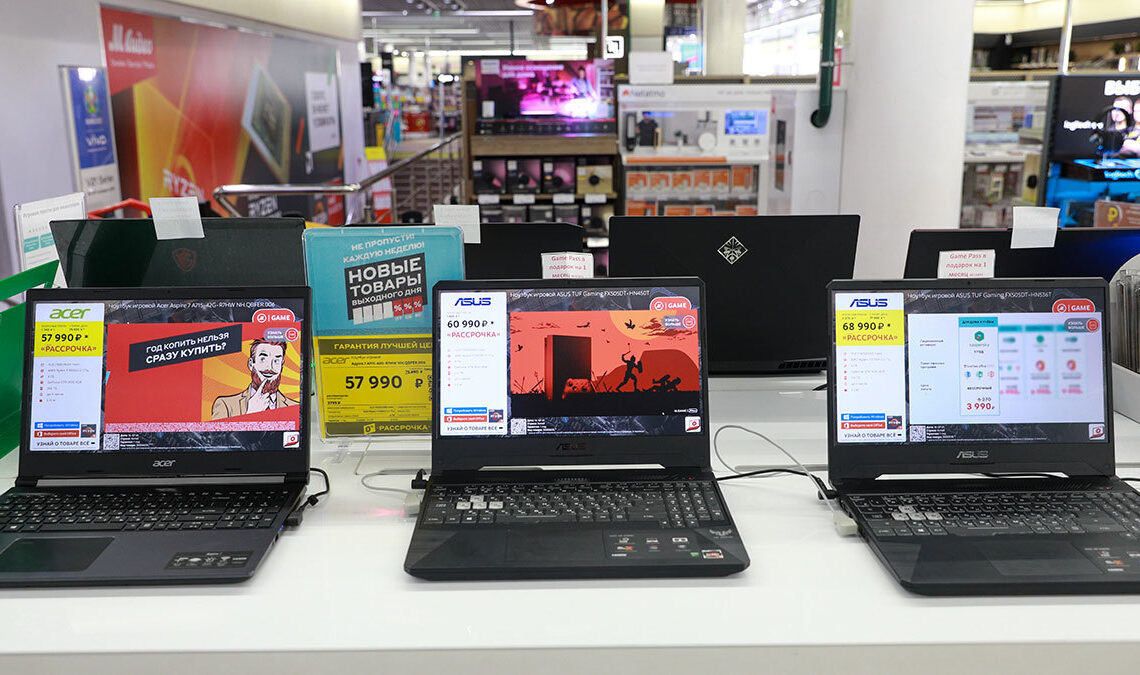
Reports about a possible tightening of rules for parallel imports of computer equipment starting from the end of May have caused a noticeable reaction in the market. According to media sources, this concerns adjustments to the list of goods that can be imported into the country without the consent of the rights holder. While previously the parallel import scheme allowed relatively free supply of a wide range of electronics, the rules may now become significantly stricter.
Formally, this is not a complete ban on all computer equipment. The restrictions apply to specific categories of goods defined by HS codes, as well as a number of popular brands. The list includes companies such as Acer, Asus, HP, Samsung, Intel, and ADATA. Products from these manufacturers, including components, laptops, server equipment, and peripherals, may fall under the new restrictions.
To understand the scale of potential consequences, it is important to understand how parallel imports work. Essentially, it is a mechanism that allows original goods to be imported without direct permission from the manufacturer, but through alternative supply channels. After 2022, this scheme became a key way to supply the market with equipment when official deliveries from many brands were reduced or stopped.
If the restrictions do come into force, this will mean that a significant portion of established supply channels will be closed. Importing without the rights holder’s consent will become impossible for a range of product categories. As a result, the market may face a classic supply compression effect. The first and most obvious consequence is rising prices. When supply decreases and demand remains, the market reacts in a fairly predictable way. This is especially true for segments where alternatives are limited: server components, data storage systems, professional GPUs, and corporate solutions. In these areas, replacing brands is often not only about price, but also about compatibility, certification, and existing infrastructure.
There is also a separate risk for the business segment. Telecom operators, data centers, and large companies depend on stable equipment supplies. This is not just about “hardware,” but entire ecosystems: servers, storage devices, and networking equipment that must work together. Limiting access to original components may complicate infrastructure upgrades and increase implementation timelines for new solutions.
For ordinary users, the impact will be more noticeable at the consumer level. Laptops, components, storage devices, and printers may become more expensive or less available. At the same time, the choice is likely to shift toward lesser-known brands or alternative suppliers, which may affect quality and service.
Interestingly, the market has already gone through similar adaptation phases. After previous restrictions, supply chain participants learned to quickly adjust, find alternative routes, and build new channels. Therefore, it is unlikely that equipment will disappear entirely. More realistically, it will become more expensive and logistics will become more complex.
There is also a longer-term effect. Such measures стимулируют развитие локальных решений и поиск новых поставщиков, including those from Asia. However, this process is not fast: replacing technological ecosystems requires time, investment, and testing.
In the end, a typical picture of restrictive measures emerges. Formally, the market does not shut down completely, but it becomes more fragmented and more expensive. Those who adapt quickly and build alternative supply chains benefit. Those dependent on specific brands and unprepared for change lose out.
And the key question here is not whether the equipment will disappear — it will not. The question is how much it will cost and how much harder it will be to obtain. In such conditions, the market usually finds new rules of the game quickly, even if they are not the most comfortable for the end user.
All content provided on this website (https://wildinwest.com/) -including attachments, links, or referenced materials — is for informative and entertainment purposes only and should not be considered as financial advice. Third-party materials remain the property of their respective owners.