

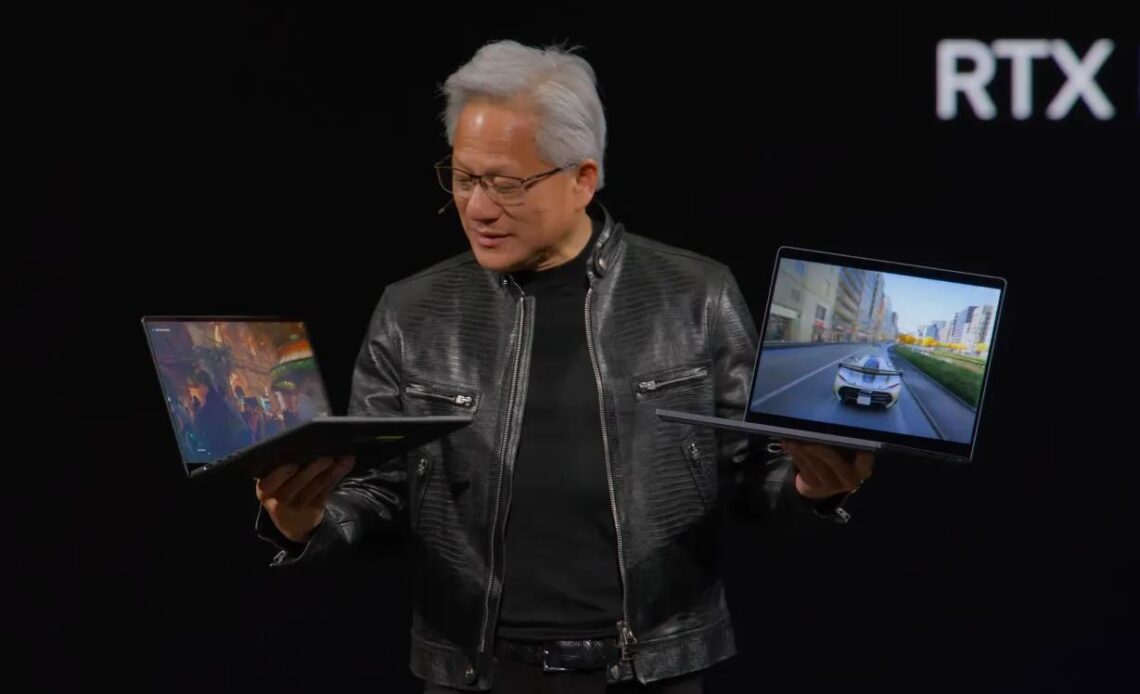
NVIDIA presented RTX Spark – “the most efficient PC chip in history”
NVIDIA officially presented RTX Spark – a new ARM chip for ultra-thin laptops and mini PCs, which the company already calls “the most efficient processor solution for personal computers ever created”. The new product is immediately positioned as a direct competitor to the Apple Silicon ecosystem and, above all, the MacBook lineup.
RTX Spark combines a 20-core Grace CPU, Blackwell architecture graphics, and integration with the full NVIDIA technology stack. The company is focusing not only on traditional performance, but also on a new PC usage scenario – local artificial intelligence that works without the cloud.
On the technical side, the platform looks like an attempt to erase the boundary between a laptop, a workstation, and a miniature AI server. RTX Spark supports up to 128 GB of unified LPDDR5X memory (minimum 16 GB) with bandwidth up to 300 GB/s via NVLink C2C. A key emphasis is placed on unified memory architecture – CPU and GPU work in a shared space without classical separation, which is critically important for running large language models and generative AI directly on the device. The graphics part is based on Blackwell and supports the full modern NVIDIA stack: CUDA, TensorRT, NVFP4, DLSS, Ray Tracing, Reflex, and G-SYNC. In fact, this is a full ecosystem transferred into a laptop form factor, where developers can run CUDA solutions without additional adaptations.
According to the company, RTX Spark performance in certain scenarios can reach the level of RTX 5070, which makes the platform interesting not only for AI workloads, but also for gaming, 3D graphics, and professional content.
NVIDIA separately emphasizes that RTX Spark was created for a new wave of computing tasks – primarily local AI models, diffusion generators, video processing, and next-generation assistants. In this context, the laptop stops being just a working device and becomes a personal computing node. The first RTX Spark-based devices are expected in autumn 2026. At the same time, the partner ecosystem looks large-scale: Microsoft (Surface Laptop Ultra), Asus (ProArt P14 and P16), Dell (XPS 16), MSI (Prestige N16 Flip AI), HP (OmniBook X14 Ultra 16), Lenovo (Yoga Pro 9i) and other manufacturers are preparing their solutions.
A separate direction is compact desktops. Acer, Asus, Dell, Gigabyte, HP, MSI and Lenovo are already working on RTX Spark Desktop solutions, which effectively extends the new platform beyond laptops and makes it a universal architecture for personal AI systems. The first commercial devices are expected in the coming months after shipments begin, however the mass market will form closer to 2026.
If the stated characteristics are confirmed in practice, the Windows laptop market may receive the first real technological counterweight to the MacBook in a long time – not as a catching-up competitor, but as an alternative computing platform with its own philosophy: more local AI, more power, and less dependence on the cloud.
All content provided on this website (https://wildinwest.com/) -including attachments, links, or referenced materials — is for informative and entertainment purposes only and should not be considered as financial advice. Third-party materials remain the property of their respective owners.