

“Minions-style” negotiations as a new form of information warfare
The confrontation between the United States and Iran is increasingly moving beyond traditional diplomacy and military rhetoric into the realm of digital media and symbolic gestures. The latest episode of this information escalation took an unexpected form – Iran used an AI-generated video featuring characters from the animated film “Minions” to mock Donald Trump’s rhetoric and American threats toward Tehran.
The trigger for the latest online exchange was a post by Donald Trump on the Truth Social platform on May 18. The post featured the U.S. flag with red arrows indicating potential strike directions against the territory of the Islamic Republic. The message was perceived as a demonstration of force and a hint at possible escalation, which immediately triggered a response in the Iranian information space.
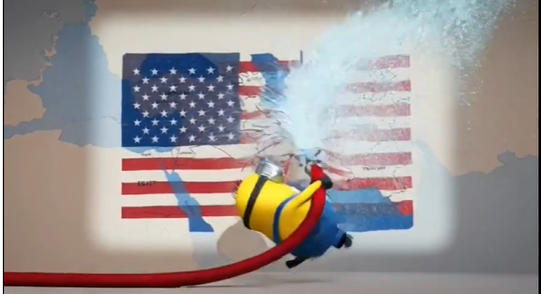
Tehran’s response was highly unconventional for traditional diplomacy and moved entirely into the realm of digital satire. Iran’s diplomatic mission in Ghana published a video created using artificial intelligence technologies. The storyline featured characters from the popular “Minions” animated franchise by Illumination.
In the video, styled as an animated scene, the Minions are shown dramatically “washing away” the American flag using water from a fire hose, after which it is replaced by a shield bearing the emblem of the Islamic Republic of Iran. The visual composition was designed to symbolize a reversal of the U.S. political message, turning a threat into an object of mockery. Iranian media and official accounts amplified the format, framing it as a response to American pressure rhetoric.
Several publications emphasize that the use of recognizable pop culture characters allows political messaging to reach a wider audience while simultaneously reducing the formality of traditional diplomatic communication, replacing it with satire and visual irony.
This effectively represents a new stage of information confrontation, where state actors increasingly rely on pop culture tools, memes, and artificial intelligence. While diplomatic conflicts were once expressed through official statements and diplomatic notes, a significant part of symbolic confrontation is now shifting to social networks, where speed of reaction and content virality often matter more than formal diplomatic status.
Such episodes demonstrate that modern geopolitical conflicts are increasingly unfolding not only in military and economic dimensions but also in the media space, where visual imagery, memes, and cultural codes have become tools of influence no less significant than traditional diplomacy.
A fragment of the video is available on our Telegram channel
All content provided on this website (https://wildinwest.com/) -including attachments, links, or referenced materials — is for informative and entertainment purposes only and should not be considered as financial advice. Third-party materials remain the property of their respective owners.