

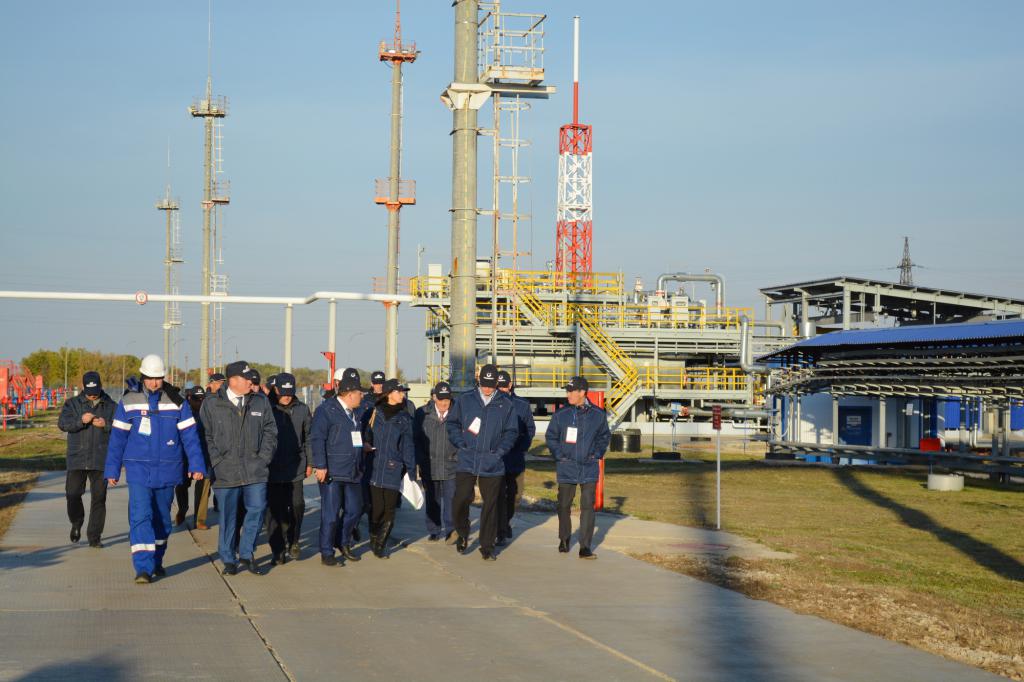
In April, oil production in Russia decreased by approximately 300,000–400,000 barrels per day — the sharpest monthly drop in the past six years, according to Reuters. The scale alone already looks significant, but more important are the causes and consequences, which extend far beyond a single country.
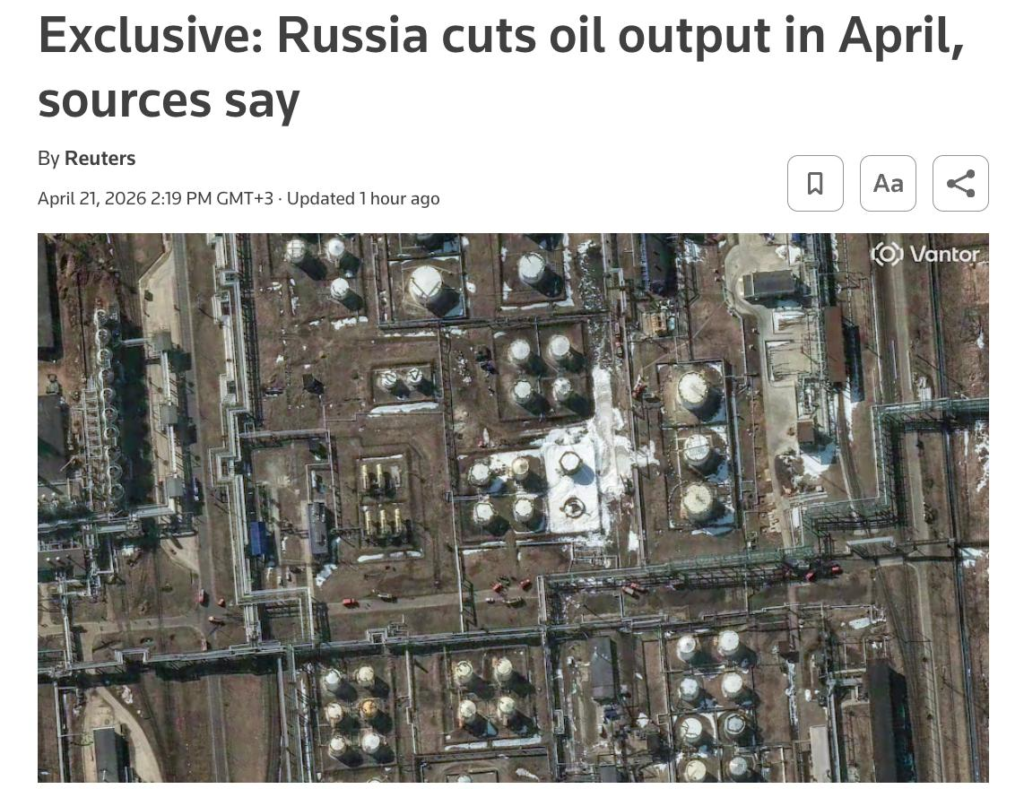
The key factor behind the decline is a series of strikes by Ukrainian drones on energy infrastructure. This is not about isolated incidents, but systemic pressure on critical nodes without which the “production — refining — export” chain begins to falter. Oil refineries, port infrastructure in the Baltic and Black Seas, as well as elements of the pipeline network have been targeted. This not only reduces current volumes but also limits the ability to quickly restore export flows.
Of particular importance is the situation surrounding the Druzhba pipeline — one of the key routes for oil supplies to Europe. Its partial or complete unavailability turns the problem from a production issue into a logistical one. Even if the oil is produced, delivering it to the end consumer becomes more difficult and expensive. In the energy sector, this is almost equivalent to a reduction in production itself.
Additional strain comes from the decision to halt the transit of Kazakh oil to Germany via the same route. Formally, this concerns supplies from Kazakhstan to Germany, but in practice it represents another element of overall instability. The European market, already balancing between different energy sources, gains a new factor of uncertainty.
The broader context makes the situation even more sensitive. Supply disruptions from the Middle East amid tensions around Iran amplify the domino effect. When multiple sources of risk begin to operate simultaneously, the market reacts not linearly but in sharp moves. Even a relatively small reduction in supply can lead to noticeable price movements.
For the global oil market, this is a signal that geopolitics is once again coming to the forefront. In recent years, market participants have become accustomed to OPEC+ decisions and macroeconomics playing the key role. Now, however, infrastructure risks and military factors are increasingly determining the balance of supply and demand.
From a pricing perspective, such a production decline is not catastrophic for the global market on its own, but in combination with other factors, it intensifies the overall supply deficit. This supports high oil prices and increases volatility. The market becomes more nervous: reactions to news accelerate, and the range of fluctuations widens.
For Europe, the consequences are more practical. Any supply disruptions mean rising costs, the need to urgently seek alternative routes, and, as a result, pressure on fuel prices and industry. Germany, as the largest economy in the region, finds itself in a particularly vulnerable position, as it must balance energy security with economic efficiency.
In a broader sense, what is happening demonstrates how fragile the global energy system remains. Even partial disruptions in logistics can trigger a chain reaction affecting multiple regions at once. This brings the market back to an old but often forgotten truth: in oil, it is not only reserves and production that matter, but also the ability to deliver the resource to where it is needed.
Thus, the April decline in production is not just a statistical deviation, but a reflection of a deeper trend. Energy is becoming increasingly dependent not only on economics, but also on geopolitics. This means that the period of relative predictability, to which markets had grown accustomed, is gradually giving way to an era of heightened uncertainty.
All content provided on this website (https://wildinwest.com/) -including attachments, links, or referenced materials — is for informative and entertainment purposes only and should not be considered as financial advice. Third-party materials remain the property of their respective owners.