


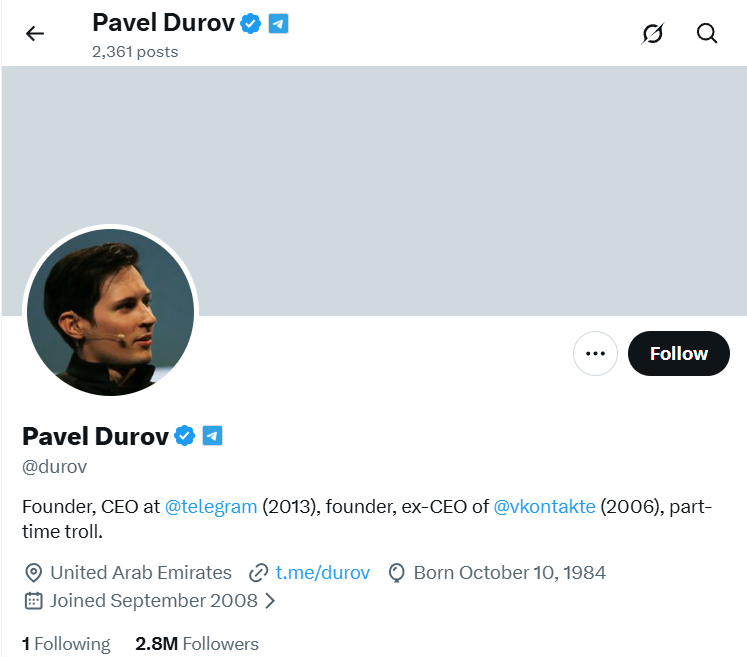
The founder of Telegram, Pavel Durov, delivered one of the sharpest public criticisms of European and British regulators in recent times. According to him, this is not merely about content regulation or user protection, but about a systemic practice of informal pressure on social platform executives.
Durov claims that representatives of major social networks are regularly offered “behind-the-scenes agreements” with government authorities. The essence of such proposals, as he describes it, is the voluntary restriction of certain types of content, primarily that which may be considered “politically sensitive” or “disinformation.” Formally, this is presented as cooperation in the field of security and user protection, but in practice, in his view, it turns into a tool for controlling the information environment.
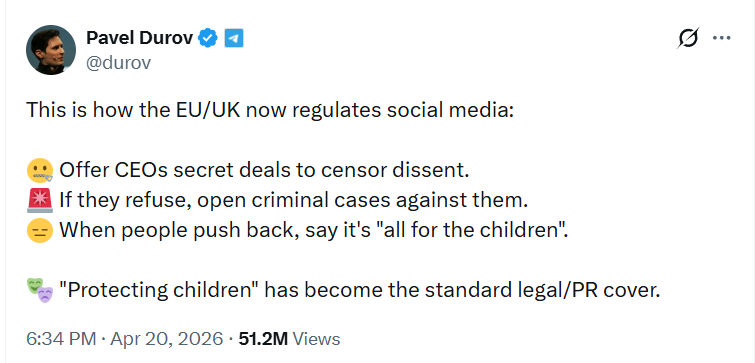
A key element of this scheme, as highlighted by Durov, lies in the following logic: first, companies are asked to informally align on moderation rules. If they refuse, formal legal pressure mechanisms are activated, including criminal cases and charges, often linked to the protection of children and the fight against prohibited content. He considers this aspect to be the central element of both public and legal pressure.
Durov expressed this quite bluntly, stating that the argument of “protecting children” has gradually become a universal justification for expanding digital control. According to him, this rhetoric carries strong emotional weight and helps reduce public resistance by appealing to basic instincts and security concerns: “When people resist, say it is ‘all for the children.’ ‘Child protection’ has become a standard legal and PR cover.”
At the same time, he recalled his own experience with European law enforcement. In August 2024, he was detained at a Paris airport as part of an investigation related to Telegram. He faced multiple charges, including allegations of insufficient moderation of prohibited content. In November 2025, travel restrictions were lifted, but the investigation continues, and potential penalties, according to him, could include lengthy prison terms.
Durov’s position was publicly supported by Elon Musk. He stated that he sees political motivation in the actions of European regulators and an attempt to pressure digital platforms through legal instruments. In his view, such processes go beyond standard regulation and touch on issues of freedom of speech and the independence of technology companies.
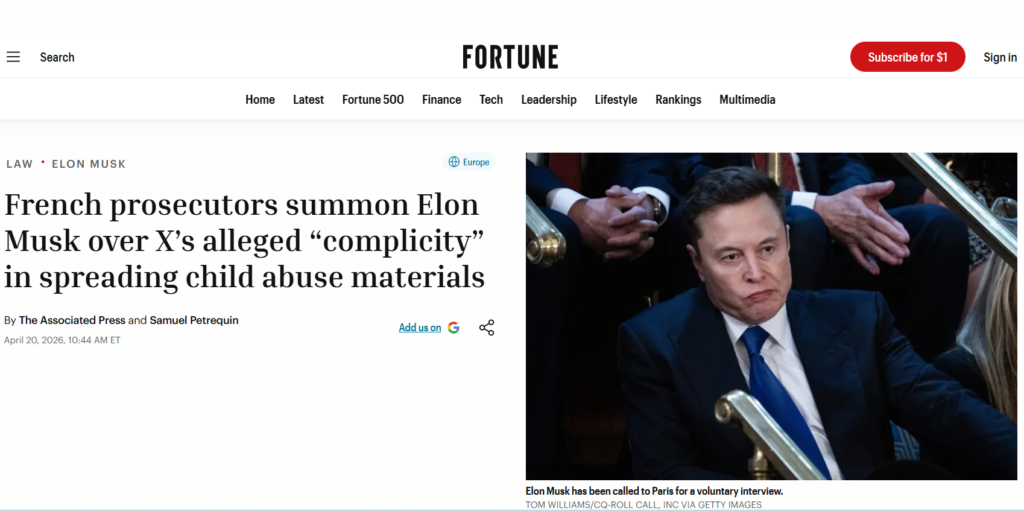
Additional tension was introduced by an investigation in France related to the platform X. Musk was summoned for voluntary questioning over allegations of spreading deepfakes and content involving violence against minors. Musk rejected the accusations and described the situation as a politically motivated attack.

The situation gained international resonance after the U.S. Department of Justice refused to comply with a French request for legal assistance. Washington stated that such actions may represent politically driven criminal prosecution and should not be used within international legal cooperation mechanisms.
Another element of the discussion was a speech by UK Prime Minister Keir Starmer on April 16 at Downing Street. He held a meeting with executives from major technology platforms, including X, Meta, Snap, YouTube, and TikTok. During the discussion, he emphasized the need to strengthen measures to protect minors online and suggested that if progress is not achieved, stricter restrictions could be considered, including potential limitations on children’s access to social media.
Starmer noted that public expectations regarding digital safety are rising, and parents are demanding faster and more effective action from technology companies. According to him, the government is ready to use all available tools to ensure the safety of minors in the online environment.
Against this backdrop, a broader picture of conflict is emerging between government regulators and digital platform owners. On one hand, governments are increasing pressure, citing the need to combat harmful content, disinformation, and threats to children. On the other hand, technology companies are increasingly warning about the risks of excessive state interference in information governance mechanisms.
The French investigation into X and the ongoing case against Telegram are becoming part of a wider trend in which the boundary between regulation of the digital environment and control over it is being defined. In the coming months, the development of these cases may reveal where the real balance lies between safety, freedom of speech, and political influence in the digital age.
All content provided on this website (https://wildinwest.com/) -including attachments, links, or referenced materials — is for informative and entertainment purposes only and should not be considered as financial advice. Third-party materials remain the property of their respective owners.