


At first glance, the situation looks paradoxical. Three major players in the aerospace and defense sector — RTX Corporation, Northrop Grumman, and GE Aerospace — are reporting results that look more than solid across most key metrics. Revenue is growing, profits are beating analysts’ expectations, order backlogs are expanding, and demand from governments remains consistently strong.
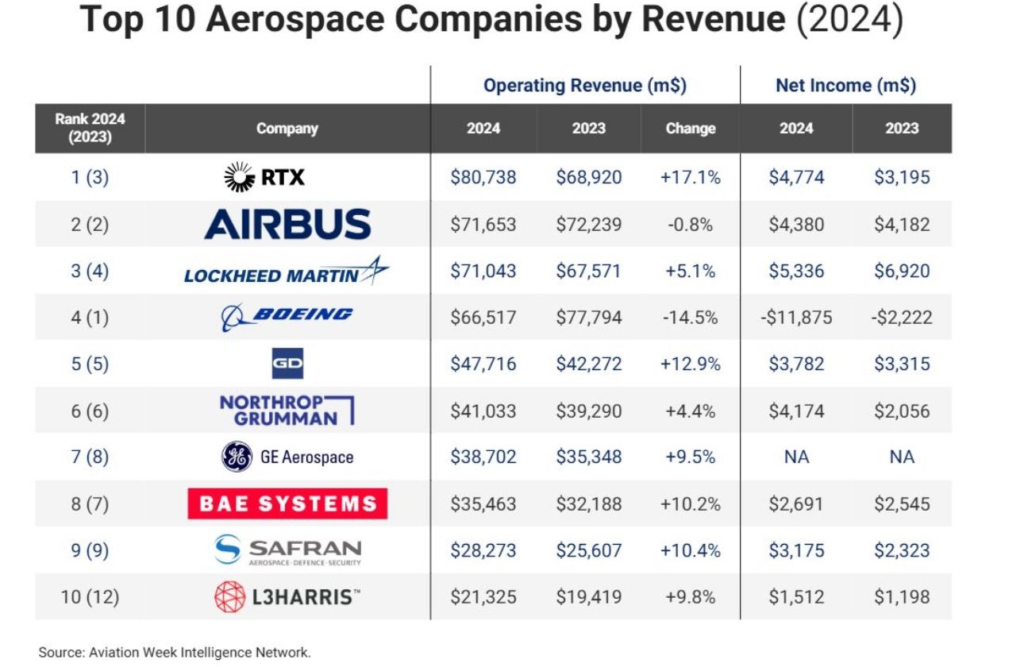
The broader backdrop also supports the sector. The Pentagon is requesting a record budget of around $1.45 trillion, with a focus on next-generation weapons, air defense systems, drones, and military modernization. Formally, this is close to an ideal environment for growth: funding is available, demand is strong, and geopolitics is pushing spending higher.
And yet, the market is reacting with declining stock prices. The reason is simple: markets do not trade on current numbers, but on expectations. And in this case, expectations turned out to be too high.
By the time earnings were released, a significant portion of the positive scenario had already been priced in. Back in March, investors actively moved into the sector, anticipating strong results and continued growth in defense spending. In effect, stocks were rising in advance — on future news. When that news became reality, the immediate upside potential turned out to be limited.
This is where the classic market rule applies: “buy the rumor, sell the news.” Even strong earnings can trigger a decline if they merely confirm the optimism already embedded in prices rather than significantly exceeding it. In such situations, large players lock in profits, shifting positions into cash, which puts pressure on stock prices.
There is also a second layer to this dynamic — expectations about future growth. Investors look not only at current performance but also at the pace of business expansion. If the market begins to doubt that growth will accelerate, even good results are perceived as “not good enough.” This is a subtle but important point: in highly valued sectors, the bar of expectations is always elevated.
In addition, the factor of capital rotation cannot be ignored. Once a sector has delivered strong performance, some investors begin looking for new opportunities in other parts of the market. This is a normal redistribution of capital and does not necessarily reflect fundamental problems within companies.
It is also important to consider the specifics of the defense industry. Despite massive budgets and long-term contracts, the business tends to grow in a relatively predictable manner and does not exhibit the explosive growth rates typical of technology companies. This makes the sector stable, but less “speculatively attractive” in the short term.
As a result, the current pullback looks more like a technical correction than a sign of trouble. Order books are filled years ahead, government spending remains high, and the geopolitical backdrop is unlikely to become calmer anytime soon.
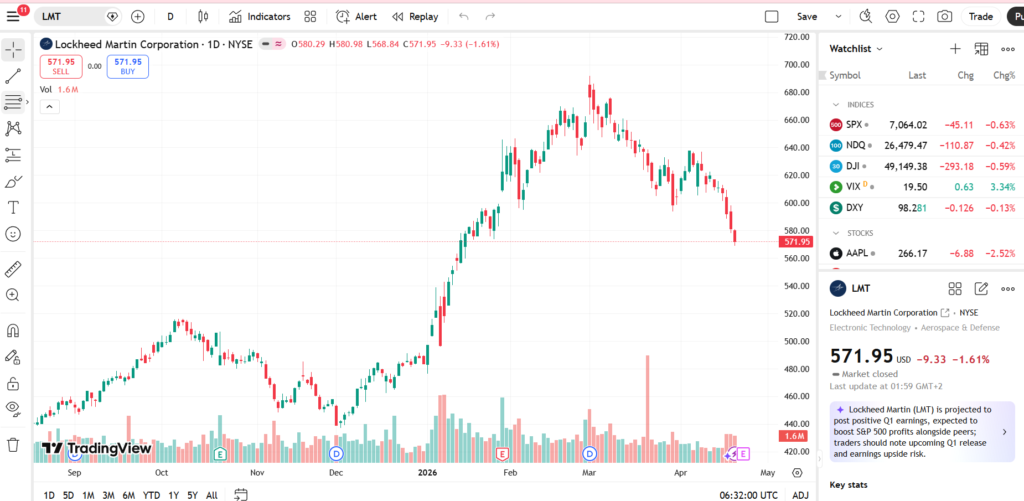
Attention now shifts to the next key trigger — the earnings report of Lockheed Martin. It may set the tone for the entire sector: either confirming the resilience of the trend or amplifying the correction if expectations once again prove too high.
From a practical standpoint, the key question for investors is not “why is it falling,” but “what to do about it.” And here it all comes down to time horizon and strategy. For long-term investors, current pullbacks may be seen as an opportunity to gradually build positions. For short-term strategies, the market may continue to “digest” the news and move without a clear direction for some time.
The main takeaway remains unchanged: strong numbers alone do not guarantee stock growth. What matters is how much they exceed expectations. In this sense, today’s market resembles a strict examiner — good answers are no longer enough, you have to impress.
All content provided on this website (https://wildinwest.com/) -including attachments, links, or referenced materials — is for informative and entertainment purposes only and should not be considered as financial advice. Third-party materials remain the property of their respective owners.