

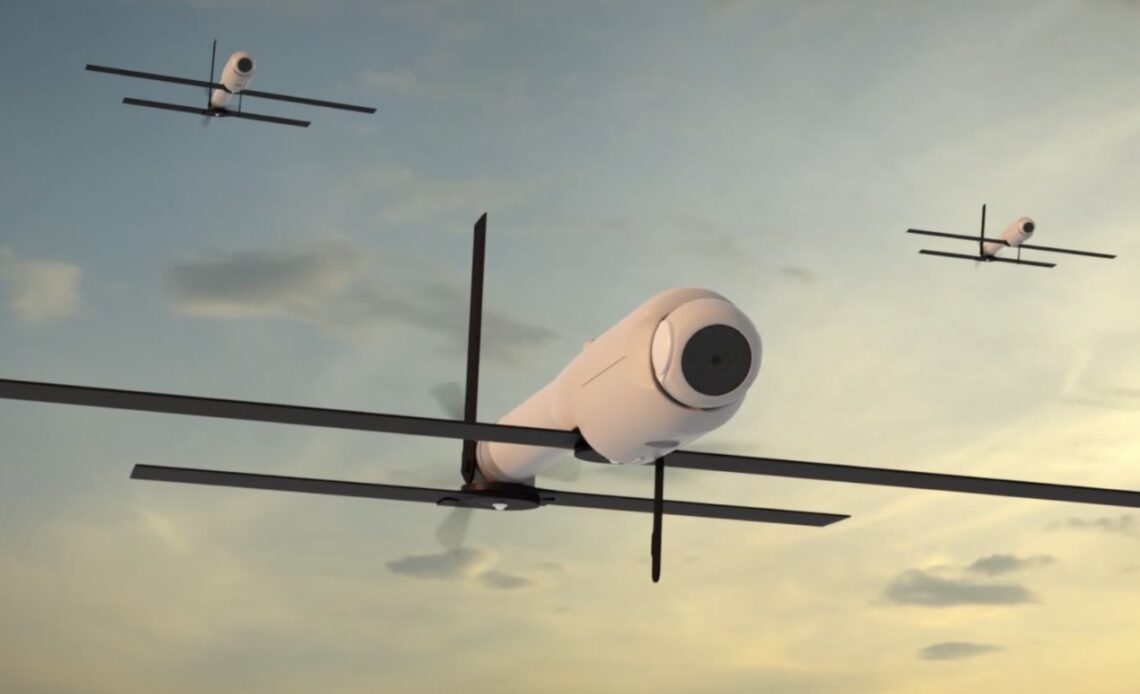
The market for unmanned aerial vehicles has recently become a major focus for investors and analysts. The trigger was news that the administration of Donald Trump is actively negotiating a new form of financing for key industry players. This is no longer just about traditional government procurement, but about a structural attempt to accelerate the development of the industry through direct state participation in company capital and large-scale expansion of production capacity.
In essence, the discussion is shifting from a “Pentagon as a customer” model to a “Pentagon as an investor” model. Under this concept, the US Department of Defense could use debt and equity participation mechanisms, including instruments from strategic capital offices. This implies a potential direct state entry into the capital of promising defense companies operating in autonomous systems and drone technologies.
The key driver behind this initiative is the rapidly increasing demand for modern combat systems. According to sources, the Pentagon has requested more than $54 billion for the development of its autonomous warfare division (DAWG). These funds are considered part of a broader program unofficially referred to as Drone Dominance, which aims to reach production levels of up to 300,000 drones by the end of 2027.
If implemented, these plans would effectively create a new industrial defense infrastructure comparable in scale to Cold War-era programs, but based on fundamentally different technological foundations. Instead of tanks and traditional aircraft, the focus is shifting toward mass-produced, low-cost, partially autonomous systems capable of operating alongside artificial intelligence and distributed command networks.
Investors reacted immediately to these signals. Stocks of companies linked to drone technology and defense systems surged on expectations of new government contracts and potential capital inflows from the state.
Among the most notable moves:
Unusual Machines (UMAC) gained more than 57%
Red Cat Holdings (RCAT) rose about 23%
AeroVironment (AVAV) increased by around 18%
Kratos Defense & Security Solutions (KTOS) added about 13%
Such synchronized sector-wide growth typically reflects not just one-day fundamentals, but a sharp increase in expectations regarding future contracts and long-term industry repricing. The market is effectively starting to price in a scenario where drones become not a supporting technology, but a core element of US defense strategy.
However, it is important to note that these developments are still at the discussion and preliminary review stage. Final decisions regarding funding structures and state participation have not yet been made. This means the market is largely reacting to expectations rather than confirmed contracts.
This is where the key risk for investors emerges. The defense technology sector is traditionally highly sensitive to news flow and political signals, making it capable of significant volatility even without fundamental changes. History shows that markets often overestimate the speed of government program implementation during such phases, especially when new mass-production technologies are involved.
On the other hand, the underlying industry trajectory appears structurally strong. Modern warfare and strategic planning are increasingly shifting toward autonomous systems, where scalable, low-cost and rapidly adaptable solutions play a central role. This creates long-term demand for drone manufacturers, control systems, sensors and software platforms.
Another major factor is the growing integration of artificial intelligence into defense technologies. Drones are increasingly viewed not as standalone units, but as part of networked systems capable of interacting with each other, analyzing real-time data and executing missions with minimal human intervention. This significantly expands the potential market and reshapes defense spending structures.
At the same time, analysts emphasize that the current rally in the sector is partially speculative. Many companies are already trading at elevated valuation multiples due to expectations of future government funding. In such an environment, even small delays in program approvals or budget revisions could trigger sharp corrections.
In the long term, the key success factor will not be the receipt of government support itself, but the ability of companies to scale production, reduce costs and maintain consistent product quality at mass deployment levels. These parameters will determine which players become permanent parts of the new defense ecosystem and which remain short-term beneficiaries of an information-driven boom.
Ultimately, the drone market today sits at the intersection of technology, geopolitics and capital. If the Pentagon’s plans are fully implemented, this could represent one of the most significant structural shifts in the defense industry in decades.
All content provided on this website (https://wildinwest.com/) -including attachments, links, or referenced materials — is for informative and entertainment purposes only and should not be considered as financial advice. Third-party materials remain the property of their respective owners.