

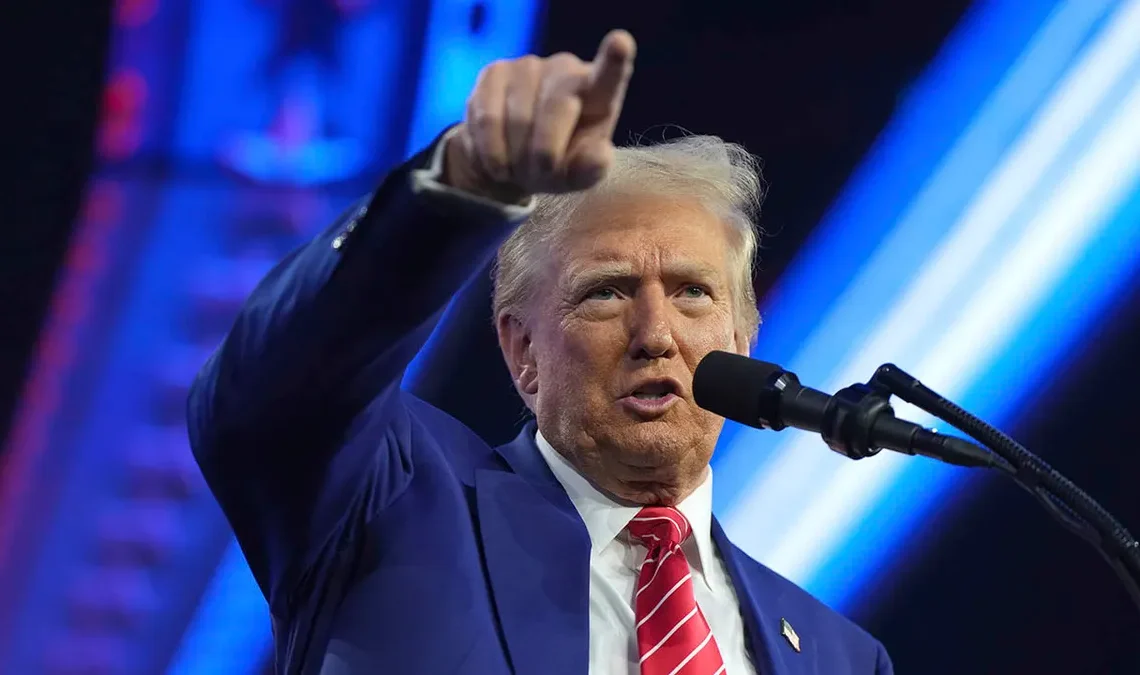
In mid-spring 2026, one of the most widely discussed cases of political influence on market sentiment emerged in the technology stock space. The trigger was a public remark made by Donald Trump on May 8, in which he stated in his characteristic style: “Go out and buy a Dell, they’re great” — effectively recommending investors to look at shares of Dell Technologies.
At the time, the statement appeared more like a political-media soundbite than a market-moving factor. However, subsequent developments turned it into one of the most striking episodes of recent market dynamics.
Just 19 days later, on May 27, it became known that Dell had secured a major Pentagon contract worth $9.7 billion. The deal involves large-scale procurement of technological infrastructure and equipment for the US defense sector. For the company, this was not just another contract, but confirmation of its key role in government and enterprise IT projects.
Market reaction was immediate and extremely aggressive. Following the release of stronger-than-expected financial results, Dell shares surged by roughly +30% in a single trading session. Investors interpreted the combination of strong earnings and a major government contract as a signal for a higher valuation.
The following day, momentum intensified further: in pre-market trading, Dell shares were up around +40%, reflecting continued buying pressure and strong speculative interest.
When the entire trajectory is combined, the picture becomes particularly striking. Since Trump’s statement on May 8, Dell shares have risen by approximately +92%, adding more than $120 billion in market capitalization. This represents one of the sharpest rallies among major technology corporations over a comparable period.
It is also noted that since the beginning of 2026, Dell’s stock performance has reached around +246%, placing the company among the absolute leaders of the tech sector in terms of capitalization growth this year. This performance is driven not only by political remarks or individual contracts, but also by sustained demand for infrastructure solutions, server systems, and enterprise IT products, which remain critical amid the global expansion of artificial intelligence and data centers.
In the expert community, this case is already seen as an illustration of several broader trends. First, the growing influence of public political statements on short-term market dynamics. Second, the increasing dependence of the tech sector on government contracts, particularly in defense and infrastructure. And finally, the overall overheating of investor interest in companies positioned at the intersection of multiple macro trends.
At the same time, analysts emphasize that such moves are rarely linear. Rapid capitalization growth is often followed by increased volatility and a consolidation phase. However, the fact that a single public comment was associated with such a massive market move has already become a topic of discussion among market participants.
Ultimately, the Dell story has become a clear example of how politics, government contracts, corporate earnings, and market expectations intersect in today’s financial system. And while markets formally move based on fundamentals, such episodes increasingly demonstrate how powerful the information environment can be in shaping the valuation of major technology companies.
All content provided on this website (https://wildinwest.com/) -including attachments, links, or referenced materials — is for informative and entertainment purposes only and should not be considered as financial advice. Third-party materials remain the property of their respective owners.