

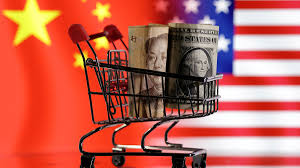
Against the backdrop of public diplomacy and repeated statements about stable relations between the United States and China, a less visible but strategically important process is unfolding in the financial system. China is gradually reducing its holdings of U.S. government bonds, lowering its exposure to dollar-denominated assets while also diminishing its role as the largest foreign creditor of the United States.
According to data from the U.S. Treasury Department and market estimates, China’s holdings of U.S. Treasuries have declined to approximately $693 billion, the lowest level since 2008. This reduction is not a one-off move but a structural trend that has been ongoing since 2022, when Beijing began accelerating the rebalancing of its foreign exchange reserves. Formally, this is explained by diversification and a reduction in concentration in dollar assets. However, in a broader context, it coincides with rising geopolitical tensions, trade restrictions, and concerns about potential financial confrontation, including sanctions risks and possible asset freezes.
For many years, China was one of the largest holders of U.S. government debt and effectively acted as a key external stabilizer of demand for Treasuries. Its gradual withdrawal from this role is reshaping the balance in the U.S. sovereign debt market.
The mechanics of this process are systemic in nature. A reduction in demand for government bonds from a major foreign buyer means that the government must attract financing at higher yields. Long-term U.S. bond yields are already elevated, with 30-year Treasuries exceeding 5 percent, reflecting a combination of high interest rates, inflation expectations, and risk premiums.
Rising yields directly affect borrowing costs across the entire economy. The U.S. federal budget is facing increasing debt servicing costs, already exceeding one trillion dollars annually. At the same time, the budget deficit remains high and is projected to approach $2 trillion in 2026, further increasing debt pressure.
A classic macro-financial feedback loop emerges. Higher debt increases borrowing needs, higher borrowing pushes yields up, and higher yields increase debt servicing costs. In such a system, even moderate changes in demand from large players can amplify overall stress.
Monetary policy adds another layer. High inflation limits the Federal Reserve’s ability to aggressively cut interest rates. As a result, the cost of money in the economy remains elevated for longer than is comfortable for both the federal budget and the corporate sector.
Against this backdrop, China’s actions can be interpreted as part of a strategic restructuring of its reserve model. Instead of concentrating in dollar assets, there is a gradual shift toward other instruments and currencies. Formally, this appears as neutral diversification, but in practice it alters the global demand balance for U.S. debt.
It is important to emphasize that there is no direct evidence of a deliberate financial attack. Neither side frames the process in such terms. However, within a systemic analysis of international finance, it can be seen as a form of indirect pressure arising from rational market behavior under geopolitical uncertainty.
As a result, a more complex picture emerges. On one hand, public diplomacy reflects an effort to maintain manageability in relations between the world’s largest economies. On the other hand, financial flows are gradually shifting, weakening the stability of the previous global credit model in which the U.S. was the primary debt issuer and China one of the key buyers.
This divergence between political messaging and structural market changes is becoming one of the defining features of the current phase of the global economy.
All content provided on this website (https://wildinwest.com/) -including attachments, links, or referenced materials — is for informative and entertainment purposes only and should not be considered as financial advice. Third-party materials remain the property of their respective owners.