

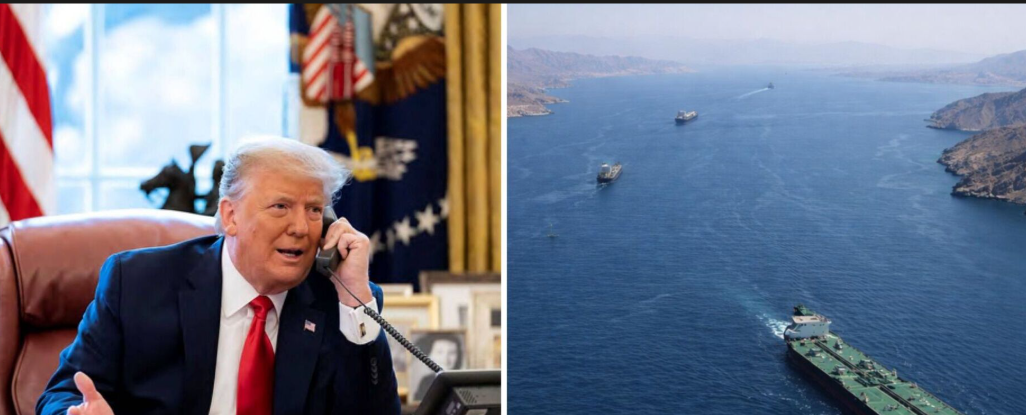
The situation surrounding the Strait of Hormuz, one of the world’s most important energy routes, remains uncertain despite Donald Trump’s high-profile statements about reaching an agreement with Iran. The U.S. president said that the blockade of the strait is effectively being lifted and that vessels previously stranded in the region can resume their journeys. However, Iranian officials and several U.S. media outlets argue that no final agreement has yet been reached.
The Strait of Hormuz is critically important to the global economy. A significant share of the world’s oil and liquefied natural gas exports passes through this narrow maritime corridor between the Persian Gulf and the Gulf of Oman. Any disruption to traffic through the strait immediately affects energy markets, oil prices, and investor sentiment worldwide.
According to Trump, the parties have moved closer to resolving the crisis. Under the outlined conditions, Iran would abandon the pursuit of nuclear weapons, guarantee freedom of navigation through the Strait of Hormuz, remove any remaining naval mines, and allow the extraction and destruction of nuclear materials that survived recent U.S. strikes on various facilities.
Trump’s remarks were presented as if a deal had effectively been reached. He also suggested that the crisis is nearing its end and that threats to global oil supplies are gradually fading. For financial markets, this was seen as a positive signal, as even the prospect of stabilization in the Strait of Hormuz could reduce the geopolitical risk premium embedded in energy prices.
However, conflicting reports emerged almost immediately afterward. Iranian news agency FARS described Trump’s statements as a “mixture of truth and falsehood,” arguing that negotiations are still ongoing and that the proposed agreement remains under internal review and ratification in Iran. From Tehran’s perspective, it is still too early to declare the crisis resolved.
Additional uncertainty came from American sources. According to several media outlets, including The New York Times, no final decision on the agreement was made even after a lengthy meeting in the White House Situation Room. This suggests that disagreements remain within the U.S. administration regarding the terms of any potential deal and the next steps in relations with Iran.
In practice, there are currently two competing narratives. The first is Trump’s version, which suggests that the core elements of a settlement have already been agreed upon and that both sides are in the final stage of implementation. The second is the version presented by Iran and parts of the U.S. media, according to which negotiations are still ongoing and no final agreement has been approved.
The importance of this issue for global markets is difficult to overstate. The Strait of Hormuz remains one of the most critical components of the world’s energy infrastructure. Millions of barrels of oil pass through it every day on their way to Asia, Europe, and other regions. Any threat to its closure can trigger sharp increases in oil prices, rising inflation risks, and greater instability across financial markets.
Investors are watching developments closely not only because of the energy implications. A potential agreement between the United States and Iran could become a major geopolitical event affecting the entire Middle East. If a deal is ultimately reached, it could help reduce regional tensions and lower the risk of further military escalation.
For now, however, the situation remains unresolved. Trump is already speaking as though a breakthrough has been achieved, while Tehran and parts of the American political establishment continue to view the negotiations as unfinished. As a result, the key question is no longer whether the Strait of Hormuz will reopen, but whether a final agreement actually exists.
At this stage, it can only be said that the parties appear to be moving closer to a compromise, but the process has not yet been completed. Markets will therefore continue to monitor every new statement from Washington and Tehran, since the outcome of these negotiations will influence not only the future of the Strait of Hormuz but also the direction of the global energy market in the months ahead.
All content provided on this website (https://wildinwest.com/) -including attachments, links, or referenced materials — is for informative and entertainment purposes only and should not be considered as financial advice. Third-party materials remain the property of their respective owners.