
Cerebras Systems (CBRS) went public on Nasdaq with such noise that the market seemed to return for a day to the era of the first AI euphoria, only now with real money, profits, and industrial orders. The company, which many call a potential “Nvidia killer,” did not just conduct an IPO but effectively staged a show of strength: investor interest was so high that the offering range had to be revised during the deal preparation. And instead of the initially expected $115–125, the price moved to $185, which in itself is already a signal of overheated demand even before the first trading day.

Then what is known in market slang as the “initial expectation surge” began. On the first trading day, the stock rose to nearly $385, and the closing took place at $311.07, giving a gain of about 68% in a single session. For an IPO of this scale, this is not just a good start, but an indication of how strongly the market is currently overvaluing any company associated with AI infrastructure. Essentially, investors are voting not for current revenue, but for the right to be inside the next technological cycle.

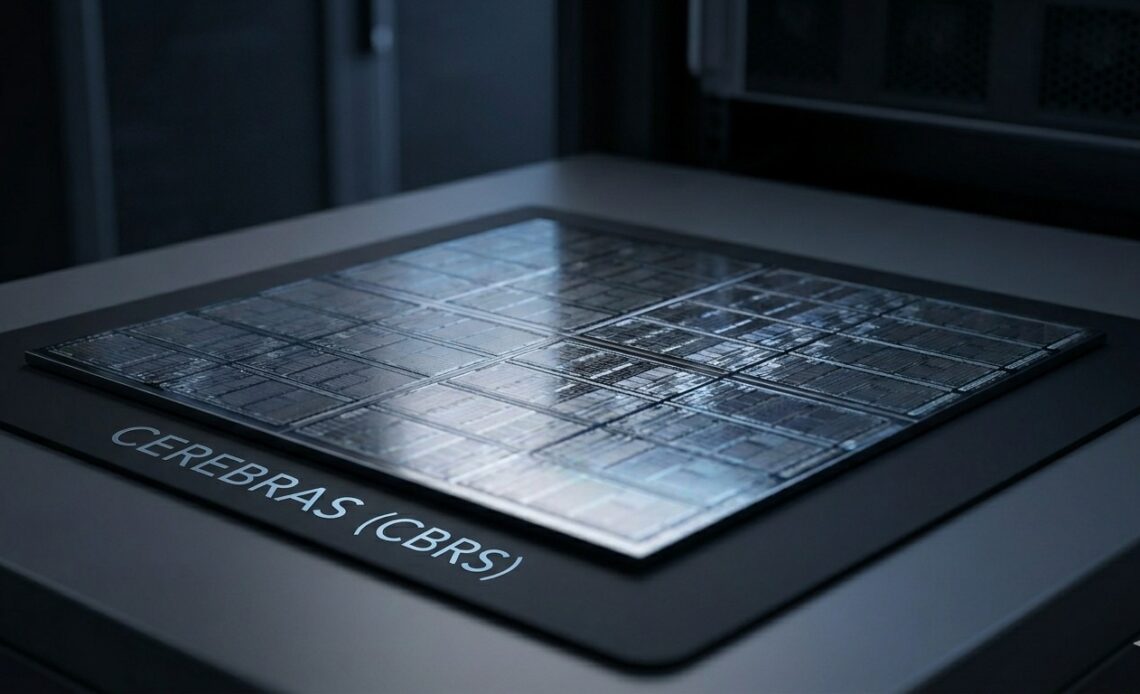
But the key reason for interest in Cerebras is not the price, but the technology. The company is betting on wafer-scale architecture, meaning chips that are created not as separate processors but as a single wafer. This is a fundamentally different approach to AI computing. One such chip contains about 4 trillion transistors and roughly 900 thousand computing cores, which allows solving neural network training tasks at a level that traditionally requires massive GPU clusters. That is why Cerebras is often compared to Nvidia, although it is more accurate to speak not of a direct replacement, but of a competing computing philosophy: not scaling through thousands of graphics cards, but an attempt to concentrate all power in one superchip. Against this background, the financial result is especially important, which looks unusually mature for a tech IPO. In 2025, the company reported net income of about $237.8 million with revenue of around $510 million, which means growth of about 76% year over year. For a market accustomed to startups with losses in exchange for growth, this is a rare case where the “future of technology” story is already backed by real money, not just presentations and roadmaps.

An additional factor of trust is formed by clients and partnerships. Among them are OpenAI and Amazon, and chip production is carried out at TSMC facilities. This automatically places the company in the category of players embedded in the global AI infrastructure, rather than an isolated technological experiment. And such connections often become a key argument for institutional investors.

Against this backdrop, the question of competition with Nvidia naturally arises. While Nvidia remains the dominant player in the GPU segment and model training infrastructure, Cerebras is trying to occupy a niche of an alternative computing approach. And although it is premature to talk about a direct displacement of the leader, the very fact of the emergence of a profitable competitor in the AI chip segment is already changing the structure of market expectations. Especially given that demand for AI computing power continues to grow faster than supply.

However, along with enthusiasm comes a more pragmatic part of the picture. The market has already shown on the first trading day how strongly it can “heat up” such stories. Growth of dozens of percent in a single session almost always means increased volatility going forward. This is not a situation where the price moves linearly. On the contrary: after a sharp impulse, a period of sharp pullbacks, profit-taking, and reassessment of valuations begins.

From an investor’s perspective, this is a classic moment of choice between short-term speculation and a long-term bet on technology. In the first case, the risk of catching a correction is very high; in the second, the bet is that over time the market will begin to value not IPO emotions, but real contracts, revenue, and share in AI infrastructure.

In a broader context, Cerebras’ market debut shows that the artificial intelligence market is entering a new phase. If previously the main focus was on software models and startups around them, now the focus is increasingly shifting to companies that build the physical foundation of this industry – chips, data centers, and computing platforms.

And that is why this debut is perceived not just as a successful IPO, but as another signal: the race for AI infrastructure is only beginning, and it is no longer enough to simply be a “market participant.” You either need to create standards or try to rewrite them.

0
0
Disclaimer

All content provided on this website (https://wildinwest.com/) -including attachments, links, or referenced materials — is for informative and entertainment purposes only and should not be considered as financial advice. Third-party materials remain the property of their respective owners.

Leave a Reply

Your email address will not be published. Required fields are marked *

Related posts
Disruptive technologyNewsStock research & analytics

SpaceX and its IPO filing

The SpaceX IPO could become one of the most significant capital market events of the decade – both…
Read more
CryptocurrencyNewsStock brokersStock research & analytics

Are traders shifting to crypto?

On X (Twitter), screenshots and discussions are spreading suggesting that some traders operating in…
Read more
NewsStock brokersStock research & analytics

4 giants and an all-time high

While the broad market is taking a pause and digesting macroeconomic risks – from interest rates…
Read more
Telegram
Subscribe to our Telegram channel

To stay up-to-date with the latest news from the financial world

Subscribe now!