
NewsStock brokersStock research & analytics

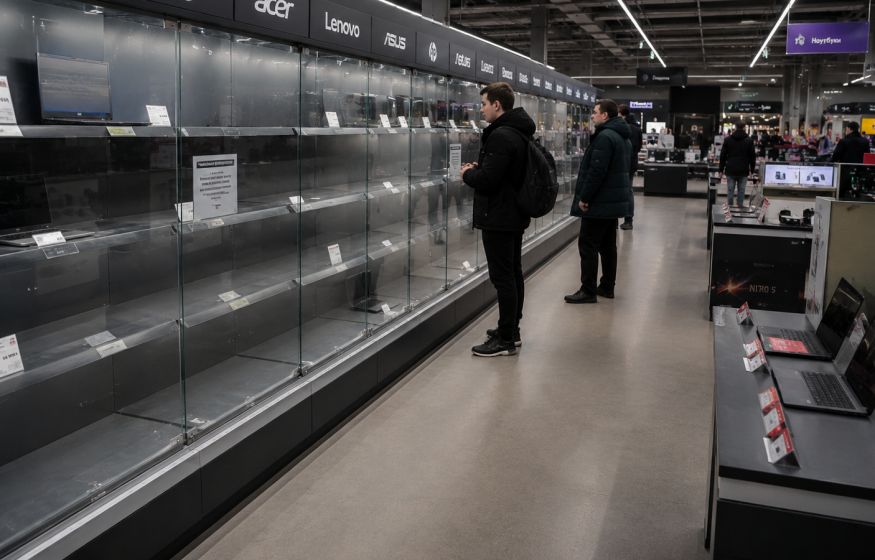
Laptops “through the gray channel” are no longer getting through: Russia changes import rules

Join our Trading Community on Telegram

Starting today, new restrictions on parallel imports of electronics and computer hardware have officially come into force in Russia. The changes concern the list of goods that were previously allowed to be imported without the direct consent of trademark owners through so-called “gray” or parallel import schemes. After 2022, this mechanism became one of the main ways Western technology continued to enter the Russian market outside official distribution channels.

Now, a wide range of global brands and product categories has been removed from the approved parallel import list. The restrictions cover laptops, computers, server equipment, hard drives, SSDs, monitors, and other electronics from companies such as Acer, Asus, HP, Fujitsu, Hitachi, IBM, Intel, Kingston, Samsung, Toshiba, and others.

In practice, this means that from May 27 suppliers can no longer legally import such products without authorization from the trademark owners. Since most major global manufacturers have either significantly reduced or fully stopped direct shipments to Russia after 2022, the market is entering a new zone of uncertainty.

Parallel imports were introduced by Russian authorities as an emergency anti-crisis measure following the exit of many international companies. The scheme allowed importers to purchase goods through third countries such as Turkey, the UAE, Kazakhstan, China, and others, and then resell them domestically without the brand owner’s consent.

Thanks to this mechanism, products such as new iPhones, Asus laptops, Intel processors, Samsung devices, and many other goods continued to appear on the Russian market despite the official withdrawal of Western companies.

Now the situation is changing. For retailers and businesses, the new restrictions mean higher legal and logistical risks. Goods imported without authorization outside the approved list may be held at customs, banned from sale, or even confiscated. There is also an increased risk of claims from trademark holders.

Market experts are already warning that the consequences will likely be reflected in prices. The more complex the logistics and the higher the legal risks, the more expensive imports become. These additional costs are likely to be passed on to end consumers.

The issue is especially sensitive in the laptop and components segment. The Russian market has been heavily dependent on foreign manufacturers of processors, memory, storage devices, and computer electronics. Intel, Kingston, Samsung, and other brands have long formed the backbone of both consumer and enterprise IT infrastructure.

The Ministry of Industry and Trade, however, states that no serious shortages are expected, arguing that some products are already being replaced by domestic production or supplies from “friendly” countries.

This raises a key question: whether Russian manufacturers are truly capable of fully replacing global brands in the mass-market segment.

Formally, Russia does have its own IT and electronics projects, ranging from laptops based on domestic processors to local assembly lines. However, much of this production is either focused on the public sector or still lags behind global alternatives in price, performance, or scale.

In addition, even many “Russian” devices still depend on foreign components delivered through complex import chains.

Interestingly, the restrictions are not limited to computer hardware. Some consumer goods were also removed from the list, including Braun electric shavers and Biorepair oral care products. This indicates that authorities are gradually reassessing the parallel import framework itself, narrowing categories previously considered critical for the market.

On a broader level, this reflects a gradual transformation of the country’s economic model in recent years. After the initial emergency opening of gray import channels, the government is shifting toward a more selective approach: localizing some products, replacing others with Asian supplies, and restricting certain categories to stimulate domestic production.

However, the electronics market remains one of the most globalized industries in the world. The production of processors, memory chips, displays, and other components is deeply integrated into international supply chains dominated by the United States, Taiwan, South Korea, and China.

This is why even with strong support for local manufacturers, fully isolating the market from global technology brands remains extremely difficult.

For consumers, the effects may appear gradually: reduced product variety, higher prices, longer delivery times, and more complicated warranty support. This is especially true for the enterprise segment, which relies on stable supplies of servers, components, and specialized equipment.

In effect, the Russian electronics market is entering a new phase — no longer just adapting to sanctions, but attempting to restructure the entire system of technology imports. The key question now is not only whether individual brands can be replaced, but whether the new supply model itself can remain stable under ongoing technological isolation.

0
0
Disclaimer

All content provided on this website (https://wildinwest.com/) -including attachments, links, or referenced materials — is for informative and entertainment purposes only and should not be considered as financial advice. Third-party materials remain the property of their respective owners.

Leave a Reply

Your email address will not be published. Required fields are marked *

Related posts
Disruptive technologyNews

A new Silicon Valley image?

 Mark Zuckerberg has unexpectedly found himself at the center of a new cultural aesthetic now often…
Read more
CryptocurrencyNewsStock research & analytics

Fortune Most Powerful Women Ranking

Binance co-CEO and co-founder Yi He has been included in the annual Fortune Most Powerful Women 2026…
Read more
Disruptive technologyNewsStock brokersStock research & analytics

Ferrari “outdid itself”

  First EV Luce priced at $640,000 Ferrari has officially unveiled its first fully electric car…
Read more
Telegram
Subscribe to our Telegram channel

To stay up-to-date with the latest news from the financial world

Subscribe now!