

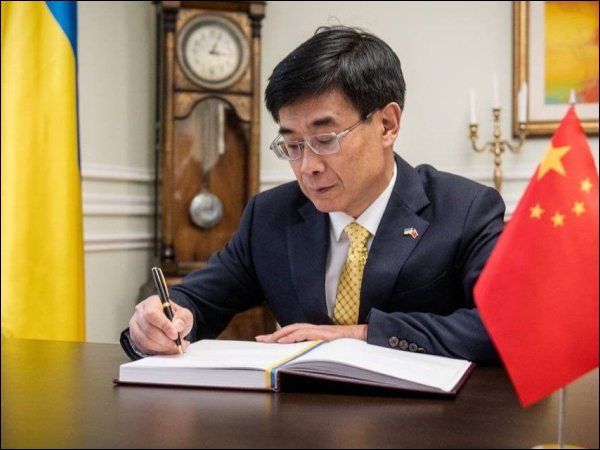
The idea that Bitcoin may have been created not by a single individual but with the involvement of state structures periodically resurfaces in expert and market-adjacent discussions. The statement by Beijing professor Jiang Xueqing, already dubbed the “Chinese Nostradamus” in the West, is less a new theory and more a refined version of long-standing doubts presented in a sharper form.
In his version, the key argument is scale. Creating Bitcoin required not only writing code but also a deep understanding of cryptography, network protocols, game theory, and economic incentives. The system had to function without a central authority, be resilient to attacks, and at the same time incentivize participants to maintain the network. This is not just “good code” — it is an architecture that solves several complex problems from day one.

Hence the logic: such a level of design supposedly resembles the work of a resource-backed team more than that of a single individual under the pseudonym Satoshi Nakamoto. The creator’s anonymity only strengthens this hypothesis: if it was not an individual, then disappearing from the public space looks like a deliberate decision.
The second argument is based on historical parallels. The professor draws a line between blockchain and technologies such as the internet or GPS, which were indeed developed with government involvement. For example, DARPA played a key role in creating early network protocols, which later moved into the civilian sector. By this logic, blockchain could have followed a similar path: first as an experiment, then as an “open” technology.
This is complemented by references to the CIA as a symbol of institutions capable of running long-term technological projects with a high level of secrecy. Within this framework, Bitcoin could have been either a research tool or an attempt to build an alternative financial infrastructure with a predefined architecture.
However, it is important not to confuse an interesting hypothesis with proven reality. There is no direct evidence supporting this version. Moreover, many elements of Bitcoin are based on open scientific developments that existed long before its creation: cryptographic hash functions, proof-of-work, and the concept of digital money. Satoshi, more likely, assembled these elements into a working system rather than inventing them from scratch.
There are also counterarguments. Government projects usually leave traces — leaks, documents, indirect confirmations. In the case of Bitcoin, over more than 15 years, nothing of that kind has been found. Additionally, the very nature of the network — decentralized and uncontrollable — does not fit well with the logic of tools designed for management or control.
Another important point is motivation. If we assume that a state was indeed behind Bitcoin’s creation, the question arises: why release a system that cannot be controlled? This contradicts the fundamental logic of centralized institutions.
More likely, such theories reflect attitudes toward the idea of Bitcoin rather than actual facts. For some, it is a technological breakthrough; for others, it is too “perfect” to be accidental. When a system operates reliably without an obvious center, there is a natural temptation to look for a hidden architect.
In the end, the “intelligence-agency project” version remains at the level of speculation. It is interesting as an intellectual exercise and an attempt to explain the origin of a complex technology, but it does not go beyond a hypothesis. Meanwhile, the market operates not on theories but on practice: regardless of who stood at the origins, Bitcoin has long become a self-sustaining system that evolves according to its own rules — sometimes contrary to everyone’s expectations.
A video excerpt of the interview can be viewed on our Telegram channel
All content provided on this website (https://wildinwest.com/) -including attachments, links, or referenced materials — is for informative and entertainment purposes only and should not be considered as financial advice. Third-party materials remain the property of their respective owners.