

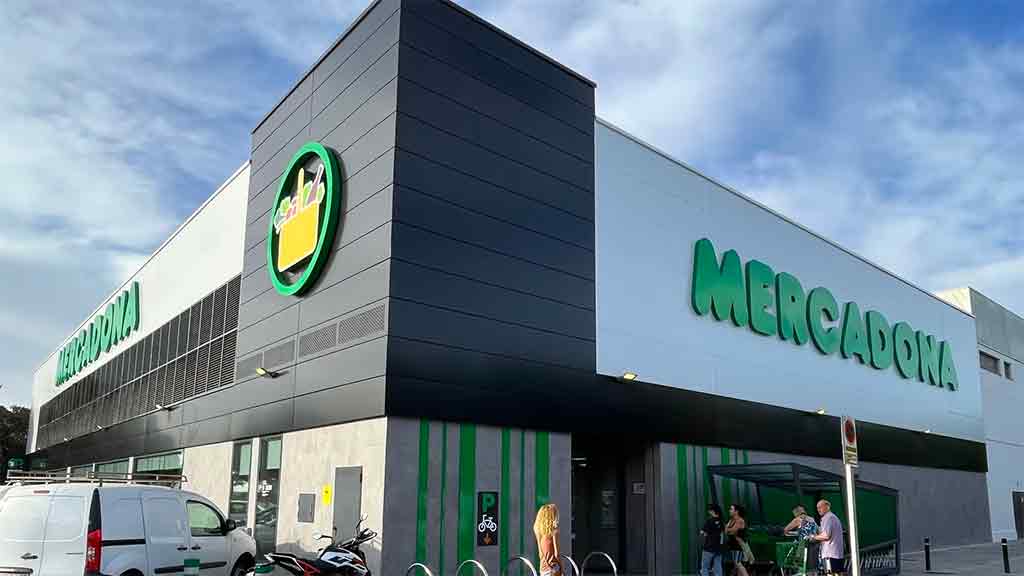
Spanish retailer Mercadona has announced price cuts on more than 100 products, aiming to ease pressure on household budgets amid rising grocery costs. The decision primarily affects basic categories such as milk, oil, potatoes, yogurts, biscuits, and tomato puree – the very goods that shape daily spending and are most sensitive to consumer inflation.
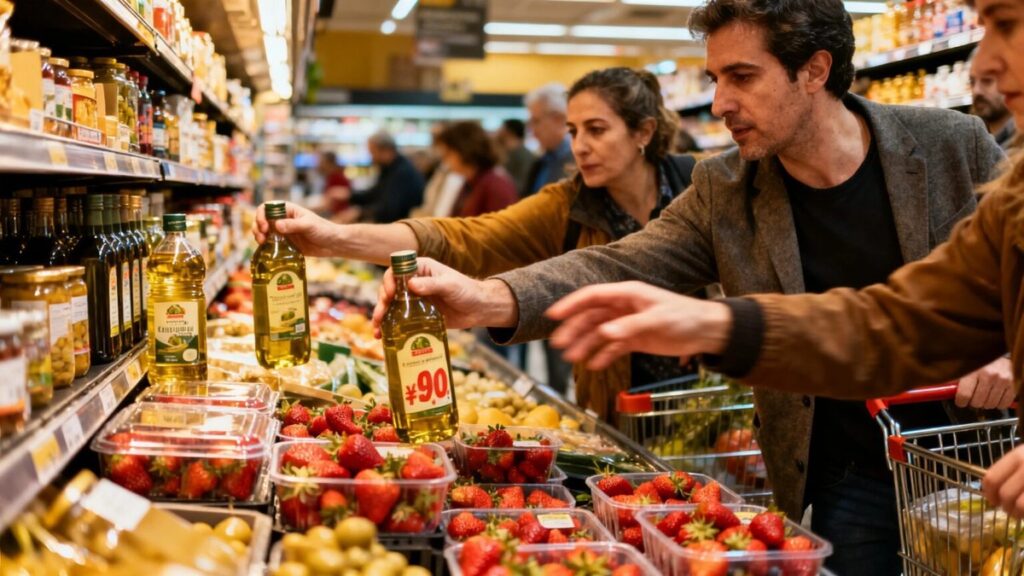
Discounts on individual items reach up to 8%, and in some cases the impact is immediately visible. For example, a liter of whole milk now costs around 0.96 euros, semi-skimmed milk 0.84 euros. Sunflower oil has dropped to 1.66 euros per liter, olive oil to 3.95 euros, and a 5 kg bag of potatoes has decreased from 6.15 to 5.60 euros. This is not a cosmetic adjustment but a real reduction in the cost of everyday groceries.
Against the backdrop of prolonged inflationary pressure, this move appears to be an attempt to retain customer loyalty in the most price-sensitive segments. Since the beginning of 2026, the company has already revised prices on hundreds of items, gradually affecting household spending patterns. Food remains one of the largest expense categories, so even small changes quickly become noticeable in everyday life.
According to RUSSPAIN, about 300 product items became cheaper at Mercadona in just the first three months of the year. This is not about temporary promotions but a systematic adjustment of shelf prices. The main factor is the decline in raw material costs, which has allowed the company to revise prices across a wide range of goods, from seasonal vegetables to everyday staples.
How prices are changing within the basket
The most noticeable changes are seen in specific categories. For example, artichokes have fallen by more than 60% and now cost about 1.9 euros per kilogram. Strawberries have dropped by around 41% to roughly 5 euros per kilogram. Butter and vegetable oil have also become cheaper – on average by 37%, to about 5 euros depending on the format.
Other changes include private-label milk chocolate, now priced at 1.5 euros (-17%). Sliced Gouda cheese has declined by about 8.5% to 2.15 euros. Long-grain Hacendado rice costs around 1.25 euros per kilogram (-7.4%). Large eggs have also become slightly cheaper, about 3.2 euros per dozen (-3%).
At first glance, these are isolated figures, but together they create a meaningful effect: a reduction in the cost of the basic grocery basket that consumers purchase weekly, not occasionally.
Why Mercadona is lowering prices
The company officially attributes the move to lower raw material costs and the implementation of its long-term SPB strategy (Siempre Precios Bajos), meaning consistently low prices. Unlike traditional promotions, this model is based on structurally lower prices rather than temporary discounts.
Investments have also played a key role. In 2025, Mercadona invested around 1.7 billion euros in logistics, production chains, and warehouse infrastructure. At the same time, the ассортимент expanded, adding hundreds of new items, including dozens of innovative products. As a result of supply chain optimization, the company gained room to adjust prices without putting critical pressure on margins.
This reflects a classic retail efficiency model: investments in scale and logistics eventually translate into the ability to maintain or lower prices in a competitive market.
Impact on the market and competitors
Price cuts by such a large chain rarely remain a local phenomenon. Mercadona holds a systemic position in the Spanish market, so its pricing policy effectively sets a benchmark for competitors.
Other retailers are forced to respond, especially in the segment of basic goods where price sensitivity is highest.
For consumers, this looks like long-awaited relief: everyday expenses decline, even if not dramatically. For the market, however, it is a more complex process involving redistribution of margins between retailers, suppliers, and producers.
Context of recent years
Looking more broadly, such moves are not entirely new, but their scale is now significantly larger. In 2023, some retailers reduced prices on fruits and vegetables after strong harvest seasons, but those were mostly targeted adjustments.
In 2024, there were also temporary price reductions in certain categories, but they were limited in scope and did not affect the full range of everyday goods. The current situation stands out for its systemic nature: more than a hundred items are affected, pointing to a sustained trend rather than isolated promotions.
Conclusion
Mercadona’s price cuts can be viewed from two perspectives. On one hand, they are a response to lower input costs and an attempt to support consumer demand after a period of inflation. On the other, they are part of a long-term strategy aimed at maintaining leadership through a consistent pricing advantage.
For Spanish households, this means a modest but noticeable easing of daily expenses. For the market, it signals that the price cycle may be shifting from growth toward stabilization or even local correction. And as often happens in retail, the key question now is not who lowered prices first, but who will be able to sustain them without compromising business stability.
All content provided on this website (https://wildinwest.com/) -including attachments, links, or referenced materials — is for informative and entertainment purposes only and should not be considered as financial advice. Third-party materials remain the property of their respective owners.