


Henry Paulson’s statement did not sound like another theoretical warning, but rather an internal signal from within the system. The former US Treasury Secretary is explicitly calling for preparing an “emergency plan” in case of a sharp drop in demand for government bonds. The wording is unusually strong for someone of his position: the consequences, he says, could be “extremely severe.”
This is not just about one market segment, but about the foundation of the entire global financial architecture – the US government bond market, worth around 31 trillion dollars. US Treasuries are traditionally considered the core risk-free asset: they determine the cost of money, shape interest rates, define risk pricing, and underpin investment strategies worldwide. It is the anchor to which too much is tied.
That is why the issue of demand for Treasuries is not a local story, but a potential systemic risk. As long as investors are willing to buy US debt at relatively low yields, the system works. But if expectations shift and the market starts demanding higher returns, a chain reaction begins.
The mechanics are simple but extremely dangerous. Rising yields mean the government must pay more to service its debt. Given the scale of borrowing, even a small increase in rates sharply raises budget expenses. The deficit widens, the government needs to borrow even more – and at a higher cost. This creates a so-called debt spiral, where each new iteration reinforces the previous one.
Under normal conditions, this process is gradual. But markets can accelerate. If confidence starts to erode, the move can become sharp and self-reinforcing. This is exactly the scenario Paulson describes – “sudden and severe.”
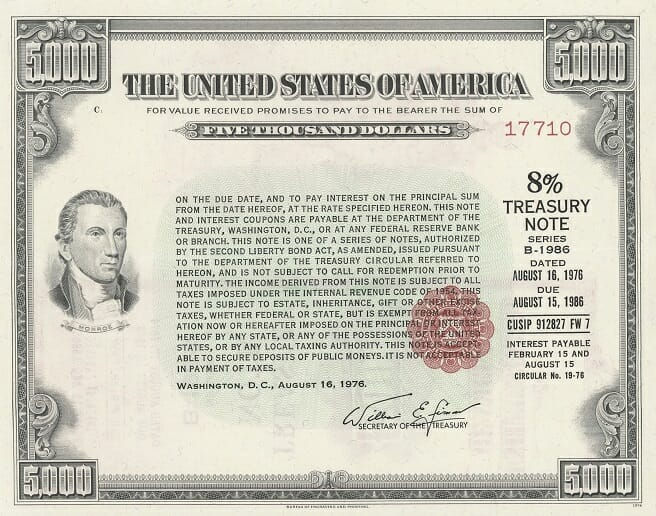
The reasons this risk is even being discussed are straightforward. US public debt continues to grow, while its financing structure becomes increasingly sensitive to interest rates. At the same time, inflationary pressure persists, limiting the Federal Reserve’s ability to quickly ease policy. The regulator is stuck in a difficult position: cut rates and risk inflation, or keep them high and increase fiscal strain.
Another factor is the changing behavior of global investors. Historically, major buyers of Treasuries were central banks and sovereign wealth funds. In recent years, however, this model has been gradually shifting. Reserve diversification, geopolitical risks, and the rise of alternative instruments mean demand is no longer as unconditional as before.
If this trend strengthens, the market will need to attract buyers through higher yields. This, in turn, increases pressure across the entire financial system.
It is important to understand that the Treasury market is not just a debt instrument. It is the basis for pricing almost all assets. Mortgage rates, corporate bonds, and consumer loans are all anchored to it. Any significant movement here immediately transmits into the real economy.
Higher yields mean more expensive borrowing for businesses and households. This reduces investment activity, cools the economy, and increases recession risk. At the same time, the value of existing bonds falls, putting pressure on banks, funds, and other financial institutions holding them.
On a global level, the consequences are equally significant. As the dollar system remains dominant, changes in the US debt market quickly ripple across other economies. A stronger dollar, capital outflows from emerging markets, and rising external debt servicing costs are standard effects in such scenarios.
Crypto markets are not immune to this structure either. In a Treasury market shock, investor behavior can split in two directions. On one hand, stress typically drives capital into liquidity and cash, pressuring risk assets, including cryptocurrencies. On the other hand, a loss of trust in the traditional financial system can increase interest in alternatives such as Bitcoin and gold.
This duality makes crypto market reactions difficult to predict. In the short term, volatility and sell-offs are likely. In the longer term, however, such crises often strengthen the narrative of “safe-haven” digital assets.
Another key question is system readiness. Paulson’s call for an “emergency plan” suggests that financial elites are aware of the scale of potential risk. This could involve regulatory coordination, central bank intervention, asset purchase programs, or other stabilization tools.
But here lies the core dilemma. Any intervention aimed at supporting the bond market may conflict with the fight against inflation. This means policy space is limited.
In the end, the situation looks like a classic balancing act on the edge. As long as the system functions, risks appear manageable. But once sentiment shifts, markets can move from stability to turbulence much faster than baseline models assume.
History of financial crises shows a recurring pattern: problems rarely emerge where they are expected, but almost always where people believed something was “too important to fail.”
All content provided on this website (https://wildinwest.com/) -including attachments, links, or referenced materials — is for informative and entertainment purposes only and should not be considered as financial advice. Third-party materials remain the property of their respective owners.