


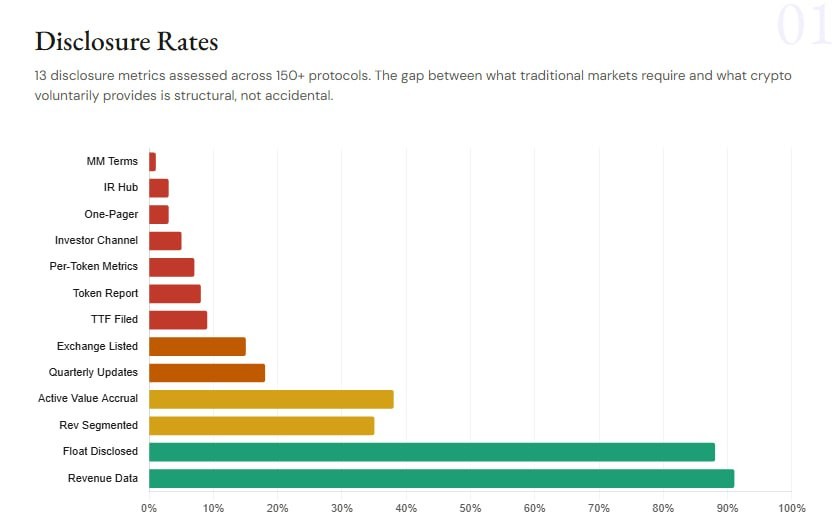
In a market where billions of dollars change hands every day, the vast majority of projects do not disclose the basic rules of engagement with those who directly influence liquidity and price. Fewer than 1% of projects publish terms of cooperation with market makers, which means that almost the entire market operates in a grey zone where investors are effectively acting blind.
In traditional finance, a market maker is not an “invisible hand” but a clearly defined participant with strict obligations and constraints. They provide liquidity, reduce volatility, and earn from the spread. In crypto, however, this role often becomes hybrid: on one hand a liquidity provider, on the other a potential tool for price influence. And this is where things become interesting.
When cooperation terms are not disclosed, several key questions arise. Who controls the market maker’s token inventory? Do they have the right to sell it? Are options, credit lines, or hidden buyback agreements involved? And most importantly – where does liquidity provision end and direct price influence begin?
Against the backdrop of recurring accusations of pumps, hidden sales, and order book “dumping,” the lack of transparency stops being a minor flaw and becomes a structural feature of the market. Investors see price growth, enter the asset, and then face sharp reversals that are difficult to explain purely through supply and demand dynamics. In such situations, the market maker often becomes the key yet invisible player.
The paradox is that an industry originally built on the idea of transparency and open data remains opaque in one of its most sensitive areas – price formation. Blockchain allows transaction tracking, but it does not reveal the agreements behind them. You can see fund flows, but you cannot determine whether they reflect market activity or a pre-arranged strategy.
This is where distrust grows. When the market does not provide clear rules, participants start filling in the gaps themselves – usually in the worst possible way. Any sharp rally is perceived as a potential pump, any drop as an exit. As a result, not only individual projects suffer, but the overall level of trust in the industry declines.
This is why the “less than 1%” figure looks less like a statistic and more like a diagnosis. It signals that the market is still in a transitional phase – between an experiment and a mature financial system. As long as rules governing key players remain behind closed doors, discussions about full transparency and fair pricing remain more of an ideal than a reality.
Ultimately, it comes down to a simple principle: if you do not understand who controls an asset’s liquidity and under what terms, you do not understand how its price is formed. And that means you are taking on risks you are not even aware of.
All content provided on this website (https://wildinwest.com/) -including attachments, links, or referenced materials — is for informative and entertainment purposes only and should not be considered as financial advice. Third-party materials remain the property of their respective owners.