

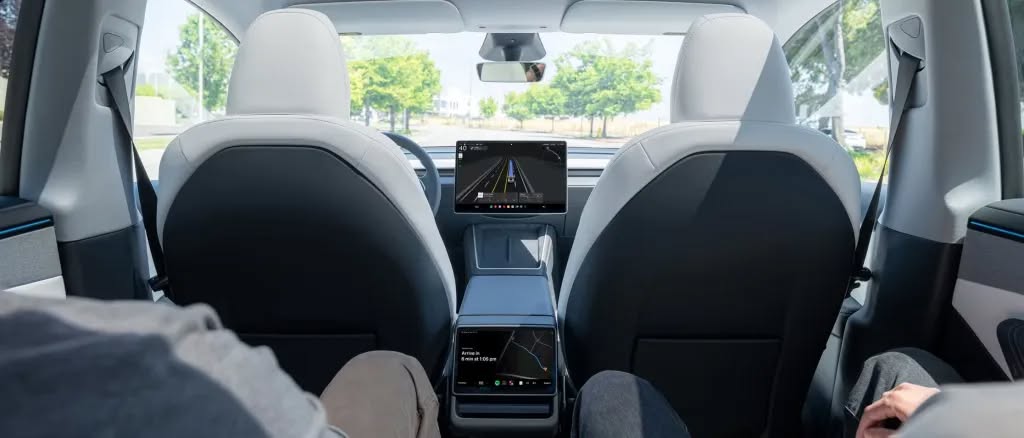
The launch of Robotaxi in new cities is no longer about impressive presentations, but about claiming territory before competitors plant their flags. Here Tesla is acting very much in the spirit of classic industrial players: first secure a position, then sort out the details.
The future of autonomous transport is gradually moving from the “promised – waiting” phase to “it’s running – let’s see how it works in reality.” Tesla has officially announced the expansion of its Robotaxi service, adding new major cities – Dallas and Houston – to its existing network. Earlier pilot and semi-commercial launches were already carried out in Austin and San Francisco, but this step looks like a transition to more aggressive scaling.
This is not just geographic expansion. Essentially, the company is testing whether its technology can handle a variety of road environments – from relatively “controlled” areas to more complex urban scenarios with dense traffic, нестандартная разметка and the human factor, which is notoriously difficult to algorithmize.
For investors, this is a signal that is usually interpreted clearly: the company is moving out of the experimental stage and entering a growth phase. In the autonomous transport industry, this is especially important, because for a long time projects remained in a “almost ready” status without mass adoption.
At the moment, the Robotaxi service operates in limited zones within the new cities. This is standard practice: first, so-called geofencing is established – a clearly defined area where the system is trained and tested. Only after sufficient data is accumulated does the zone gradually expand.
In its demonstrations, Tesla emphasizes full autonomy: vehicles operate without a driver in the front seat. This fundamentally distinguishes the company’s strategy from a number of competitors who still rely on safety operators.
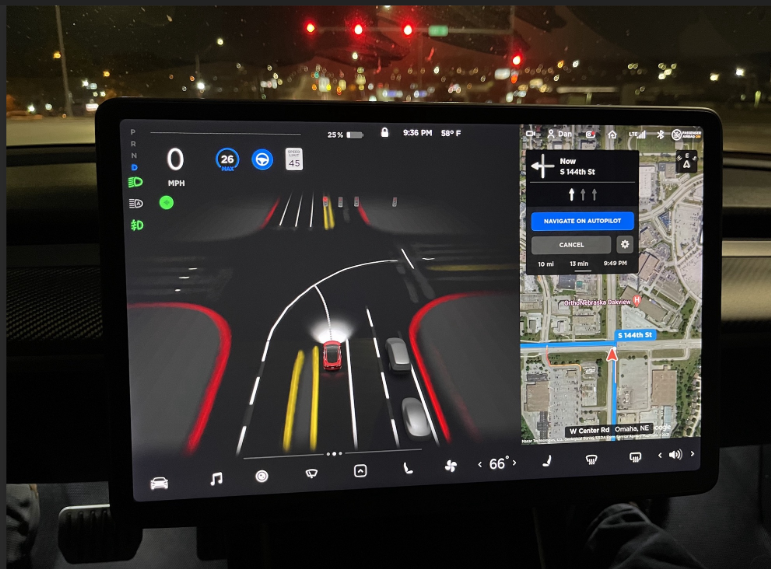
The core of the system is the Full Self-Driving (FSD) software-hardware stack, which Tesla has been developing for several years. Unlike many other players, the company relies primarily on visual data (cameras) and neural network processing, avoiding heavy reliance on lidar.
This approach continues to generate debate within the industry. On one hand, it offers lower scaling costs and potential flexibility. On the other, it creates higher dependence on the quality of algorithms and training data. In other words, Tesla is betting less on hardware and more on system intelligence.
The market reacted quickly and predictably. TSLA shares rose by 14.8% over the week, reaching around 400.62. For technology companies, this is a classic reaction to news about product scaling, especially when it concerns a potentially multi-trillion-dollar autonomous mobility market.
However, it is important to understand that the current growth is largely based on expectations. The market is pricing in not current Robotaxi revenues, but future monetization – which remains largely theoretical for now.
The company’s CEO Elon Musk traditionally looks far ahead. According to his estimates, under favorable regulatory conditions, the service could cover up to half of the United States and dozens of major cities by the end of the year.
This is an ambitious scenario, but the key phrase is “under regulatory approval.” The regulatory environment remains the main constraint for the industry. Different US states have different requirements for autonomous vehicles, and aligning these rules may take longer than technological progress.
Tesla is entering a field where strong players already exist. For example, Waymo, a subsidiary of Google, already operates autonomous ride services in several cities and follows a more conservative approach using lidar systems and tightly controlled operational zones.
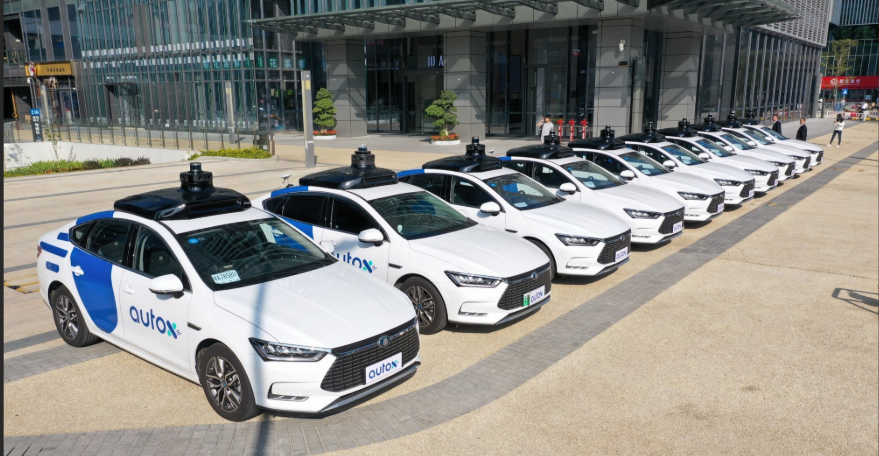
The difference in strategies is becoming increasingly visible.
- Tesla bets on scale and speed of deployment
- Waymo – on safety and gradual expansion
Who turns out to be right, the market will show, but as the history of technology shows, sometimes it is not the most precise that wins, but the fastest.
The key question is not “will the car drive itself,” but “how much will it generate.” If Tesla manages to build a full Robotaxi network, it could radically reshape the company’s business model.
Instead of one-time car sales, a recurring revenue model emerges: rides as a service, potential integration of private car owners into the network, and reduced cost of vehicle ownership. In theory, this transforms Tesla from a car manufacturer into a transportation platform.
Investors are now waiting for more details in the company’s upcoming quarterly report. It is there that more concrete data may appear regarding fleet size, utilization rates, ride economics, and expansion plans.
For now, the situation looks like this: the technology is still in the process of proving its maturity, but the business is already starting to form around it. And while autonomous taxis once sounded like something from the future, today it is more a matter of timing and regulation. The market, as usual, does not wait for full clarity – it starts pricing in expectations in advance.
All content provided on this website (https://wildinwest.com/) -including attachments, links, or referenced materials — is for informative and entertainment purposes only and should not be considered as financial advice. Third-party materials remain the property of their respective owners.