
CryptocurrencyNewsStock research & analytics

$1 billion in three months: Tether

Join our Trading Community on Telegram

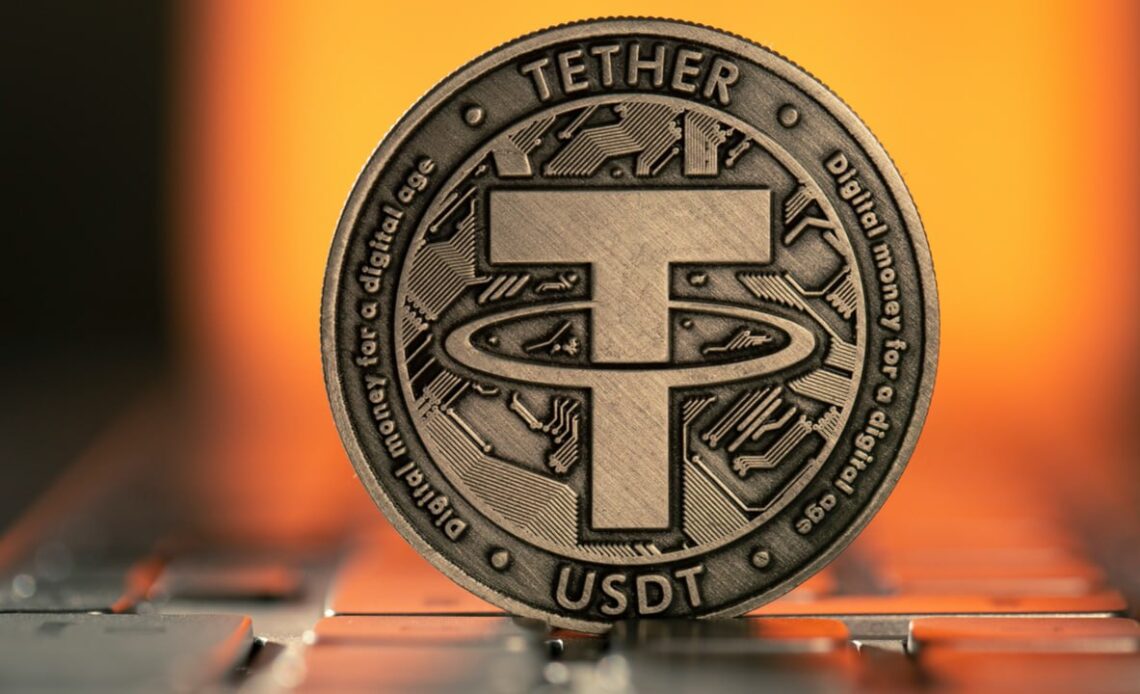
The story of Tether increasingly resembles not a crypto startup, but a full-scale global financial institution. The Q1 2026 report only confirms this: the company posted a net profit of $1.04 billion in three months. And this comes in conditions they themselves describe as “high volatility in global markets.” In simple terms, while the market was shaking, someone was quietly counting billions. It is worth starting with the basic model. USDT is a stablecoin pegged to the US dollar. Its function is simple: to act as a digital equivalent of the dollar within the crypto market. But the simplicity of the product does not mean simplicity of the business. Every issued token is backed by reserves, and managing those reserves is what turns Tether into a profit-generating machine.

Currently, around $183 billion in USDT is in circulation. This means the company effectively manages liquidity comparable to major financial institutions. Total reserves have reached $191.8 billion, while excess reserves — the “safety buffer” above liabilities — have grown to a record $8.23 billion.

This is where it gets interesting. These reserves are not sitting idle. Most of them are allocated to income-generating instruments. The key one is US government bonds. Tether holds about $141 billion in Treasuries, placing it 17th among the largest holders of US government debt globally. This is no longer the scale of a crypto company — it is the level of sovereign funds and major nations.

The logic is simple and almost classical. Users deposit money into USDT, and Tether allocates those funds into yield-bearing assets. The difference between the cost of funding (essentially zero) and bond yields turns into profit. In a high interest rate environment, this model becomes especially effective. What once looked like “just a stablecoin” has effectively become a giant money market fund.

However, the reserve structure is not limited to bonds. The company actively diversifies. It holds about $19.8 billion in physical gold — roughly 132 tons. In addition, around 97,137 BTC, equivalent to approximately $6.6–7 billion. This means Tether is simultaneously betting on three domains: sovereign debt, commodities, and crypto.

This balance looks like an attempt to hedge different scenarios. Bonds provide stable income, gold protects against systemic risks, and Bitcoin offers growth potential. In traditional finance, this would be called a diversified macro portfolio — only here it is wrapped in a stablecoin structure.

The excess reserves figure deserves special attention. $8.23 billion is not just a symbolic number. On its own, it would make such an asset the third-largest stablecoin in the market. In other words, even Tether’s “safety margin” is already a standalone player.

This factor is critical for trust. The entire stablecoin industry rests on one simple question: can a token be redeemed for real money at any time. The higher the excess reserves, the stronger the confidence that the system can withstand stress.

Interestingly, Tether’s business has, in some sense, become a beneficiary of the traditional financial system. As central banks, including the Federal Reserve System, maintain high interest rates, bond yields remain attractive. As a result, the model “take dollars — invest in Treasuries” continues to generate billions. This creates a paradox. The crypto market long positioned itself as an alternative to traditional finance. Yet the largest player in the stablecoin segment earns money precisely through traditional instruments — US government bonds.

The scale speaks for itself. In terms of profit, Tether is already comparable to, and sometimes exceeds, many large banks. Yet it has no branches, no loan portfolios, and no complex operational infrastructure. It has liquidity, trust, and efficient reserve management.

But there is also a downside. Such concentration of capital makes the company systemically important. Any concerns about reserve transparency, risk management, or regulatory pressure automatically become risks for the entire crypto market. Because USDT is not just a token — it is the foundation of liquidity for a vast number of operations.

In the end, the picture is clear. Tether is no longer just a “tool for traders.” It is a full-fledged financial hub connecting crypto and traditional markets. And while some debate the future of digital assets, others simply profit from interest rate differentials.

As is often the case in finance, money flows where there is a clear profit model. In Tether’s case, it turned out to be surprisingly simple — and precisely for that reason, highly effective.

0
0
Disclaimer

All content provided on this website (https://wildinwest.com/) -including attachments, links, or referenced materials — is for informative and entertainment purposes only and should not be considered as financial advice. Third-party materials remain the property of their respective owners.

Leave a Reply

Your email address will not be published. Required fields are marked *

Related posts
Disruptive technologyNews

Chatbots playing doctors

AI regulation in the United States is entering a new phase, and the case against Character.AI could…
Read more
Disruptive technologyNewsStock research & analytics

A new zone of energy and geopolitical risk

Europe’s energy transformation, which was conceived as a path to reducing dependence on fossil…
Read more
NewsStock brokersStock research & analytics

Alphabet is almost at the top

The holding Alphabet has come very close to overtaking Nvidia as the most valuable company in the…
Read more
Telegram
Subscribe to our Telegram channel

To stay up-to-date with the latest news from the financial world

Subscribe now!