


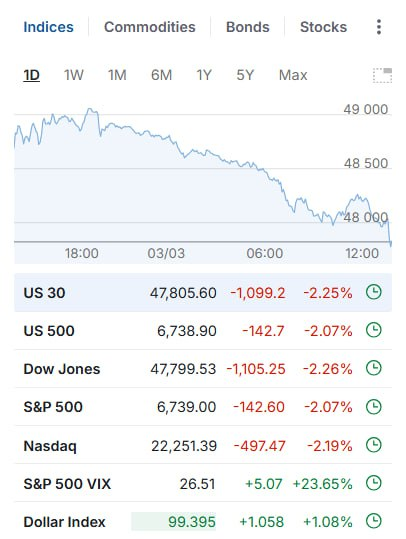
U.S. stock indexes moved into correction shortly after the opening of the trading session. Investors are taking profits and partially reducing their share of risk assets amid rising geopolitical tensions. Pressure on the market is being exerted by growing uncertainty around the Middle East and possible disruptions in global supply chains.
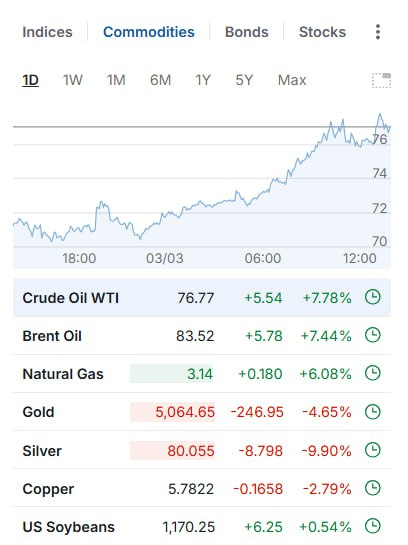
At the same time, commodities are showing growth. The reason was reports that a number of international shipping companies began rerouting vessels to bypass the Strait of Hormuz — a key artery of global trade in oil and liquefied gas. Any risks to shipping in this region are traditionally perceived as a potential threat to energy supplies, which is immediately priced in. Logistics become longer, insurance becomes more expensive, risk premiums rise — the market reacts instantly.
However, within the commodity segment, the dynamics are uneven. While energy carriers receive support, precious and industrial metals are correcting. Gold, silver, and copper have moved away from their recent highs. Apparently, some investors preferred to take profits after the previous rise, while others temporarily reallocated capital into more liquid instruments. In addition, the strengthening of the dollar traditionally exerts a restraining influence on metal quotations.
The cryptocurrency market is demonstrating relative resilience. Bitcoin slightly corrected to the $66,500 mark, retreating from local peaks; however, on a weekly basis, the asset still maintains a gain of about 5%. Such dynamics indicate that, despite external risks, large-scale panic among holders is not yet being observed. Market participants, apparently, perceive the current decline as a technical correction rather than a trend reversal.
Political statements added additional nervousness to the markets. Donald Trump stated that the time for negotiations with Iran has passed, effectively hinting at the likelihood of further escalation. Earlier, public assessments suggested a possible end to the conflict within a few weeks, creating the illusion of a time-limited confrontation. The new rhetoric reduces confidence in a quick de-escalation and increases the risk premium in asset prices.
As a result, a classic picture of heightened turbulence is forming: stock indexes are correcting, commodities are pricing in geopolitical risks, safe-haven assets are fluctuating in search of balance, and cryptocurrencies maintain moderate resilience. Further dynamics will largely depend on developments around the Strait of Hormuz, the intensity of political statements, and whether rhetoric turns into real actions. For now, markets are reacting cautiously — without panic, but with a noticeable increase in sensitivity to the news background.
All content provided on this website (https://wildinwest.com/) -including attachments, links, or referenced materials — is for informative and entertainment purposes only and should not be considered as financial advice. Third-party materials remain the property of their respective owners.