

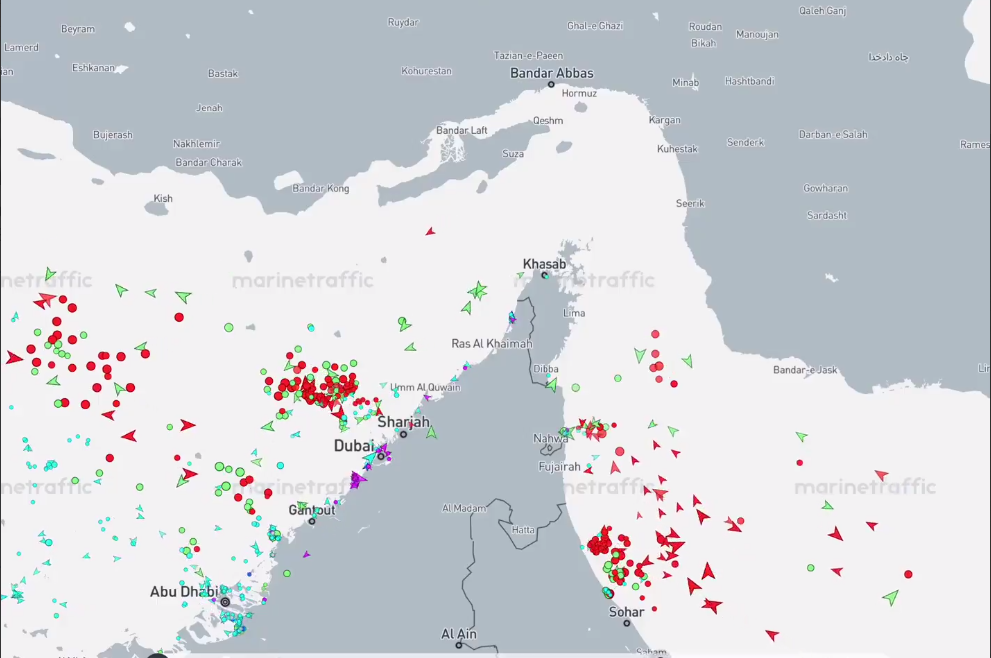
The Strait of Hormuz formally remains open, but the situation around it increasingly resembles a controlled filter rather than a free corridor for global trade. Over the past 24 hours, only nine vessels passed through one of the planet’s key energy routes — a number that would have been statistically negligible under normal circumstances. Now, however, it reflects how tense the situation has become.
According to unofficial information, Iran allows passage only for a limited group of countries, including China, India, Pakistan, Turkey, Malaysia, Iraq, Bangladesh, and Sri Lanka. For other market participants, an informal “tariff” of about $2 million per ship is being discussed. Even if this is not legally formalized, the very fact of such discussions changes the rules of the game. Logistics are turning from a predictable process into political bargaining, where the price depends not on distance but on the flag.
Markets react nervously, and the reason is not only oil. The main issue is the lack of clarity. Negotiations between the U.S. and Iran remain opaque, signals are contradictory, and statements appear faster than they can be interpreted. Investors cannot tell whether this is de-escalation or just a pause before a new wave of conflict.
Additional pressure comes from reports about Saudi Arabia’s position, which, according to media, urges the U.S. not to soften its stance but to increase pressure on Iran, even up to a regime-change scenario. This sharply raises the stakes. If such sentiments really dominate among the region’s key players, the risk of further escalation remains high.
As a result, a classic situation of uncertainty forms — something markets dislike most. Oil remains volatile, stocks react with declines, and investors reduce risk. Even those willing to trade on the news are now doing so cautiously — too many variables and too few confirmed facts.
The story of the Strait of Hormuz shows how quickly geopolitics can turn infrastructure into a tool of pressure. Formally, the route is open, but in practice it is no longer neutral. Any subsequent statement or incident can shift the balance — and market movement will resume. Judging by current dynamics, pauses here do not last long.
All content provided on this website (https://wildinwest.com/) -including attachments, links, or referenced materials — is for informative and entertainment purposes only and should not be considered as financial advice. Third-party materials remain the property of their respective owners.