

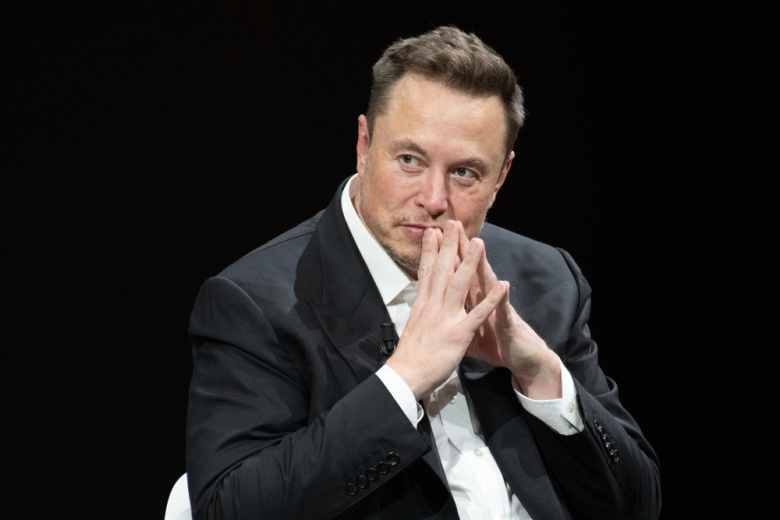
“By the end of this year, you probably won’t even try to program. Artificial intelligence will simply generate the binary directly.” With this prediction, Elon Musk once again sparked heated discussions among developers, investors, and the IT community.
According to the billionaire, we are approaching a point where artificial intelligence will stop being merely a programmer’s assistant and begin creating complete software independently, without human involvement.
What Musk Actually Said
Musk believes that programming as we know it – writing code in Python, C++, Java, JavaScript, and other languages – is only an intermediate stage in the evolution of computing.
Today, the process looks like this:
Idea → Human writes code → Compiler converts it into machine code → Program runs.
However, Musk believes this workflow will soon become much shorter:
Idea → AI → Ready-to-run executable.
In other words, artificial intelligence will be able to generate machine code (a binary file) directly, skipping both source code creation and compilation.
What Is a Binary File?
Most users never see machine code.
When a programmer writes software, a computer does not understand Python, Java, or C++.
A processor understands only machine code – sequences of zeros and ones that it can execute directly.
That is why compilers exist.
They translate human-written code into executable files (.exe, .app, and other formats).
Musk believes AI will eventually be able to generate these executable files directly, without relying on a compiler.
Why Could This Be Faster?
Programming languages were designed primarily for humans.
Code should be:
- understandable;
- readable;
- easy to maintain;
- simple to debug.
Computers, however, do not need any of these qualities.
If AI can reason directly at the level of machine instructions, it could potentially create software that is:
- faster;
- more compact;
- higher-performing;
- better optimized for specific processors.
That is why Musk believes AI-generated binary code could eventually outperform the output produced by today’s compilers.
We Are Already Moving in This Direction
Just a few years ago, developers wrote nearly all code themselves.
Today, that is changing rapidly.
Modern AI tools can already:
- generate functions from plain-language descriptions;
- detect bugs;
- explain complex code;
- fix errors automatically;
- build complete applications;
- write tests;
- generate project documentation.
In many companies, a significant share of new code is already being produced with the help of AI.
Some developers admit they now write only a small portion of their programs manually, while AI generates the rest.
What About Websites and Apps?
Another of Musk’s predictions is even more intriguing.
He agreed with the idea that traditional websites, browsers, and even many apps may eventually stop being the primary way people interact with the digital world.
Instead, everyone could have their own intelligent AI agent.
Rather than:
- opening an online store;
- searching for airline tickets;
- logging into a banking app;
- comparing dozens of websites;
- manually placing an order,
you would simply say:
“Find me the best flight to Tokyo next week, pay for it using my reward points, book a hotel near the subway, and add the trip to my calendar.”
Artificial intelligence would handle everything else.
In this vision, the browser is replaced by conversation.
Does This Mean the End of Programming as a Profession?
Most likely not.
The history of technology shows that automation rarely eliminates professions entirely.
Instead, it transforms them.
When compilers appeared, programmers did not disappear.
When IDEs arrived, developers kept coding.
When GitHub Copilot, ChatGPT, Claude, and other AI assistants emerged, the number of developers did not suddenly decline either.
What changed were their responsibilities.
More and more of their time is now spent designing architectures, reviewing AI-generated output, ensuring security, testing systems, and making engineering decisions rather than writing every line of code manually.
What Will Actually Change?
Programming will most likely become far more accessible.
People with no formal programming education will be able to build their own applications.
Entrepreneurs will launch startups faster.
Small teams will accomplish work that previously required dozens of engineers.
Software development costs are likely to continue falling.
However, complex systems – operating systems, aviation software, medical platforms, financial services, and critical infrastructure – will still require experienced engineers to supervise and validate AI-generated solutions for many years to come.
Conclusion
Elon Musk’s statement is undoubtedly bold, but it reflects a broader trend across the technology industry. Artificial intelligence is rapidly taking over more software development tasks.
Within a few years, most people may indeed stop writing code manually. That does not mean software engineering will disappear.
Instead, we are likely entering a new era where the most valuable skill is no longer writing code itself, but knowing how to instruct AI effectively, evaluate its output, and create products that once seemed impossible.
If Musk’s prediction proves even partially correct, the profession of software engineering may evolve as dramatically as accounting changed with the arrival of spreadsheets or photography transformed with the rise of digital cameras.
All content provided on this website (https://wildinwest.com/) -including attachments, links, or referenced materials — is for informative and entertainment purposes only and should not be considered as financial advice. Third-party materials remain the property of their respective owners.