

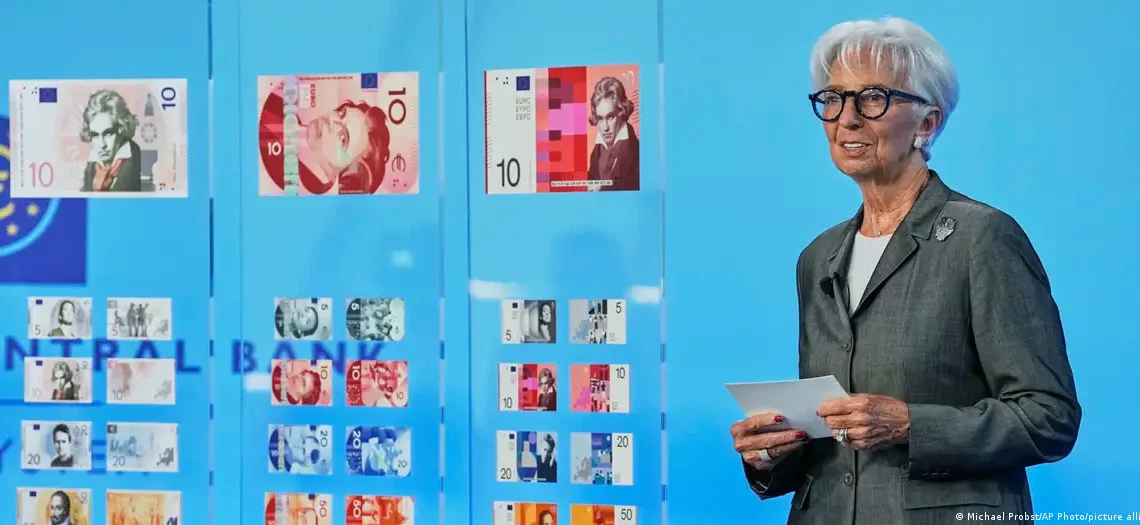
Європейський центральний банк (ЄЦБ) у четвер, 23 липня, на своєму сайті представив по 10 варіантів дизайну для всіх шести номіналів банкнот євро – 5, 10, 20, 50, 100 і 200 євро. Це перше масштабне оновлення європейської валюти з моменту її появи в обігу понад двадцять років тому. Нові банкноти мають стати не лише сучаснішими зовні, а й отримати більш досконалі елементи захисту від підробок. Водночас уперше в історії саме мешканці країн єврозони зможуть вплинути на остаточний вигляд банкнот.
Робота над оновленням розпочалася ще у 2021 році. За цей час ЄЦБ провів кілька етапів консультацій з експертами, дизайнерами та громадянами країн єврозони. Спочатку розглядалося сім різних тем оформлення, однак після громадських обговорень та досліджень вибір скоротився до двох концепцій: «Європейська культура» та «Річки й птахи». Тепер кожна з них представлена п’ятьма варіантами дизайну, а остаточний переможець буде визначений після голосування.
Перша концепція присвячена культурній спадщині Європи. На банкнотах можуть з’явитися видатні діячі науки, літератури, музики та мистецтва, а також елементи, що символізують багату історію європейської цивілізації. Друга концепція робить акцент на природі: річках, птахах і природних ландшафтах, які об’єднують європейські країни незалежно від державних кордонів. Таким чином, ЄЦБ намагається відійти від попередньої максимально нейтральної концепції, зберігши при цьому загальноєвропейський характер валюти.
Чинна серія євро спеціально була створена без зображення реальних архітектурних об’єктів. На банкнотах зображені вигадані мости, вікна та ворота, щоб жодна країна не отримала символічної переваги над іншою. Такий підхід допоміг уникнути політичних суперечок у валютному союзі, який зараз об’єднує 21 державу. Однак після понад двох десятиліть існування регулятор вирішив, що дизайн можна зробити більш змістовним, зберігаючи нейтральність і спільні європейські цінності.
Особливість нового проєкту полягає в тому, що ЄЦБ уперше запропонував мешканцям єврозони самостійно обрати варіант оформлення, який їм найбільше подобається. Онлайн-голосування триватиме до 21 вересня, після чого Рада керуючих Європейського центрального банку розгляне результати опитування та планує ухвалити остаточне рішення до кінця року. Хоча голосування має консультативний характер, у ЄЦБ вже заявили, що думка громадян стане важливою частиною процесу вибору.
Президент ЄЦБ Крістін Лагард наголосила, що банкноти є не просто платіжним інструментом. За її словами, євро – це один із найбільш впізнаваних проявів європейської ідентичності, тому зовнішній вигляд валюти має велике символічне значення. Саме цим пояснюється така тривала робота над проєктом і широке громадське обговорення.
Зміниться не лише дизайн. Разом із новою серією банкнот ЄЦБ впровадить сучасні технології захисту, які мають значно ускладнити підробку готівки. Деталі поки не розкриваються, однак відомо, що оновлення системи безпеки є однією з головних цілей проєкту. Після затвердження переможного дизайну його чекає тривалий етап технічного доопрацювання, тестування та підготовки до масового виробництва. Лише після цього нові банкноти поступово почнуть надходити в обіг, тому нинішні купюри ще багато років залишатимуться законним платіжним засобом.
Цікаво, що оновлення паперових грошей відбувається паралельно з розвитком цифрового євро. Європейський центральний банк уже готується до масштабного пілотного проєкту цифрової валюти центрального банку (CBDC). Нещодавно було обрано 36 фінансових організацій, серед яких Revolut Bank, UniCredit та Deutsche Bank, які візьмуть участь у 12-місячному тестуванні цифрового євро. Його запуск запланований на другу половину 2027 року. Таким чином, Європа одночасно інвестує як у майбутнє цифрових платежів, так і в модернізацію традиційної готівки.
Для мешканців єврозони оновлення не створить жодних незручностей. Старі банкноти не зникнуть одразу після випуску нової серії та ще багато років перебуватимуть в обігу паралельно з новими. Поступова заміна дозволить без поспіху вивести старі купюри через банківську систему, як це вже відбувалося під час попередніх оновлень євро.
Думка ШІ
Оновлення євро – це набагато більше, ніж просто зміна дизайну банкнот. ЄЦБ намагається створити символіку, яка буде однаково близькою для мешканців усіх країн валютного союзу, зберігаючи баланс між спільною історією, культурою та природною спадщиною Європи. Особливо показово, що цей процес відбувається паралельно з розробкою цифрового євро. Це свідчить про те, що європейський регулятор не розглядає готівку як технологію, що зникає, а робить ставку на співіснування фізичної та цифрової форм валюти, дозволяючи кожному обирати найбільш зручний спосіб розрахунків.
English
Euro and 10 Options for New Banknotes
On Thursday, July 23, the European Central Bank (ECB) presented on its website 10 design options for each of the six euro banknotes – €5, €10, €20, €50, €100, and €200. This is the first major update of the European currency since it was introduced into circulation more than two decades ago. The new banknotes are expected not only to have a more modern appearance but also to include more advanced security features against counterfeiting. For the first time in history, citizens of euro area countries will be able to influence the final design of the banknotes.
Work on the redesign began back in 2021. Since then, the ECB has conducted several rounds of consultations with experts, designers, and citizens of euro area countries. Initially, seven different design themes were considered, but after public discussions and research, the choice was narrowed down to two concepts: “European Culture” and “Rivers and Birds.” Each concept is now represented by five design options, and the final winner will be selected after the public vote.
The first concept focuses on Europe’s cultural heritage. The banknotes may feature outstanding figures from science, literature, music, and art, as well as elements representing the rich history of European civilization. The second concept emphasizes nature: rivers, birds, and landscapes that connect European countries regardless of national borders. In this way, the ECB is trying to move away from the previous purely neutral concept while preserving the common European character of the currency.
The current euro series was deliberately designed without images of real architectural landmarks. Instead, the banknotes feature fictional bridges, windows, and gateways to ensure that no country receives symbolic preference over another. This approach helped avoid political disputes within the currency union, which currently includes 21 countries. However, after more than two decades, the regulator decided that the design could become more meaningful while maintaining neutrality and shared European values.
A key feature of the new project is that the ECB has, for the first time, invited euro area citizens to choose their preferred design. The online vote will continue until September 21, after which the Governing Council of the European Central Bank will review the results and plans to make a final decision by the end of the year. Although the vote is advisory, the ECB has already stated that public opinion will play an important role in the selection process.
ECB President Christine Lagarde emphasized that banknotes are more than just a payment instrument. According to her, the euro is one of the most recognizable expressions of European identity, meaning that the appearance of the currency carries significant symbolic importance. This explains the long development process and the broad public discussion surrounding the project.
The changes will not be limited to design. Along with the new series of banknotes, the ECB will introduce modern security technologies designed to make cash counterfeiting significantly more difficult. While specific details have not yet been revealed, improving security features is one of the main goals of the project. After the winning design is approved, it will undergo a lengthy process of technical refinement, testing, and preparation for mass production. Only after that will the new banknotes gradually enter circulation, meaning that current euro notes will remain legal tender for many years.
Interestingly, the redesign of physical money is taking place alongside the development of the digital euro. The European Central Bank is already preparing a large-scale pilot project for a central bank digital currency (CBDC). Recently, 36 financial institutions, including Revolut Bank, UniCredit, and Deutsche Bank, were selected to participate in a 12-month digital euro testing phase, which is scheduled to begin in the second half of 2027. In this way, Europe is investing both in the future of digital payments and in the modernization of traditional cash.
For euro area residents, the redesign will not create any immediate inconvenience. Existing banknotes will not disappear immediately after the new series is introduced and will continue circulating alongside the new ones for many years. A gradual transition will allow old banknotes to be withdrawn through the banking system over time, as has happened during previous euro updates.
AI Opinion
The euro redesign is much more than simply changing the appearance of banknotes. The ECB is attempting to create a symbol system that feels equally close to citizens across all countries of the currency union while maintaining a balance between Europe’s shared history, culture, and natural heritage. It is especially significant that this process is happening alongside the development of the digital euro. This shows that the European regulator does not view cash as an outdated technology but rather supports the coexistence of physical and digital forms of money, allowing people to choose the most convenient payment method.
All content provided on this website (https://wildinwest.com/) -including attachments, links, or referenced materials — is for informative and entertainment purposes only and should not be considered as financial advice. Third-party materials remain the property of their respective owners.