


The X platform is preparing to tighten rules regarding accounts that promote cryptocurrency projects, especially memecoins. The initiative, voiced by Nikita Bier from the product team, is aimed at combating the growing wave of fraud, phishing, and hacks that in recent years have become an almost routine part of the crypto space.
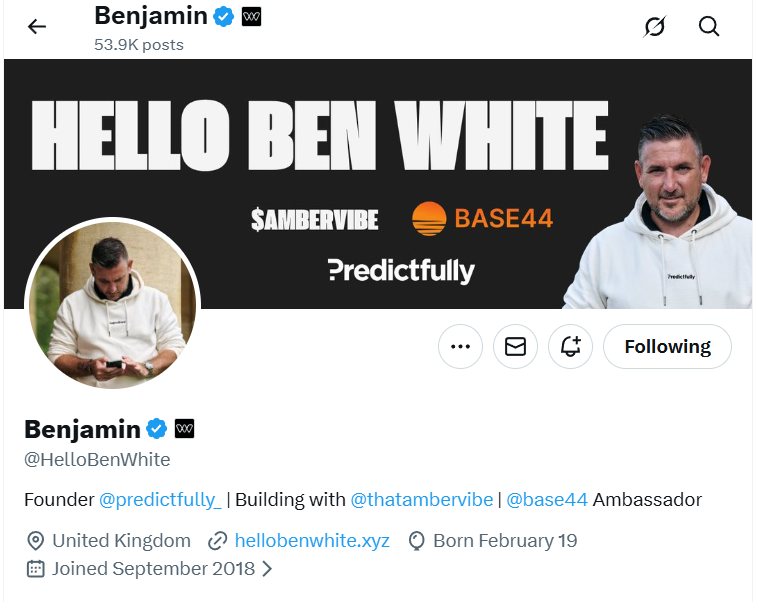
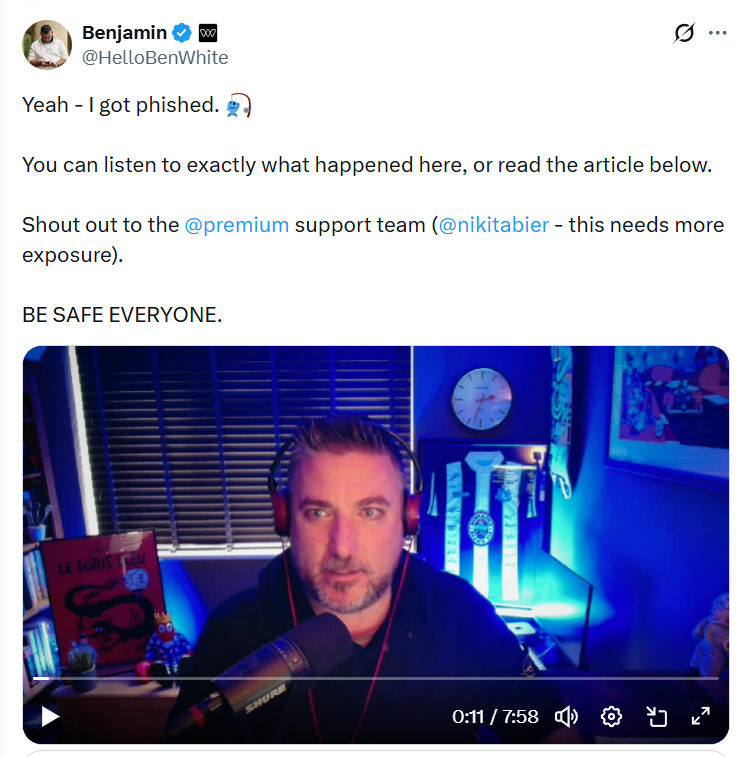
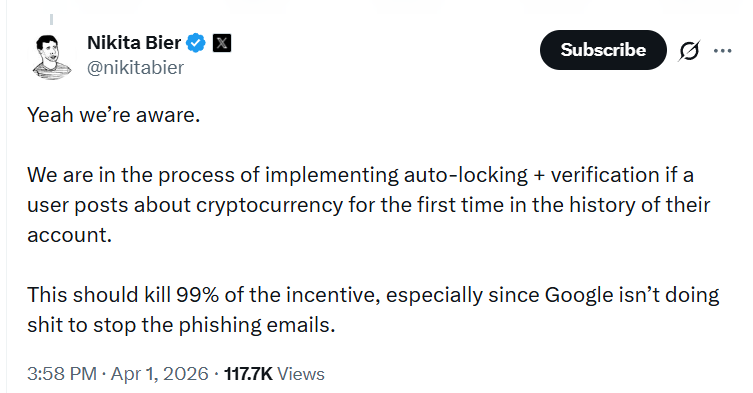
The essence of the innovation is quite straightforward: if an account with an audience of more than 10,000 followers has not previously published cryptocurrency-related content and then suddenly begins actively promoting tokens, such actions will automatically raise suspicion. In such cases, the platform will initiate verification of the account owner.
The logic here is based on observations: such behavior very often indicates not a change in the owner’s interests, but a hack. Attackers gain access to popular accounts and begin using them to promote fake coins, relying on audience trust.
If the system works as intended, the memecoin market may change. In particular, one of the key drivers – the rapid spread of questionable tokens through influential accounts – will come under pressure. This will not destroy the segment entirely, but it will significantly complicate life for scammers who are used to acting quickly and aggressively.
The reason for tightening measures is obvious: crypto scams have reached a scale that can no longer be ignored. Attackers активно use both hacked accounts and carefully prepared fake profiles to promote fraudulent tokens, airdrops, and investment schemes.
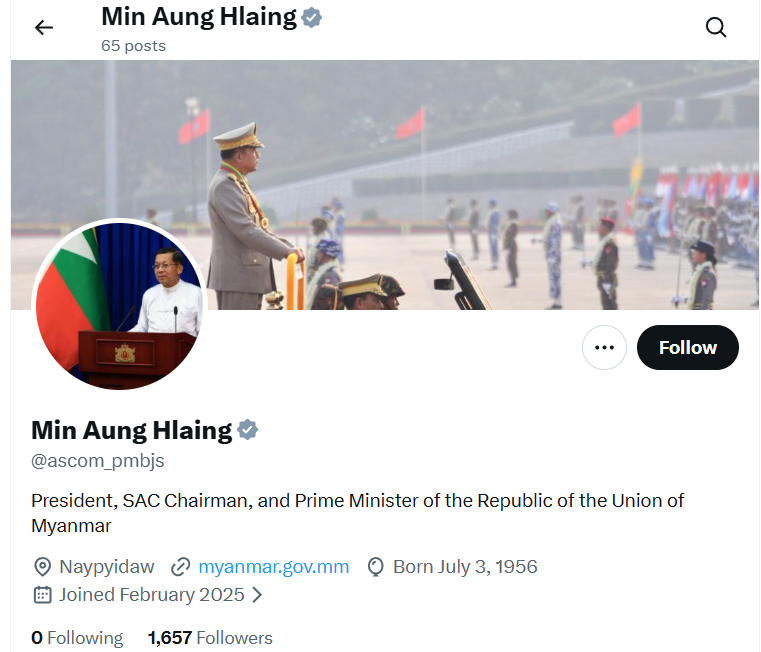
The list of high-profile incidents shows how far the problem has gone. In a number of cases, accounts of well-known politicians and public figures were hacked. For example, the account of Myanmar’s Prime Minister Min Aung Hlaing was used to promote a fake “national cryptocurrency,” after which one memecoin lost about 95% of its value. Such attacks demonstrate that trust in a public figure can be quickly monetized for fraudulent purposes.e.
No less indicative are cases involving representatives of the crypto industry and show business. The account of Animoca Brands founder Yat Siu was hacked, as was a profile associated with the ElizaOS project. Fake posts and airdrops in such cases led to an instant inflow of liquidity into fake tokens, followed by a sharp collaps
Even well-known figures such as rapper Drake became part of such schemes: scammers used his name to promote a memecoin whose trading volume reached millions of dollars before the scheme was exposed.
Special attention should be paid to the attack on the Cardano Foundation account, where attackers spread false news about lawsuits while simultaneously promoting a fake token. This is no longer just phishing, but an attempt to manipulate the market through information pressure.

As a rule, such attacks begin with phishing. A user receives an email that looks completely identical to official platform notifications. In one described case, the email looked like a standard message from X about a copyright violation. The format, tone, and structure of the text did not raise suspicion.
After clicking the link, the user was taken to a website almost indistinguishable from the real one. There, they entered their login, password, and two-factor authentication code. At this point, the attack was essentially complete. The entire account takeover process took only seconds.
The key problem is that even experienced users are not immune to such attacks. Modern phishing sites and emails imitate originals so well that it becomes extremely difficult to distinguish them. One wrong click – and account access is already in the hands of attackers.
X’s initiative is aimed at closing this vulnerable part of the system. Ideally, the new measures should reduce the number of successful attacks, decrease fraudulent posts, and increase overall trust in cryptocurrency-related content.
However, like any system, there is a downside. Tightening the rules may complicate life not only for scammers but also for legitimate users. This especially affects new projects that use social media as their main promotion channel.
They will now have to take into account an additional layer of verification and potential delays when publishing content. For small teams, this can become a serious barrier, especially in early stages when every post and every audience interaction matters.
In a broader sense, this is a step toward forming a new security standard on social platforms. X is effectively beginning to act as a filter that separates organic content from potentially suspicious material.
If the system works effectively, it could significantly change the crypto community. On one hand, the number of scams and phishing attacks will decrease. On the other, the barrier to entry for new participants and projects will increase.
But, as often happens, the market will adapt over time. Scammers will look for new ways to bypass protections, while legitimate projects will find new ways to interact with their audience.
Still, the overall direction is clear: the era when any account could freely promote questionable tokens is gradually coming to an end. And perhaps this is one of those rare cases where a bit of old-fashioned bureaucracy actually benefits the market.
All content provided on this website (https://wildinwest.com/) -including attachments, links, or referenced materials — is for informative and entertainment purposes only and should not be considered as financial advice. Third-party materials remain the property of their respective owners.