

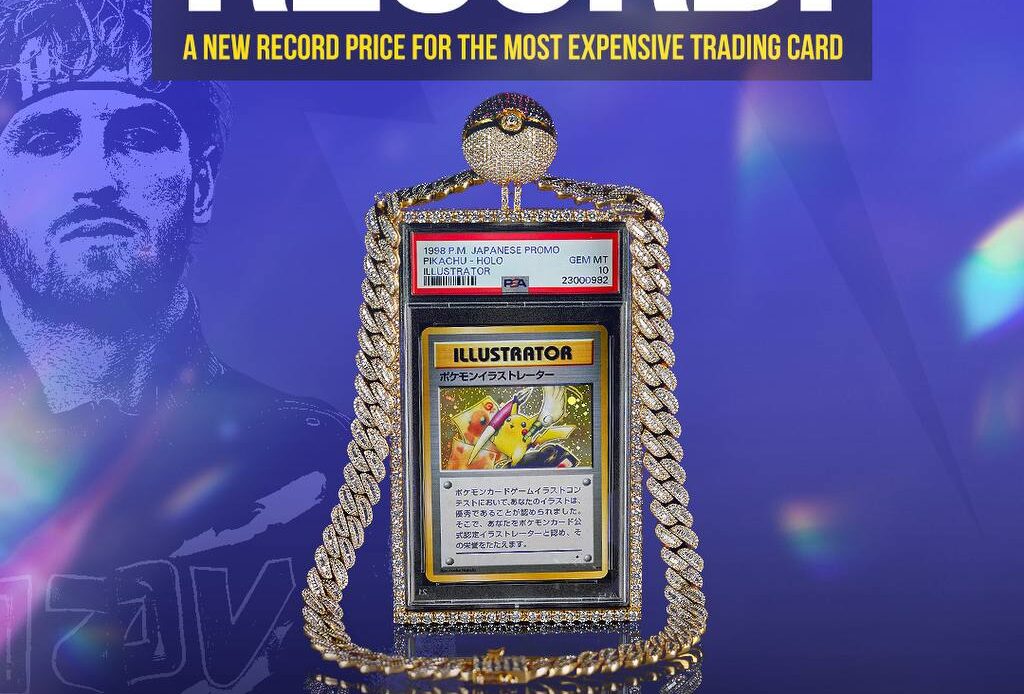
Crypto investors can argue endlessly about the future of tokens and digital collectibles, but reality sometimes turns out to be much simpler and… much more paper-based. While the NFT market is going through yet another cycle of disappointment, the true champion of massive “multiples” has emerged in the world of physical Pokémon cards.
Professional wrestler, blogger, and entrepreneur Logan Paul sold an extremely rare Pokémon card for $16.5 million, setting a new world record for the most expensive collectible card ever sold.
Yes, this is not a digital JPEG and not a metaverse asset. This is a piece of cardboard from the late 1990s that unexpectedly delivered profits many Web3 projects can only describe in pitch decks.
The card that became a holy relic of the collector market
The sold lot was the legendary Pikachu Illustrator. Among collectors, it has long been considered the “Holy Grail” of Pokémon cards.
This card was never mass-produced and was not part of regular booster packs. It was created in the late 1990s specifically for a Pokémon illustration contest. Only 39 copies were ever made, and only a small number have survived in good condition.
Out of 20 officially graded examples, only one received the highest possible rating: PSA 10, meaning absolutely perfect condition. And that unique copy belonged to Logan Paul. The buyer did not purchase just a rare card, but the only one in the world with the maximum quality grade. In the collectibles market, it is almost like buying the Mona Lisa with the artist’s signature and a certificate of authenticity.
How $5 million turned into $16.5 million
What makes the story even more striking is that this was not a lucky childhood discovery. Logan Paul deliberately placed a bet on this asset five years ago.
In 2021, he acquired the card for $5.275 million. Even then, the deal sounded insane: paying millions for Pokémon felt like a meme. But time proved that the meme was actually an investment strategy. The card has now been sold for $16.492 million. Even after fees and commissions, Paul’s profit is estimated at more than $8 million.
A physical item delivered nearly triple growth in value within just a few years. This looks especially ironic against the backdrop of many digital collectibles collapsing after promising a “revolution of ownership.”
A 42-day auction battle
The sale took place on Goldin, one of the world’s largest auction platforms for collectible items. The auction lasted 42 days and ended on February 16 after several hours of intense bidding. Until the final stage, the price hovered around $6.882 million – but then the real surge began. In the last round alone, 97 bids pushed the total up to the record-breaking $16.492 million.
During a live YouTube stream, Logan Paul could not hide his emotions: “Maybe we wore people out… Oh my God, this is insane.”
A diamond necklace as part of the lot
The card was not sold simply in a plastic case. The lot included a custom-made diamond necklace designed to hold the card. Paul wore it at WrestleMania 38, turning the collectible into a symbol of status. He also promised to personally deliver the purchase to the winning bidder.
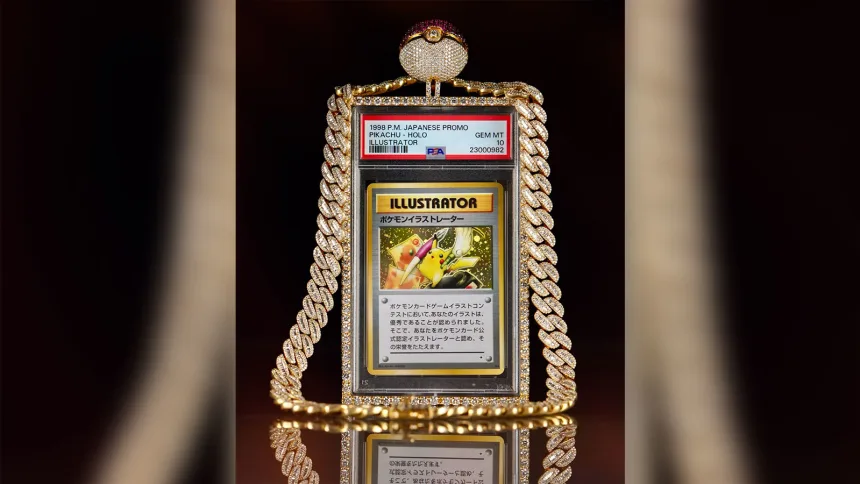
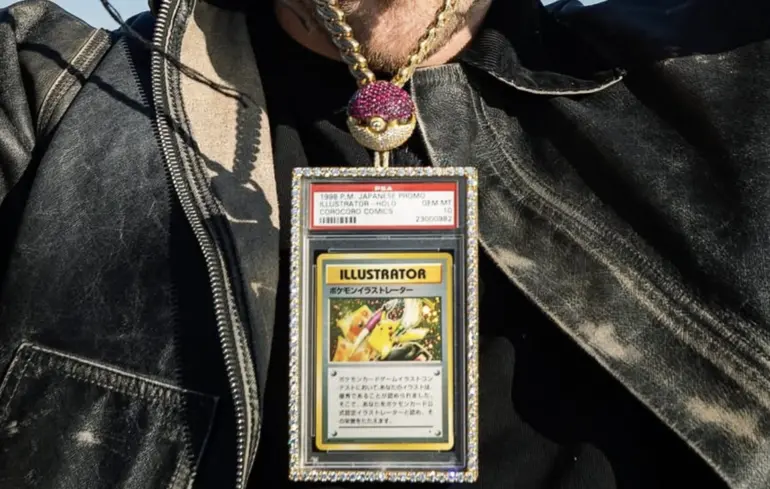
This is no longer just collecting – it is showmanship, marketing, and elite investment culture all at once.
An officially confirmed world record
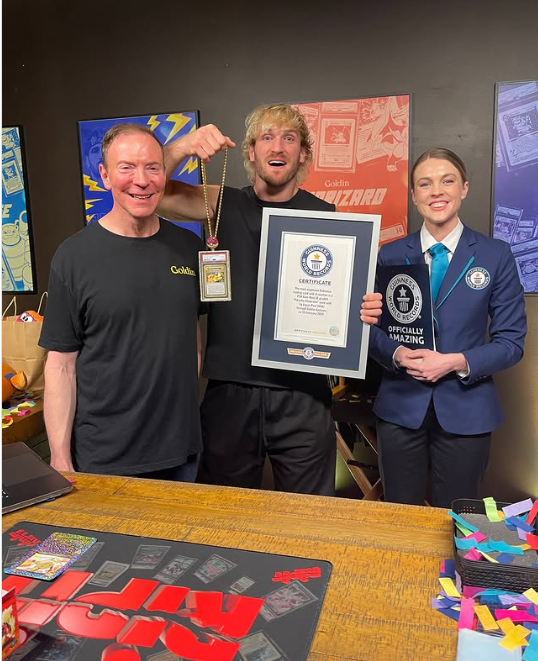
A representative of Guinness World Records officially confirmed that this is the most expensive collectible card in history, according to CNN. For comparison, the previous record belonged to the sports card “Michael Jordan – Kobe Bryant Logoman Autograph 1/1,” sold in August 2025 for $12.93 million. Pokémon has now officially surpassed sports at the very top of the collector market.
Why it matters: collectibles are investments again
This case highlights an interesting transformation in alternative asset markets. Cards, comics, watches, rare physical items – all of these are becoming what NFTs once tried to be: scarce assets that can be held, traded, and used as status symbols.
Goldin founder and CEO Ken Goldin called Pikachu Illustrator “the most desirable collectible card in the world,” noting that Pokémon card values have risen by 3000% over the past 20 years, outperforming both sports cards and the S&P index.
A slightly ironic conclusion
In the end, it was a physical card that delivered the kind of returns many NFT investors could only dream of. Not a metaverse, not tokens, not a digital revolution – but good old cardboard with Pikachu on it. Sometimes, the future of investing looks a lot like childhood.
All content provided on this website (https://wildinwest.com/) -including attachments, links, or referenced materials — is for informative and entertainment purposes only and should not be considered as financial advice. Third-party materials remain the property of their respective owners.