


Who will corporations lay off?
The question is important, and it can no longer be brushed aside. But there is a far more intriguing question, and we will get to it. Because strong AI is a paradoxical thing. It is simultaneously the dream of capitalism and its potential death. It is no coincidence that OpenAI once openly stated on its website that investments in the company should be treated more like donations, because no one knows what will happen to the money after the creation of AGI. That phrase was later removed, but the question did not go away.
Let’s start with corporations. They are built for efficiency, discipline, and managing complexity. Through scale, standardization, and control. In this they are excellent: they squeeze costs down to the last cent, turn processes into something almost machine-like, and can carry massive projects by concentrating resources. Corporations are perfect at optimizing the past. But they always struggle with the future. Radical innovations come to them poorly and late. Even Google, which essentially invented modern AI, missed the ChatGPT moment and then spent two years catching up to OpenAI in a field it originally laid the groundwork for.
Now the key question: whom will corporations lay off first, as soon as it becomes possible? If you remove morality, PR, and talk about social responsibility, the honest answer is simple: almost everyone. Not because they are evil, but because that is how logic works. AI is cheaper, does not get sick, does not take vacations, does not argue with HR, does not demand raises, and scales with a single button. As soon as it becomes technologically and legally acceptable, replacement will happen in waves.
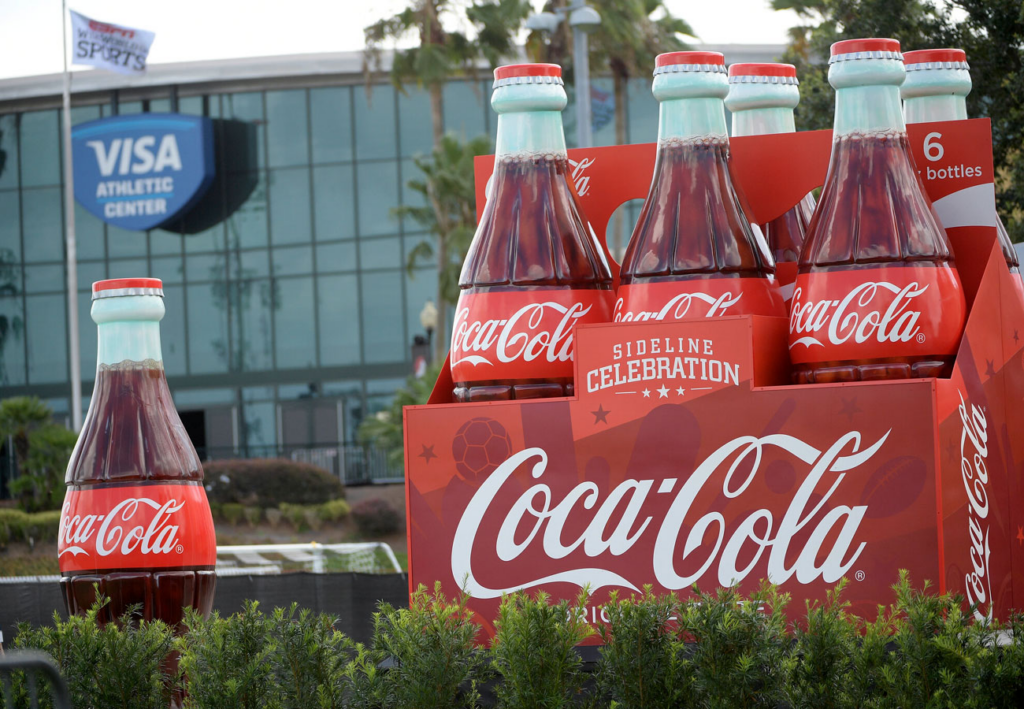
Take a hypothetical Coca-Cola. Around 70,000 employees and roughly 47 billion dollars in annual revenue. Imagine AI replacing procurement, production planning, accounting, legal support, software development and maintenance, customer support, HR. Warehouses are run by robots, delivery is handled by autonomous trucks, unloading is done by machines as well. How many people remain? A thousand? Five hundred? One hundred? For strategy, control of key processes, and development of new products. Not operations. And at the same time the company satisfies the same demand, at the same scale, possibly even better. At first glance this looks like a dystopia. But honestly, this has already happened before. More than once.
There are excellent studies on the cost of lighting. A thousand years ago, to get one hour of light, a person had to work 50-60 hours. Today, with LED lighting, an hour of light costs less than one second of an average wage. An ordinary family in a US suburb can decorate their home for Christmas in a way no king could afford several hundred years ago. Tasks that required enormous wealth and concentration of resources became trivial thanks to technology. Yes, professions disappeared. But the standard of living rose dramatically.
And this is where a much more interesting question appears. Not who corporations will lay off, but who will lay off the corporations. Because Coca-Cola does not build its own AI or its own robots. It uses third-party solutions. If AI allows a corporation to radically increase efficiency and scale, it gives exactly the same capabilities to everyone else. AI is not loyal to brands. It is loyal to tasks.
If experimentation and R&D are simplified by AI, if autonomous labs accelerate development, if manufacturing can be ordered turnkey, if logistics are automated and marketing becomes algorithmic, then 100-200-500 people capable of challenging a giant can appear anywhere. Not in a corporate headquarters and not necessarily in Silicon Valley. Geography stops being a decisive factor.
And here the main paradox emerges. Corporations strive to become smaller, cheaper, more flexible, more autonomous. Essentially, they want to turn into sole proprietors at scale. But at the same time, the sole proprietor gets tools to look and operate like a corporation. If a corporation can shrink into a small AI-powered team, then a small AI-powered team can expand into a corporation.
AI does not just lay people off. It erodes the very necessity of giant structures. Scale stops being the exclusive domain of large companies. Efficiency is no longer tied to headcount. Competition shifts from capital to speed of thinking and quality of decisions. This is frightening. And it opens opportunities. The question is no longer whether corporations will survive. It is who will learn to use AI faster and more boldly. And that, agree, is truly interesting.
All content provided on this website (https://wildinwest.com/) -including attachments, links, or referenced materials — is for informative and entertainment purposes only and should not be considered as financial advice. Third-party materials remain the property of their respective owners.