


The market is now driven not by numbers but by expectations, and this is perhaps the most accurate description of what is happening at the beginning of April 2026. On the surface, everything looks familiar: indices are rising, futures are confidently moving upward, news feeds carefully support the mood of “things are not that bad.” But if you dig deeper, it becomes obvious that the driver of this movement is not a strong economy or improving corporate performance, but a shift in expectations. The market has started to price in not a continuation of the conflict, but its gradual end. And this fundamentally changes the behavior of capital.
Investors who were recently hiding in safe assets are now beginning to cautiously return to risk. Any hint of de-escalation is perceived as a signal to act. And we are not talking about firm agreements or signed deals, but about sentiment itself. The market, as often happens, is moving ahead of events. It does not wait for the fact – it trades the expectation of that fact. As a result, we see a rather paradoxical picture: fundamentals remain weak, but prices are rising because market participants are betting on a future where the situation improves.
It is also worth looking separately at oil. Not long ago, it was the main indicator of fear. Any rise was perceived as a signal of escalation and a threat to the global economy. Now the situation has changed. Even while remaining at high levels, oil is no longer a source of panic. Moreover, its decline below the psychologically important level of $100 is perceived by the market as confirmation that the worst-case scenario will not materialize. This does not mean that risks have disappeared, but it does mean that market participants have begun to reassess them.
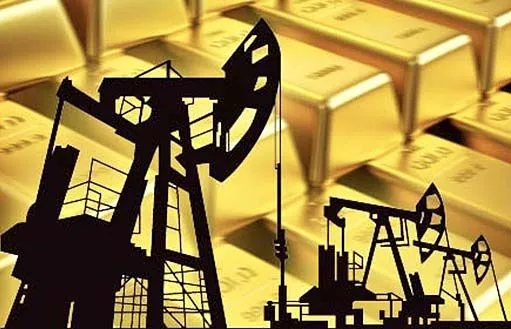
Gold, in turn, behaves even more interestingly. It continues to rise, but without the sharp dynamics typical of crises. There is no sense of a массов flight to safety. Instead, we observe a calmer, almost “technical” accumulation. This looks not like fear, but like hedging. Investors are not panicking, but they are also not ready to completely ignore risks. Such a balance often appears in transitional periods, when the market has not yet fully decided on direction, but has already begun to move away from extreme scenarios.
This entire structure rests on one key assumption: the peak of tension is already behind us. It is this idea that currently underpins the growth. And it is precisely this that makes the market both strong and vulnerable at the same time. Strong – because liquidity is flowing back into risk assets. Vulnerable – because all of this is based not on facts, but on expectations that can change very quickly.
At the same time, there is another side that is discussed much less often. The fundamental picture has not disappeared. It has simply temporarily moved into the background. Corporate reports continue to signal problems. Demand in key regions, especially in Asia, remains unstable. Pressure on margins has not gone away, and the high cost of capital continues to limit the ability of businesses to grow aggressively. Geopolitics in this case acts as a kind of “noise suppressor” that temporarily masks these signals.
But this effect is not permanent. As soon as the tension factor begins to weaken or disappears from the agenda, the market will return to more grounded issues: profits, revenues, demand, debt burden. And here an unpleasant mismatch may arise between current prices and the real state of the economy. History has repeatedly shown that such periods of optimism based on expectations end either with confirmation of the trend or with a sharp correction.
Another important factor is liquidity. It remains the main fuel of the market right now. As long as money is available and searching for yield, growth can continue even with weak fundamentals. But liquidity is a variable. It depends on central bank policy, borrowing costs, and overall risk appetite. And if this flow begins to weaken, the market will quickly feel the difference.
As a result, a rather fragile structure is forming. On one hand – rising prices, improving sentiment, and hope for stabilization. On the other – weak fundamentals and high dependence on the news flow. Any delay in negotiations, any unexpected geopolitical turn can trigger a sharp reaction. Because when the market rises on expectations, it falls just as quickly on disappointment.
In such conditions, the strategy of “chasing growth” looks increasingly risky. It is much more reasonable to treat what is happening as a phase of observation. It is precisely now that those levels and those assets are being formed that may become entry points when the situation becomes clearer. Noise, emotions, and fast movements are just the background. Real opportunities usually appear a little later, when the market stops reacting to every piece of news and starts relying on more stable factors.
The paradox is that it is precisely such periods of uncertainty that often turn out to be the most productive for long-term decisions. While most are trying to guess the next move, a calmer approach allows one to see the structure of the market and prepare for the next phase. And as practice shows, it always comes unexpectedly for those who get too carried away by the current growth.
All content provided on this website (https://wildinwest.com/) -including attachments, links, or referenced materials — is for informative and entertainment purposes only and should not be considered as financial advice. Third-party materials remain the property of their respective owners.