

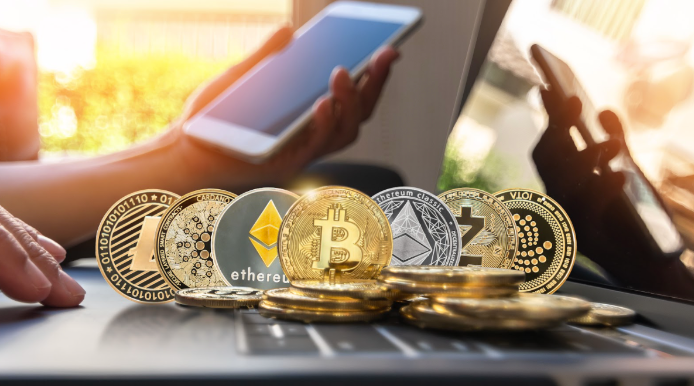
Cryptocurrency has long ceased to be something “for insiders.” Today it is a full-fledged financial instrument, and as soon as a person takes the first step, a simple question arises: where and how to exchange crypto for money or vice versa. This is where crypto exchangers come into play — the basic infrastructure without which the market simply does not work. This is not a complex tool for traders, but essentially the “cash desk” of the crypto market, where the most important thing happens — entry and exit from the system.
A crypto exchanger is a service that allows exchanging one currency for another. In the classic sense — cryptocurrency for fiat (for example, dollars or euros) or vice versa. But in practice it is broader: you can exchange one digital asset for another, lock in a rate, withdraw money to a card, or even receive cash. The main idea is simple: you give one asset — you receive another at the current rate including a fee. Like in a regular currency exchange office, only instead of dollars and euros — Bitcoin, Ethereum or Tether.
It works quite simply, but inside everything is much more interesting. When a user creates an order, the service either immediately offers a fixed rate or calculates it in real time based on the market. Then the exchange takes place — automatically or through confirmation by an operator. In some cases, the exchanger holds liquidity itself (i.e. has a stock of currency), in others — it simply acts as an intermediary between buyer and seller. That is why rates in different services may differ — this is not a mistake, but a business model.
There are several types of crypto exchangers, and each has its own logic of operation
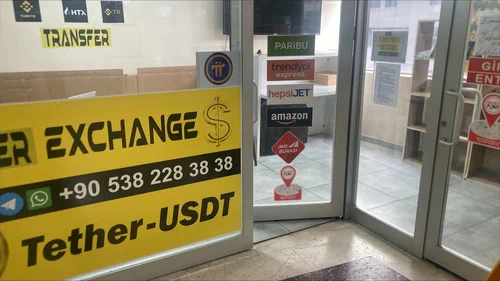
The most understandable option is offline exchangers. These are physical points that look almost like regular currency exchange offices. You come, hand over cash, transfer cryptocurrency — and receive money or vice versa. This format is especially popular in large cities where there is demand for fast cash operations. It is convenient when speed and minimal “digital footprint” are needed, but it is important to understand: the level of trust in such points must be high, because everything happens in person.
Online exchangers are the most common format. These are websites, applications, or even bots through which you can exchange cryptocurrency without leaving home. You choose the exchange direction, enter the amount, provide details — and get the result. Often such services require passing KYC — identity verification. This is already part of a global trend: the crypto market is gradually becoming more transparent and regulated. In essence, an online exchanger is a fast and convenient way to enter or exit crypto without unnecessary complexity.
A separate category is P2P exchangers. Here there is no classic intermediary in the usual sense. Users agree directly: one sells, the other buys. The platform only acts as a guarantor of the deal, holding funds until it is completed. This approach gives more flexibility — you can agree on price, payment method, and conditions. But it requires attention: here not only the platform matters, but also the specific counterparty. Most often such deals go through large platforms that act as an arbitrator in case of disputes.
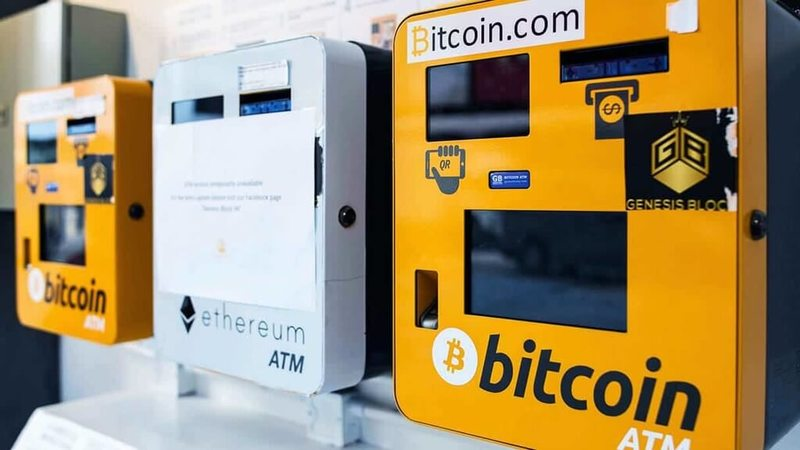
There is also another format that many underestimate — crypto ATMs. These are devices similar to ATMs through which you can buy or sell cryptocurrency. Insert cash — receive crypto. Or vice versa. This is the simplest way, especially for beginners. But convenience comes at a cost: fees in such devices are often higher than in online services. On the other hand, they operate 24/7 and do not require complex actions.
An interesting point — the boundary between exchangers and exchanges is gradually blurring. Large platforms like Binance or Coinbase essentially perform the same functions: they allow buying crypto for fiat, selling it, and withdrawing funds. The difference is that exchanges offer more tools — trading, analytics, derivatives. And exchangers are about simplicity and speed.
When choosing a crypto exchanger, it is important to look not only at the rate. This is a classic beginner mistake — chasing the best number and ignoring everything else. Reliability, reputation, speed of processing orders, transparency of fees — all of this is equally important. A too favorable rate sometimes means hidden fees or increased risks. In crypto, as in life, free cheese is rarely where you expect it.
Another nuance is security. Any exchange involves transferring funds, so it is important to understand who you are sending them to. Trusted services, reviews, history of operation — this is not a formality but a real filter against losses. Especially in conditions where the market is still partially unregulated.
In the end, crypto exchangers are not just a tool, but a gateway to the digital economy. Most users pass through them, and it is with them that the introduction to cryptocurrency begins. They can be different — fast, convenient, flexible, or on the contrary strict and regulated. But the essence remains the same: it is a bridge between traditional money and the world of digital assets.
And if you understand how they work, one simple thing becomes clear — crypto is no longer “something complicated.” It is just a new form of finance, which, like any system, has its own cash desks, rules, and fees. Only instead of a sign “currency exchange” it is now written a little differently.
All content provided on this website (https://wildinwest.com/) -including attachments, links, or referenced materials — is for informative and entertainment purposes only and should not be considered as financial advice. Third-party materials remain the property of their respective owners.