

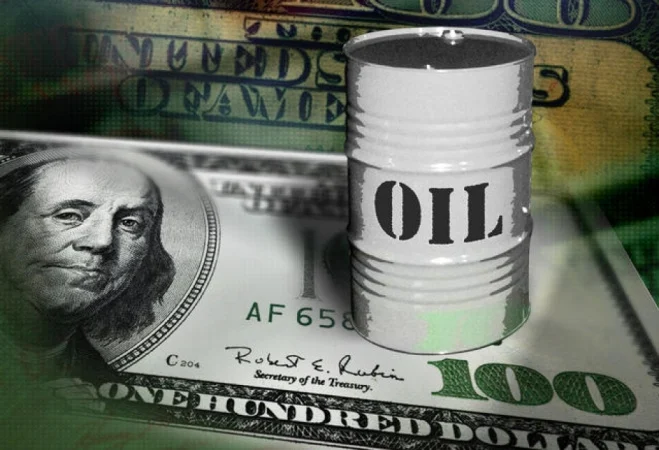
The conflict with Iran may go down in history as one of the key turning points for the global financial system and, in particular, for the petrodollar. This conclusion is outlined in an analytical report by the Deutsche Bank Research Institute dated March 24, 2026, prepared by the bank’s analyst Mallika Sachdeva. This is not about a catchy headline for the sake of attention, but about a systemic shift that has been building up for years – and has now received a powerful geopolitical catalyst.
The US dollar became the world’s reserve currency not by accident or coincidence, but due to a combination of economic and political decisions. After the United States abandoned the gold standard in 1971, the dollar moved into a fiat regime, where its stability is determined not by gold, but by trust in the American economy and government.
A key element of this system became the petrodollar. In 1974, Saudi Arabia reached an agreement with the United States: oil would be traded exclusively in dollars, and the revenue would be reinvested into US government bonds. In return, Washington provided security guarantees. This model became the standard for Gulf countries and закрепила the dollar as the main currency of global energy trade.
The mechanism was simple and, as often happens in such cases, brilliant: oil is needed by everyone, so the currency in which it is traded becomes the “default currency” for the entire global economy. As a result, the dollar gained not only demand, but also systemic accumulation – countries built up dollar reserves, invested them in US Treasuries, and thereby supported the system itself.
However, no system is eternal, especially one built on a global balance of interests. Deutsche Bank identifies several structural changes that began to weaken the petrodollar even before the current conflict.
First, the United States is no longer the main buyer of Middle Eastern oil. Thanks to the shale revolution, it has become largely energy independent. At the same time, Asia has become the main consumer. Today, a significant share of Middle Eastern exports goes to China, India, and other countries in the region rather than to the US. Around 85% of Middle Eastern crude now flows to Asia, and Beijing is increasingly pushing for settlements in yuan. This shifts the center of gravity and undermines the old model.
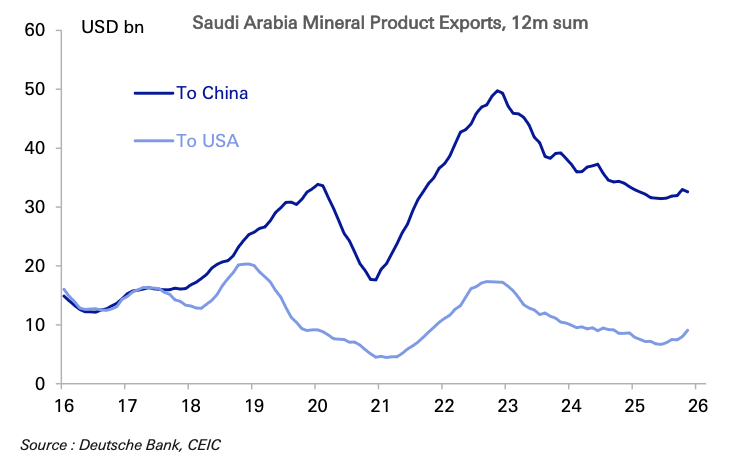
Saudi Arabia sells four times more oil to China than to the United States
Second, China is actively promoting the use of the yuan in international trade. This is not just ambition, but a systematic policy backed by infrastructure and agreements with key energy suppliers.
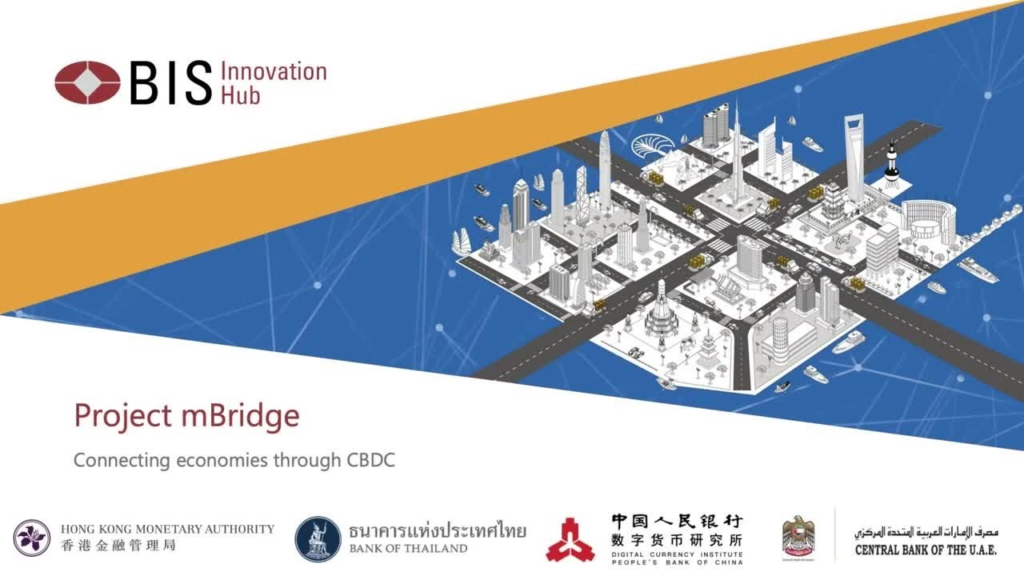
Third, the mBridge project and the development of central bank digital currencies are creating an alternative payment system. This system allows direct settlements between countries, bypassing SWIFT and the dollar correspondent network. In effect, this is a parallel financial architecture that is already operational, not just theoretical.
Finally, sanctions against certain countries have accelerated the fragmentation of the financial system. In many cases, settlements are already being conducted in alternative currencies – yuan and rupees – creating precedents for bypassing dollar-based infrastructure.
The war around Iran has become not just a political event, but a stress test for the entire petrodollar system.
First, one of its key pillars – the US security umbrella – has been called into question. Historically, Gulf countries agreed to dollar-based oil trade in exchange for protection. If that pillar weakens, so does the incentive to maintain the old model.
Second, oil logistics through the Strait of Hormuz increasingly depend not only on military power but also on diplomacy. There are emerging cases where access is secured through negotiations rather than US force projection.
Third, the possibility of oil trade in yuan is being discussed. If such arrangements take hold, this could become a point of no return. In such a scenario, it would not just be an alternative to the dollar, but a new system where different regions use different currencies for energy trade.
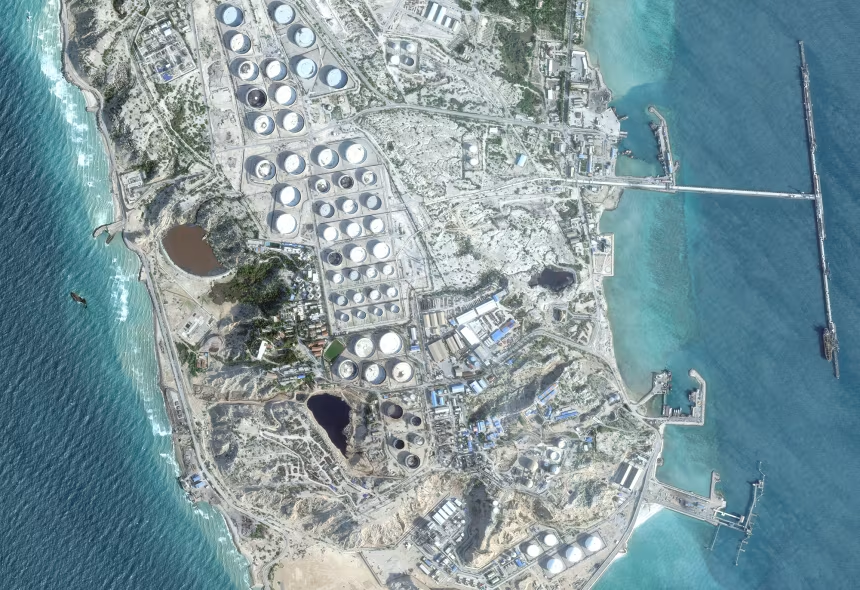
This is the potential “petroyuan” – not as a single global replacement, but as a parallel system.
Despite the pressure, the dollar still has strong defensive mechanisms. The United States remains the largest economy in the world, has the deepest financial markets, and controls a significant share of global financial infrastructure.
Moreover, the US can offset declining influence by leveraging its own energy resources. In an optimistic scenario, America strengthens its role as a major energy supplier rather than just a consumer. This would help maintain influence over pricing and preserve the dollar’s role in settlements.
In a more complex scenario, fragmentation occurs: part of global oil trade continues in dollars, especially in the Western Hemisphere, while Asia gradually shifts to alternative currencies.
It is also important to consider the reserves of Gulf countries. Their currencies are pegged to the dollar, and they hold massive dollar assets. A sharp shift away from the dollar could destabilize their financial systems. However, the current conflict may push these countries to use their reserves domestically – for rebuilding infrastructure and defense. This reduces dependence on external financial flows and opens the path for gradual system transformation.
Deutsche Bank emphasizes that the biggest threat to the petrodollar is not another currency, but a shift in the global energy structure itself. If the world begins to move away from oil and gas as primary energy sources, the entire system built around hydrocarbon trade will lose its foundation. Then the question will not be which currency oil is traded in, but whether oil will retain its central role at all.
History has seen a similar pattern before. After the 1973 oil crisis, countries began investing heavily in alternative energy, building strategic reserves, and diversifying supply sources. Today, we are seeing a similar process, but in a far more technological and accelerated form.
Special attention is given to the technological aspect. Systems like mBridge demonstrate that alternative financial infrastructure already exists and operates. Transactions in such systems can take seconds, while traditional SWIFT transfers take days.
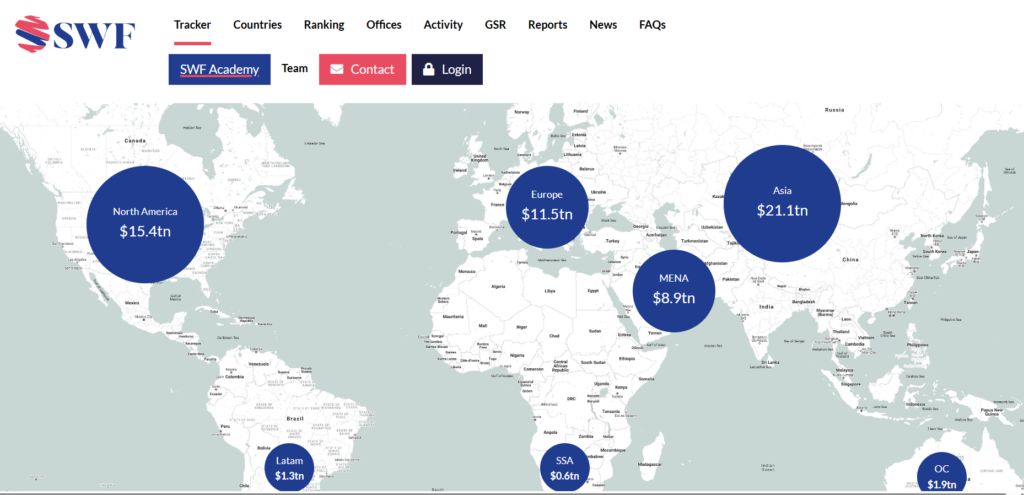
The growth of yuan settlements with Southeast Asia by tens of percent over just a few years confirms that the transition is already underway. This is not theory, but data. This reflects an important historical pattern: the transition from one reserve currency to another is not fast, but it becomes inevitable when conditions change. The British pound once gave way to the dollar in a similar manner – a process that took decades and was shaped by world wars and shifts in global power.
The dollar remains the dominant global currency, but its status no longer appears as unshakable as before. The conflict around Iran is only accelerating processes that began long before it.
Without illusions, the petrodollar system is not collapsing overnight. It is gradually losing its monolithic nature, giving way to a more fragmented and multipolar model. In some regions oil is still traded in dollars, in others in yuan, and in some cases hybrid settlement schemes are emerging. And, as is often the case in economics, it is not slogans but infrastructure that decides everything. And that infrastructure is already being built – faster than many are used to noticing.
All content provided on this website (https://wildinwest.com/) -including attachments, links, or referenced materials — is for informative and entertainment purposes only and should not be considered as financial advice. Third-party materials remain the property of their respective owners.