

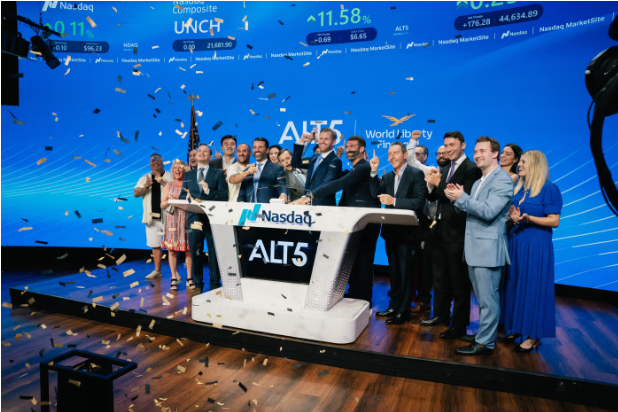
The Trump family gathered top executives from the largest financial institutions and the crypto industry at Mar-a-Lago for the first World Liberty Financial forum – an event that became an almost symbolic marker of how sharply Wall Street’s attitude toward digital assets has changed. Just a few years ago, such a meeting would have seemed like science fiction: cryptocurrencies were considered a toxic market, and their representatives were viewed more like visitors from another planet than partners for the biggest banks and stock exchanges. Now, however, they are sitting at the same table, discussing investment products and jointly shaping the future of financial infrastructure.
Among the participants were Coinbase CEO Brian Armstrong, Binance founder Changpeng Zhao – who was pardoned by Donald Trump last year – as well as Goldman Sachs CEO David Solomon and executives from Nasdaq and the New York Stock Exchange. The very fact of such a lineup speaks louder than any press release. This was not just a gathering of crypto enthusiasts – it was a meeting of the financial establishment, which until recently preferred to keep the crypto market at a safe distance.
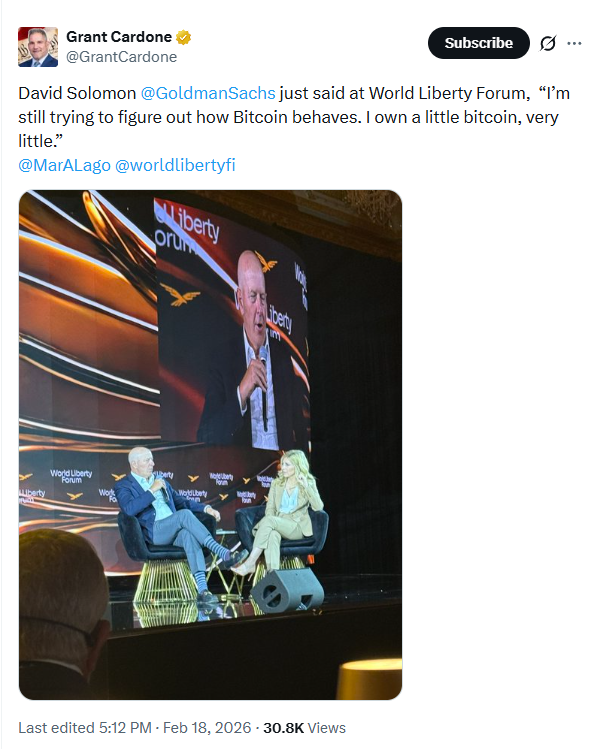
Solomon’s appearance was especially telling. A long-time crypto skeptic, he publicly admitted on stage that he now owns “a small amount of Bitcoin, a very small amount.” Under normal circumstances, this might have sounded like a joke or a personal confession. But in the context of Goldman Sachs, it looks like a corporate signal: if even one of Wall Street’s most cautious players allows Bitcoin into his personal portfolio, then the market has truly entered a new phase.
For major banks, what matters is not emotion, but political and regulatory safety. And Solomon, in essence, said: this has now become acceptable.
Wall Street’s pivot became one of the forum’s central themes. Eric Trump commented on the developments with undisguised irony. He noted that in this room sat people who used to be on the other side of the barricades – closing bank accounts, pushing people out of major banks – all because his father wore a hat that said “Make America Great Again.” In his words, the circle has now closed.
This remark was not merely a political jab, but a reminder of how tightly intertwined finance, power, and access to the system truly are. For a long time, the crypto industry existed precisely as an alternative to traditional structures that could “switch off” any inconvenient participant. Now, however, those who once tried to distance themselves from crypto are forced to acknowledge: digital assets have become part of reality, and ignoring them is no longer an option.
The forum was also attended by Mike Selig, head of the Commodity Futures Trading Commission – the agency actively seeking authority to regulate the crypto industry. Republican senators Ashley Moody and Bernie Moreno were present as well. This is another key detail: the crypto market no longer exists separately from the state. It is becoming an object of political struggle, and regulators are increasingly trying to integrate it into official frameworks. When a regulator sits at the same forum alongside the biggest exchanges and banks, it means the question is no longer whether regulation will happen, but who will gain control over this new financial territory.
But perhaps the most practical and simultaneously most revealing announcement was the news of tokenizing a resort in the Maldives. World Liberty Financial announced a partnership with Securitize to tokenize income rights tied to loans for the construction of Trump International Hotel & Resort Maldives.
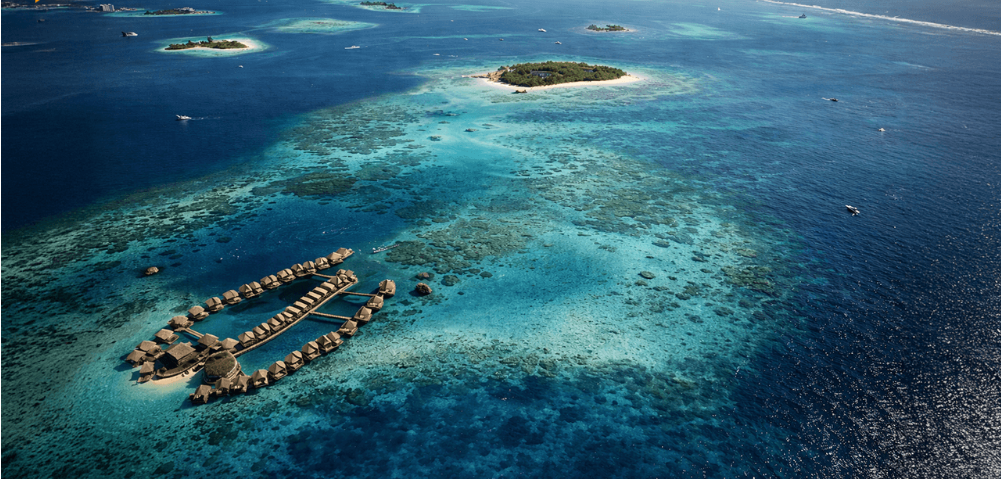
The project is being developed by DarGlobal and is expected to be completed by 2030. Around 100 luxury villas are planned, making it a high-end prestigious asset aimed at wealthy global clients.
Investors are promised fixed income and revenue flows from the loans, as well as potential participation in profits from a future sale of the property. Access will be limited to accredited investors in the US through selected partners and wallets. The company describes the deal as part of a broader strategy to develop, structure, and distribute tokenized real-world asset offerings under the World Liberty brand.
This is a fundamentally important point. Tokenization of real assets has been one of the most discussed trends of recent years, but for a long time it remained more of a concept than a массов practice. Here, however, we see a first public step: a luxury resort, income rights, a structured product, and an investor base restricted to the wealthy. Crypto technology is being used not for meme coins or hype, but for packaging a classic investment instrument into a digital form.
The Mar-a-Lago forum captured a defining moment: leaders of Goldman Sachs, Nasdaq, and NYSE found themselves sitting at the same table with the crypto industry and US regulators. This is no longer a conflict between the “old” and “new” worlds, but a process of integration. Wall Street is no longer fighting crypto – it is beginning to it.
Historical patterns reveal an interesting закономірність: major financial institutions typically enter new asset classes when the political climate makes it safe, not when the technology reaches maturity. Goldman Sachs shut down its crypto unit in 2018 and reopened it in 2021. This suggests that decisions are driven not by love of innovation, but by calculation and shifting conditions.
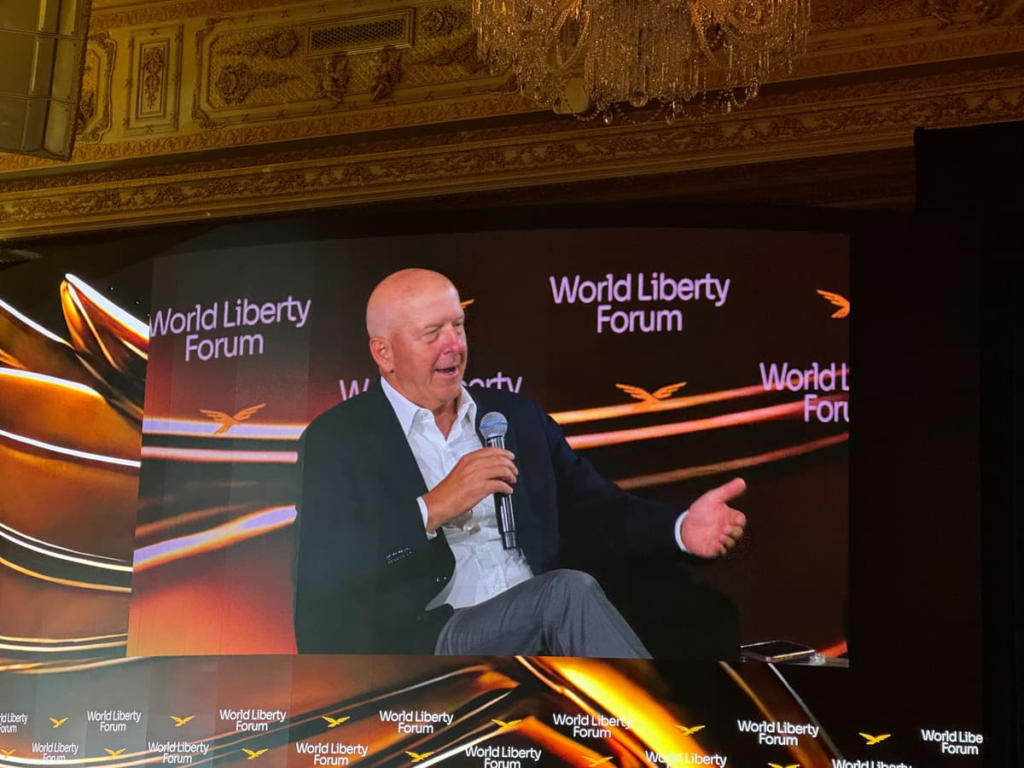
Solomon’s public admission is not so much a personal belief as a corporate signal to the market: crypto assets are becoming part of the acceptable investment universe. And the tokenization of a Maldives resort demonstrates what the next stage will look like: not just Bitcoin as an asset, but an entire infrastructure of tokenized financial products embedded into traditional capital.
If crypto once symbolized протест against the system, it is now increasingly becoming part of the system itself. And perhaps the key takeaway from the Mar-a-Lago forum is this: digital assets are no longer on the periphery. They are moving into the center of the global financial stage – precisely at the moment when Wall Street decided that resisting is pointless, and leading the process is far more profitable.
All content provided on this website (https://wildinwest.com/) -including attachments, links, or referenced materials — is for informative and entertainment purposes only and should not be considered as financial advice. Third-party materials remain the property of their respective owners.