


Futures on U.S. stock indices continue to show gains despite loud and high-profile news related to the situation in Venezuela. This indicates that market participants are showing remarkable resilience to geopolitical noise and continue to focus on fundamental economic indicators and upcoming macroeconomic data that can genuinely affect asset prices in the short and medium term.
Why oil is falling
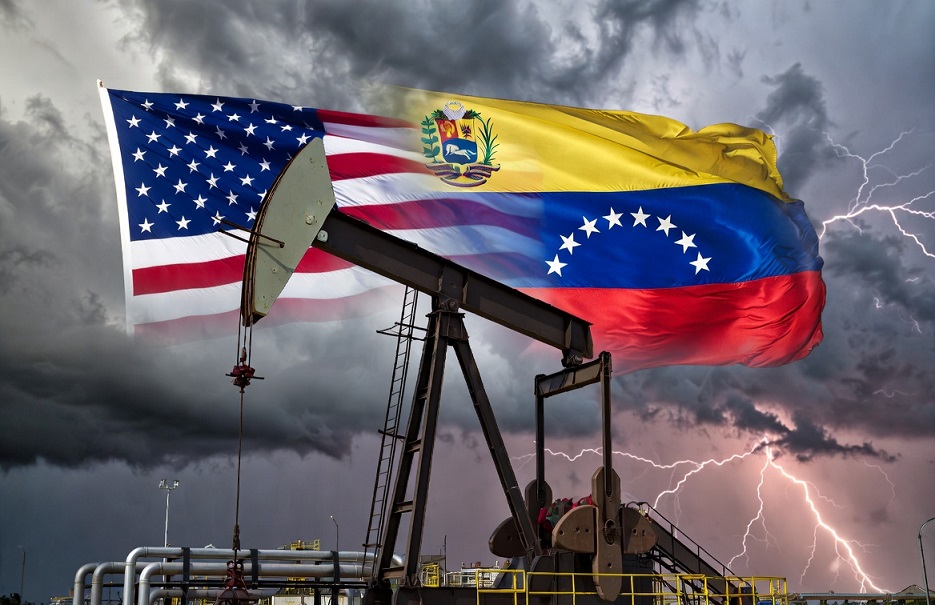
Despite striking media headlines and active discussion of events in Venezuela, oil prices are declining or, at the very least, are not showing a sharp rise. The main reasons behind this market behavior are as follows:
- Venezuela is a marginal player in the global oil market. Its share of global production and exports is so small that any disruptions or changes in supply have little noticeable impact on the balance of supply and demand.
- Limited ability to quickly increase production. Years of crisis have severely damaged the country’s oil infrastructure, and rebuilding it requires time, investment, and access to technology. This makes any short-term scenario involving a sharp increase in supply highly unlikely.
- The impact is long-term rather than immediate. Even in the hypothetical case of political stabilization and improved conditions in the country, the effect on the global oil market would be gradual. Market participants understand that current developments are not capable of instantly changing the fundamental dynamics of the global energy market.
“This is a major geopolitical event that would normally be expected to have a positive impact or push oil prices higher. However, markets have already priced in the conflict with Venezuela, which will disrupt oil exports,” said Arne Lohmann Rasmussen, Chief Analyst and Head of Research at A/S Global Risk Management.
As a result, there is no panic in the oil market, and any volatility that does emerge remains local and speculative in nature.
Investor reaction
The behavior of market participants confirms a rational approach to the current situation:
- Shares of major energy companies remain resilient. Leading corporations continue to show stability despite geopolitical risks.
- Capital is not fleeing the market, and defensive assets are not seeing large inflows. There are no signs of panic selling or capital flight.
- Focus remains on economic indicators. Investors are closely watching inflation data, Federal Reserve interest rate decisions, and corporate earnings reports, which are capable of setting the direction for markets in the coming months.
In other words, the market treats news from Venezuela as background noise rather than a factor of immediate economic impact.
The key signal for the market
Current dynamics point to a gradual shift in market behavior:
- Political noise is taking a back seat. Investors no longer react instantly to loud headlines or geopolitical scandals unless they are accompanied by a measurable economic effect.
- Focus on facts and expectations. Markets trade numbers, macro data, and forecasts rather than emotions and panic.
- Short-term volatility is possible, but the broader trend remains positive, and the current upward trend has not been broken.
Overall, this paints the picture of a mature market capable of filtering out noise and focusing on real price drivers. Market participants remain centered on fundamental data and structural economic factors, supporting stability in both equity and commodity markets amid external geopolitical shocks.
All content provided on this website (https://wildinwest.com/) -including attachments, links, or referenced materials — is for informative and entertainment purposes only and should not be considered as financial advice. Third-party materials remain the property of their respective owners.