

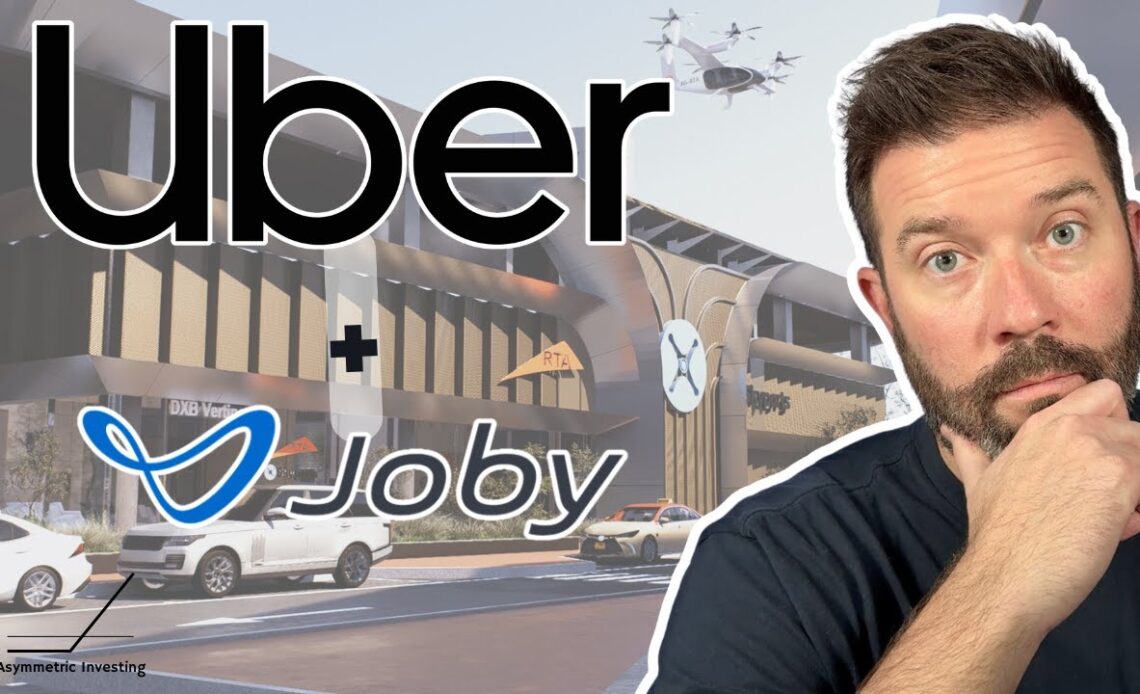
Uber is taking to the sky together with Joby Aviation and is doing it in its usual style — through a familiar application, interface, and booking logic. The project refers to the launch of the Uber Air powered by Joby service, allowing users to book air taxis directly within the Uber ecosystem. The first full launch is scheduled for Dubai in 2026.
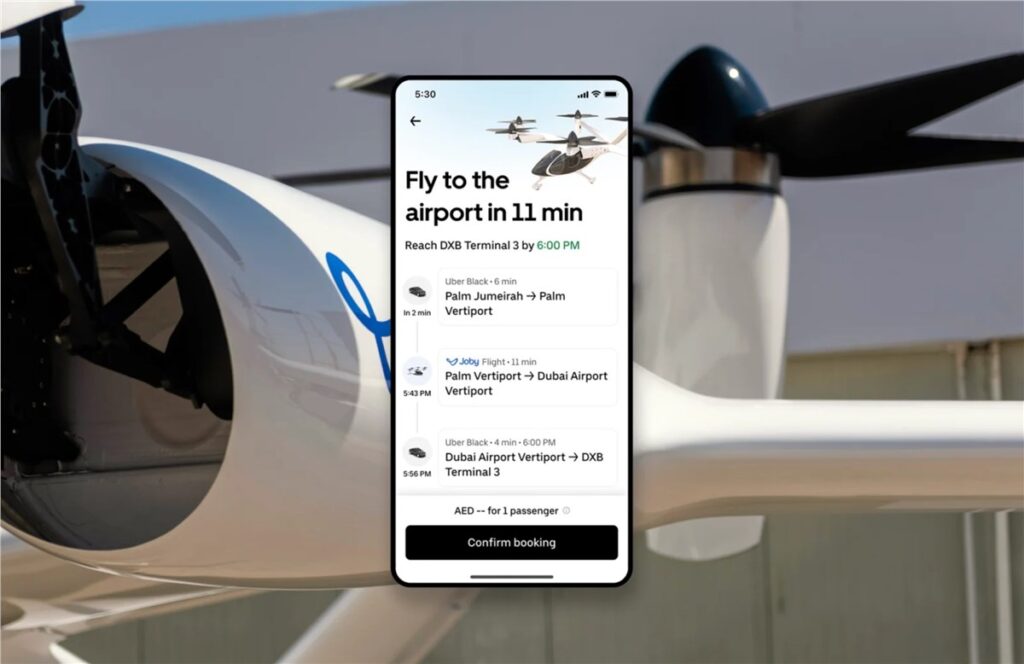
The service is designed to preserve the user experience. The customer opens the app, enters the destination, and if the route is suitable for air travel, receives an additional flight option. After selection, the system automatically sends an Uber Black vehicle to take the passenger to the nearest takeoff zone. Then the passenger flies in an electric air taxi, and after landing another car completes the trip to the final destination. The entire chain is integrated into a single booking.
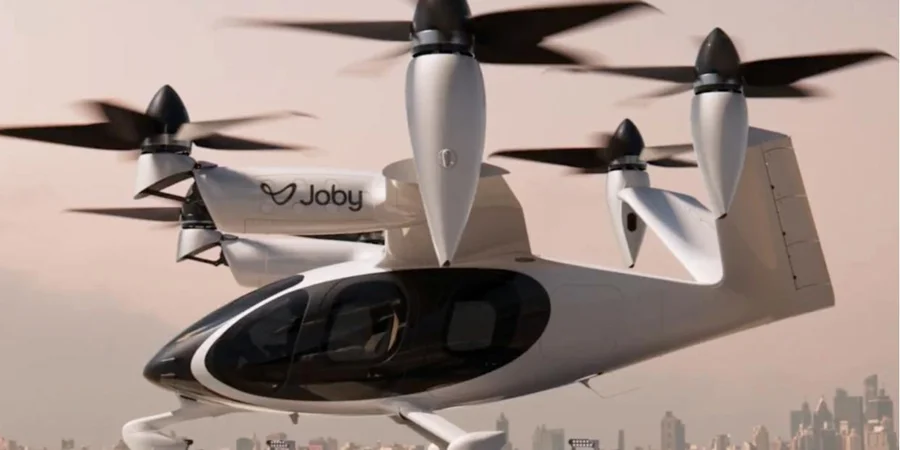
The aerial part is provided by Joby Aviation electric aircraft. These are eVTOL (electric vertical take-off and landing) vehicles designed for urban environments. They are built for four passengers with luggage and are comparable in cabin size to a spacious SUV. The company focuses not only on speed but also on comfort: panoramic windows, low noise levels, and a premium air travel experience intended to differentiate the service from traditional helicopter transportation.
Technical specifications look ambitious. Maximum speed is up to 320 km/h, and flight range is about 160 kilometers. For urban mobility, this is sufficient to connect airports with city centers or shorten routes between remote districts. Safety is ensured by a multi-layer system: four independent battery packs and an onboard computer with triple redundancy of key systems.
The economics of the project is a separate question. Initially, the aircraft will not be autonomous — they will be operated by a human pilot. This implies high operational costs due to pilot salaries, maintenance, landing infrastructure, and certification. However, Uber claims the price for customers will be comparable to an Uber Black ride. If achieved without hidden subsidies, this would represent a major technological and business breakthrough. Otherwise, the model could remain unprofitable for many years.
Dubai was chosen for its progressive transportation policies and flexible regulation. After launching in the UAE, the company plans expansion to New York, Los Angeles, as well as the United Kingdom and Japan. In the United States, pilot programs for urban air mobility testing have already been approved.
Nevertheless, skepticism remains significant. Aviation experts point to two key risks: safety and economics. In conditions of dense urban development, even isolated incidents could put an end to the entire industry. History has seen cases of helicopter crashes in large cities, and public perception of such risks is extremely sensitive. The second aspect is financial. According to several specialists, without large-scale government subsidies, the mass air taxi model may prove unprofitable. High capital costs, limited throughput capacity, and complex infrastructure create serious barriers to fast profitability.
It is also important to consider the regulatory aspect: Joby Aviation has not yet received full FAA certification in the United States. This means the project is still in the preparation and testing stage rather than full-scale global commercial operation. To reach the mass market, it must still pass certification stages, safety verification, and coordination with aviation authorities in different countries.
Strategically, Uber is betting on the long-term transformation of urban mobility. If the project proves viable, it could change transportation structures in large metropolitan areas by reducing travel time and partially relieving ground transport. However, at the current stage, this is more of an investment in the future than a source of quick profit. The potential of the direction is significant, but real financial returns are likely several years away and will depend on technology, regulators, and the ability of companies to sustain a long scaling period.
All content provided on this website (https://wildinwest.com/) -including attachments, links, or referenced materials — is for informative and entertainment purposes only and should not be considered as financial advice. Third-party materials remain the property of their respective owners.