

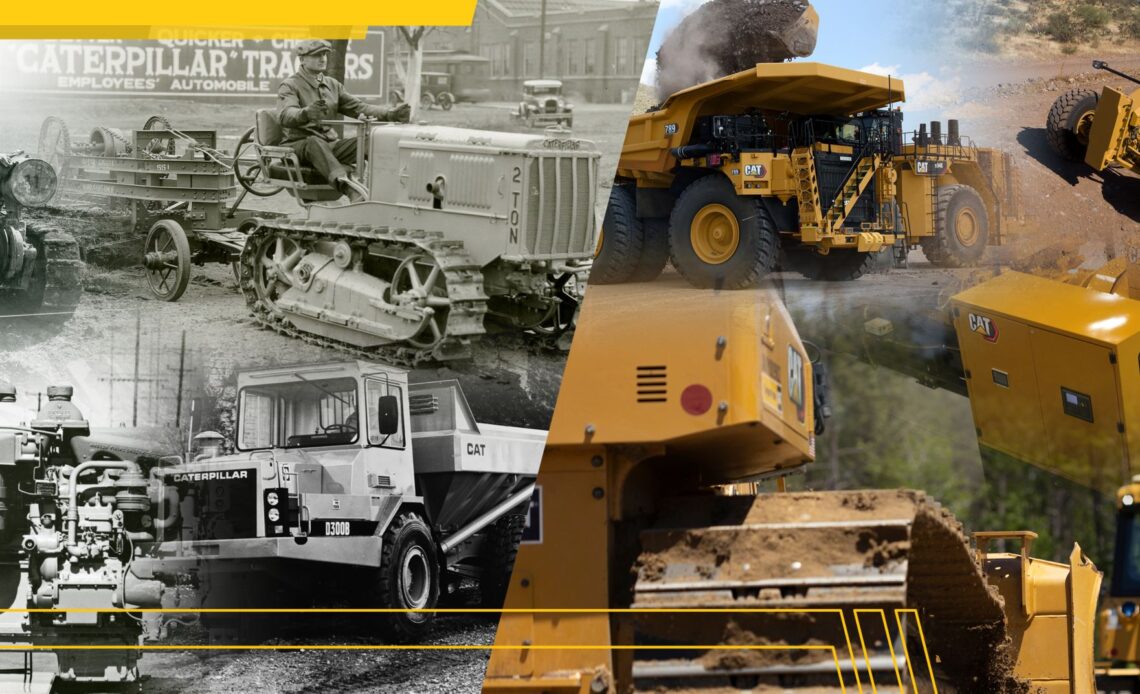
The Caterpillar story is now a clear example of how the market is reinterpreting the “old economy.” A company long associated with excavators, mining equipment, and construction sites is suddenly becoming part of one of the most advanced narratives — the race for artificial intelligence.
And this is not a paradox, but a logical evolution. Any form of AI, no matter how “cloud-based” it appears, ultimately depends on physical infrastructure. Data centers are not just servers and chips, but also electricity. A lot of electricity. An enormous amount.
And this is where things get interesting. The rapid growth in demand for AI infrastructure has significantly increased the need for power supply. Hyperscalers and tech companies are building data centers so quickly that traditional power grids are struggling to keep up. As a result, they are turning to faster and more reliable solutions — industrial-scale power generation.
Against this backdrop, Caterpillar’s energy and generator segment is showing performance more typical of high-growth tech companies. Generator sales are rising at double-digit rates, and this is not a short-term spike but a structural trend. AI is not just algorithms — it is megawatts.
The market quickly priced this in. The company’s stock has posted strong gains over a short period, and over the year the performance looks like a classic shift from a “boring industrial name” to a hot thematic play. But more important than the price action is what lies behind it.
Backlog — the order book — has expanded to tens of billions of dollars. This means demand is not speculative; it is already locked in through contracts. In other words, this is not hope — it is future revenue already in the pipeline.
The whole situation closely resembles the classic “gold rush” analogy. When a boom starts, it is not only the gold miners who win, but also those who sell the tools. In the AI cycle, those “shovels” are not only chips like NVIDIA, but also energy infrastructure. Without it, no GPUs can actually run.
And in this context, Caterpillar is in a surprisingly strong position. The company does not depend on the success of a specific AI model or startup. Its business is about providing a basic necessity. And that necessity for the entire industry right now is energy.
At the same time, a realistic view is necessary. This kind of growth is always a combination of fundamentals and expectations. If data center expansion slows down, or if energy infrastructure catches up with demand faster than expected, pressure on the segment could increase. And the traditional risks are still there — industrial cyclicality, commodity prices, and global macro conditions.
Still, the fact that a “traditional” industrial company is becoming an AI beneficiary is an important signal. The market is gradually moving away from a narrow view of tech leadership and is starting to price the entire value chain.
In a broader sense, this is a useful lesson. In every major technological wave, it is not only the obvious leaders who win, but also those who provide the infrastructure. Sometimes, they turn out to be the most resilient players.
So today Caterpillar is no longer just about construction. It is about electricity, infrastructure, and the invisible backbone of AI that makes all the “magic” possible.
And the real question is not whether the stock is a buy right now. It is how long this AI-driven energy demand surge can remain this aggressive. Because if it continues, companies like Caterpillar still have plenty to show the market.
All content provided on this website (https://wildinwest.com/) -including attachments, links, or referenced materials — is for informative and entertainment purposes only and should not be considered as financial advice. Third-party materials remain the property of their respective owners.